1683 - 1733
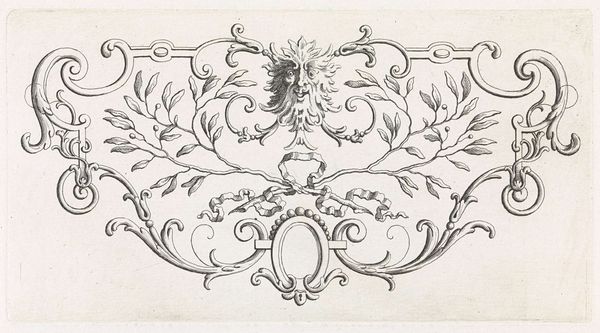
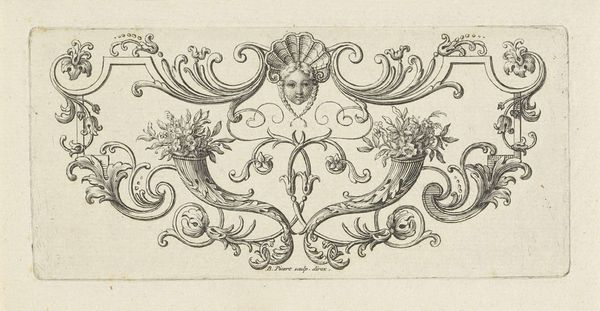
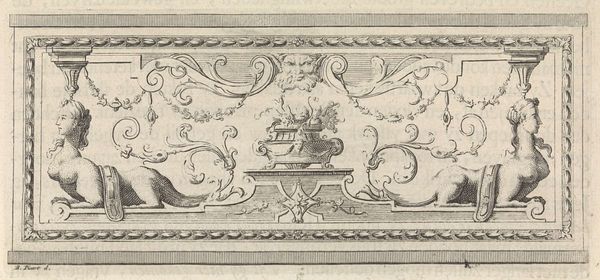
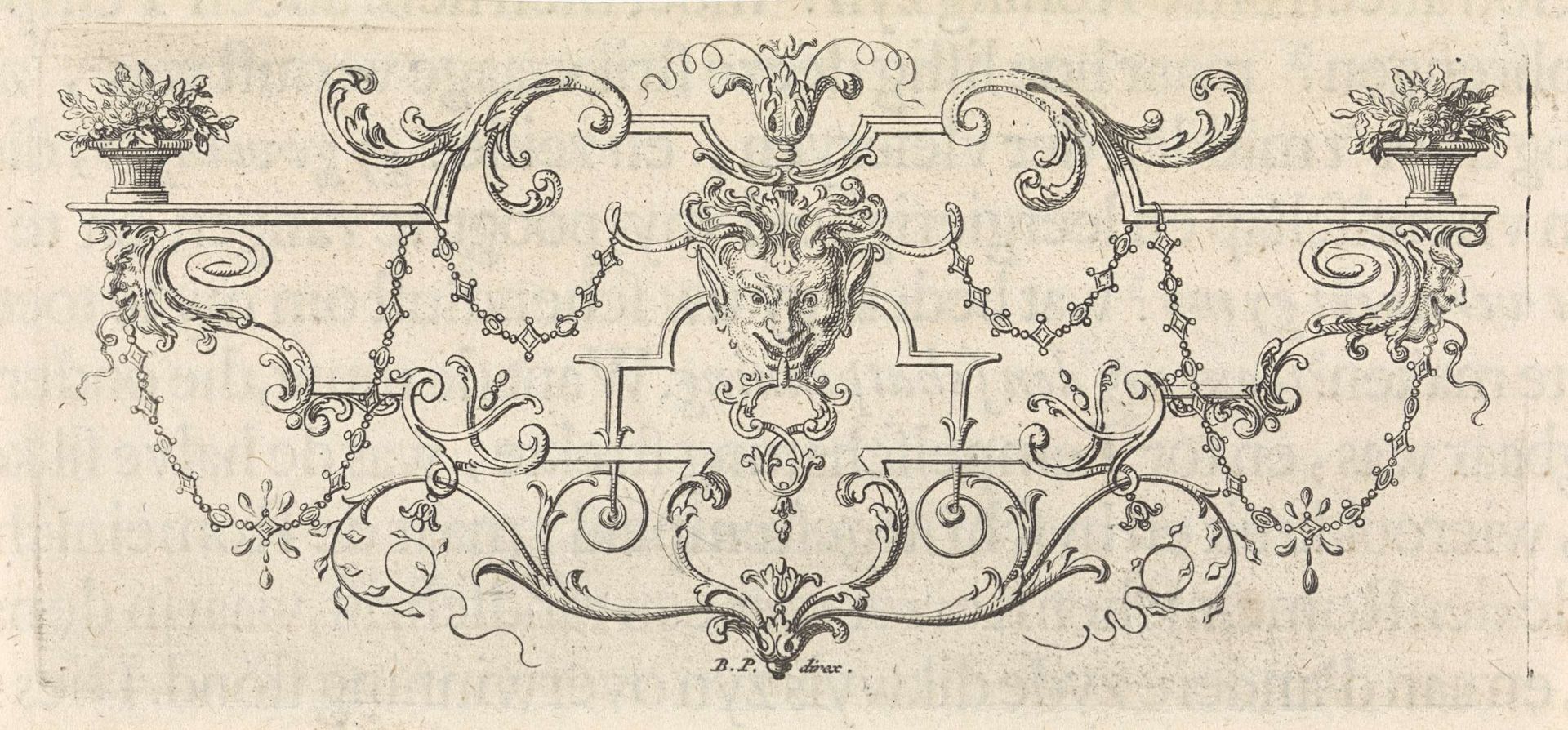
Mascaron en bladranken

Bernard Picart
1673 - 1733Location
RijksmuseumListen to curator's interpretation
Curatorial notes
Bernard Picart made this print of a mascaron, or grotesque face, entwined in foliage, using etching, sometime between the late 17th and early 18th centuries. During this period, France, and other European countries, experienced a fascination with ornamentation, visible here in the elaborate curves, stylized floral arrangements, and the fearsome, yet playful, face. But how does this image create meaning? The grotesque face, a common motif since antiquity, here combines classical elegance with a hint of the irrational, a tension reflective of the era’s intellectual climate, torn between Enlightenment reason and the persisting allure of the mysterious. The print's existence owes much to the institutional structures of art at the time, produced as part of a broader visual culture of design and decoration, often circulated among artisans and patrons. The social conditions that shape artistic production here become particularly relevant. Examining design books, period interiors, and architectural treatises, we can better understand the image's function within the visual and material world of its time.