About this artwork
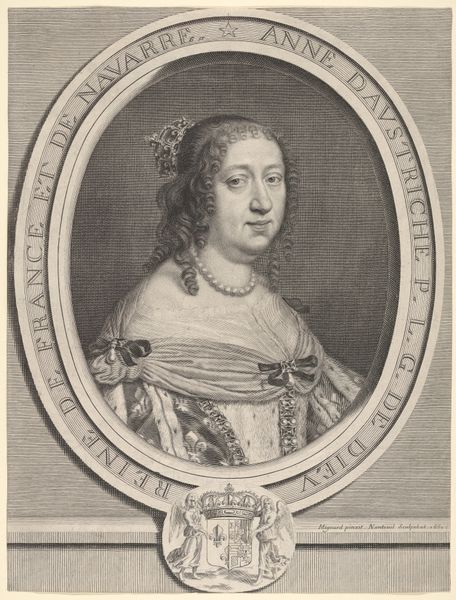
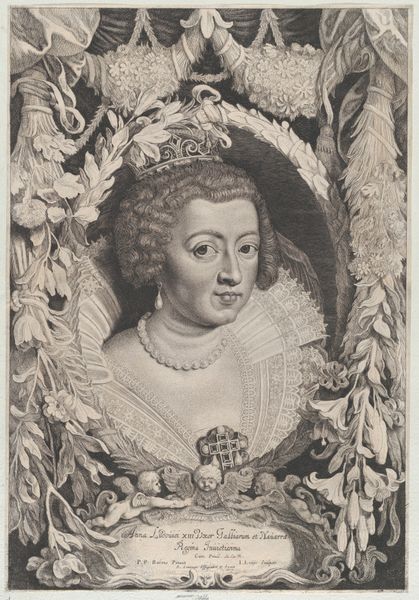
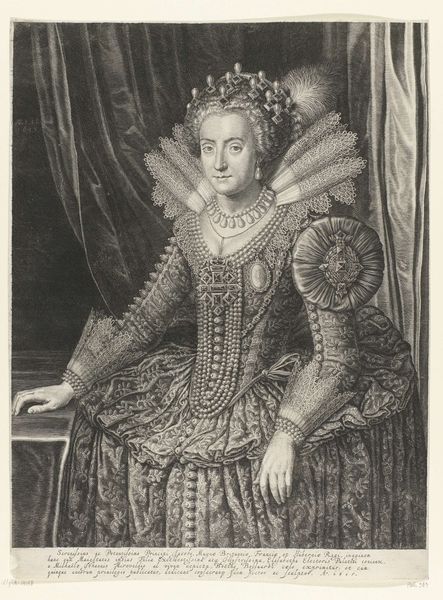
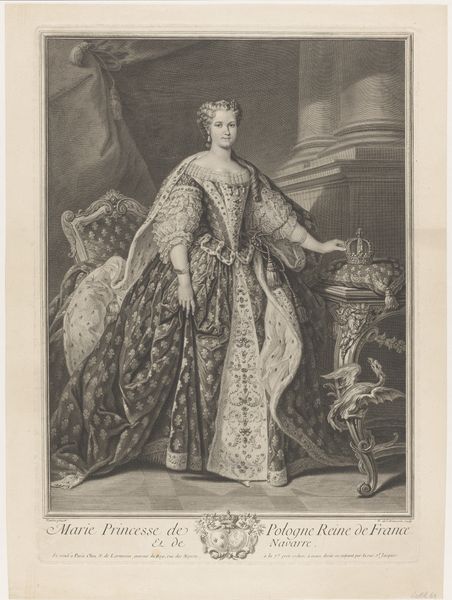
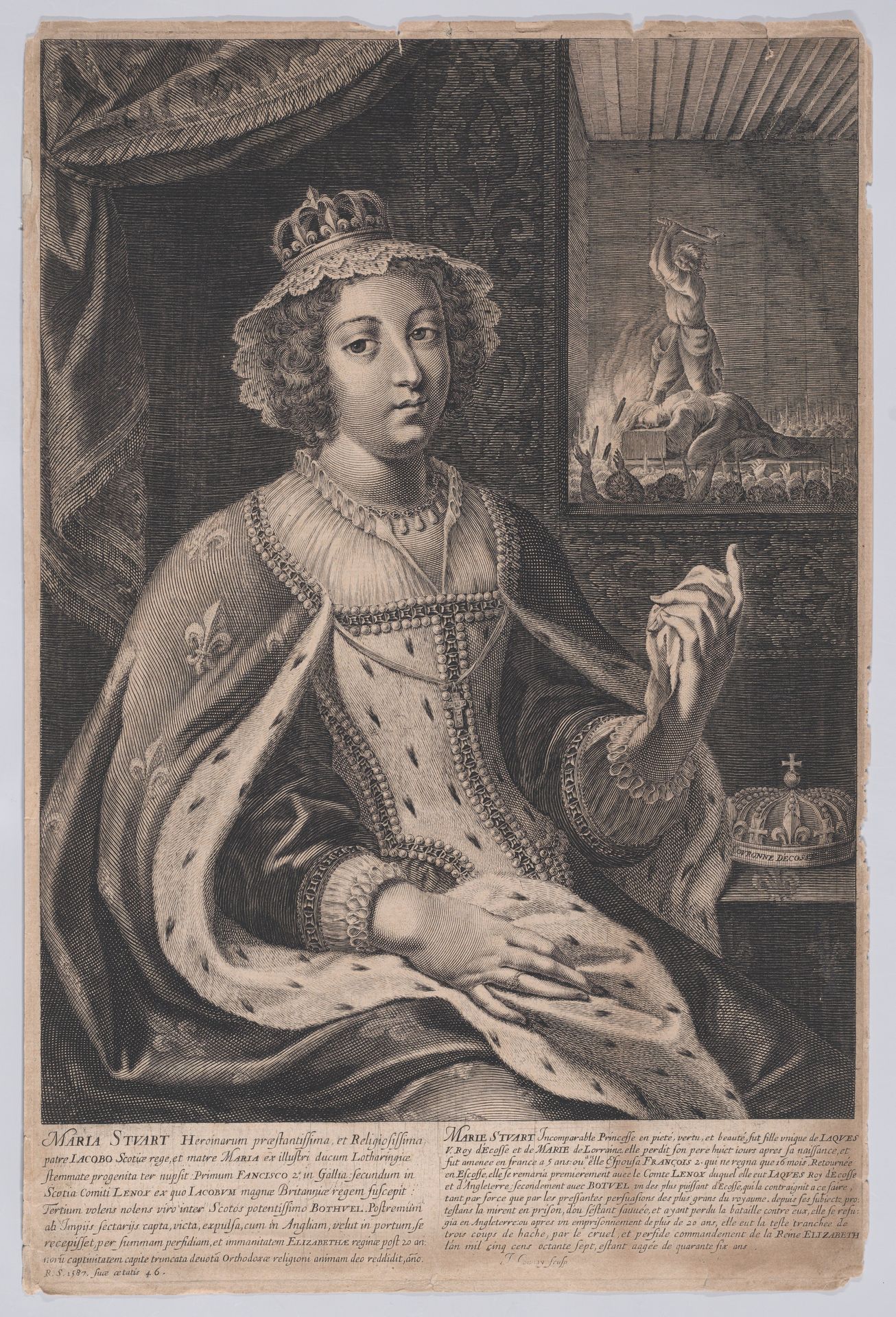
Jean Couvay created this engraving of Mary, Queen of Scots, in the 17th century, well after her death. Couvay’s Mary is regal, adorned with the symbols of monarchy: crown, royal mantle, and fleur-de-lis. Mary Stuart, a Roman Catholic, occupied a precarious position as a female monarch in a Europe undergoing religious reformation. Her claim to the English throne, as well as her Scottish one, led to political machinations and ultimately her execution by her cousin, Queen Elizabeth I. The artist includes a scene of her execution in the background, a stark reminder of her tragic end. Mary's serene expression invites contemplation on the complex interplay of power, gender, and religion that defined her life and legacy. Consider how this image perpetuates the narrative of Mary as both a powerful queen and a Catholic martyr, a potent symbol in the ongoing religious and political conflicts of the time. It invites reflection on the narratives we construct around historical figures, especially women in positions of power.
Mary, Queen of Scots
1615 - 1645


Artwork details
- Medium
- drawing, print, engraving
- Dimensions
- Sheet: 16 13/16 × 11 1/4 in. (42.7 × 28.5 cm)
- Location
- Metropolitan Museum of Art, New York, NY
- Copyright
- Public Domain
Tags
Comments
Share your thoughts
About this artwork
Jean Couvay created this engraving of Mary, Queen of Scots, in the 17th century, well after her death. Couvay’s Mary is regal, adorned with the symbols of monarchy: crown, royal mantle, and fleur-de-lis. Mary Stuart, a Roman Catholic, occupied a precarious position as a female monarch in a Europe undergoing religious reformation. Her claim to the English throne, as well as her Scottish one, led to political machinations and ultimately her execution by her cousin, Queen Elizabeth I. The artist includes a scene of her execution in the background, a stark reminder of her tragic end. Mary's serene expression invites contemplation on the complex interplay of power, gender, and religion that defined her life and legacy. Consider how this image perpetuates the narrative of Mary as both a powerful queen and a Catholic martyr, a potent symbol in the ongoing religious and political conflicts of the time. It invites reflection on the narratives we construct around historical figures, especially women in positions of power.
Comments
Share your thoughts