Dimensions: height mm, width mm
Copyright: Rijks Museum: Open Domain
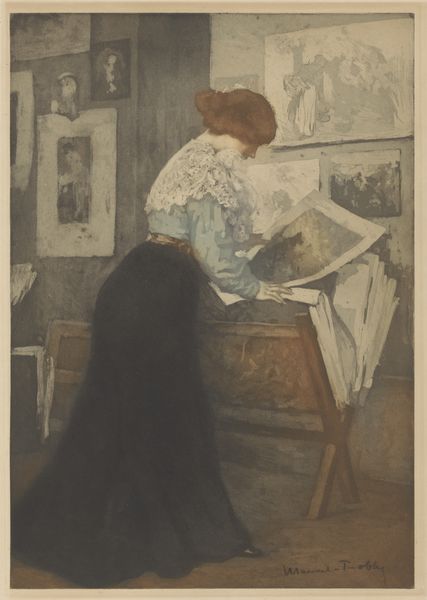
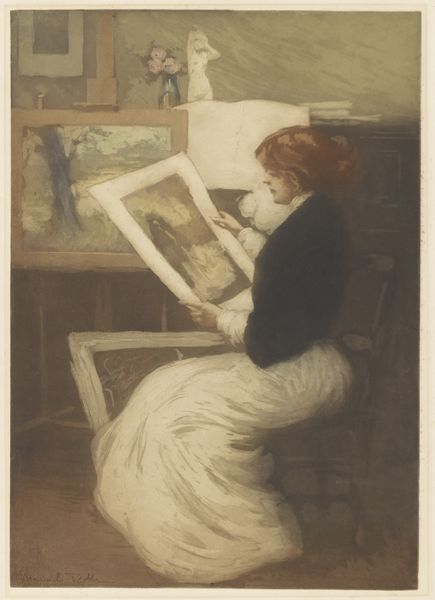
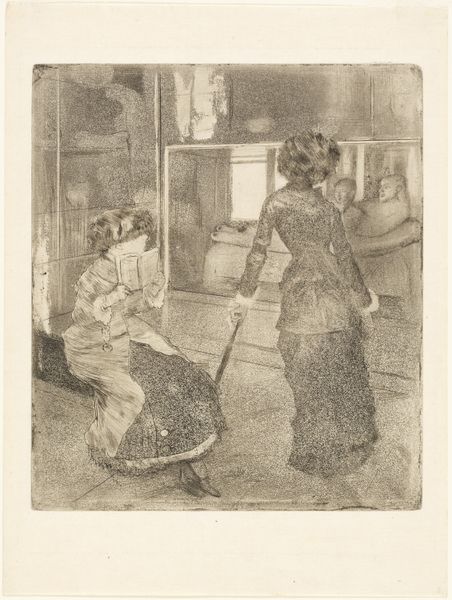
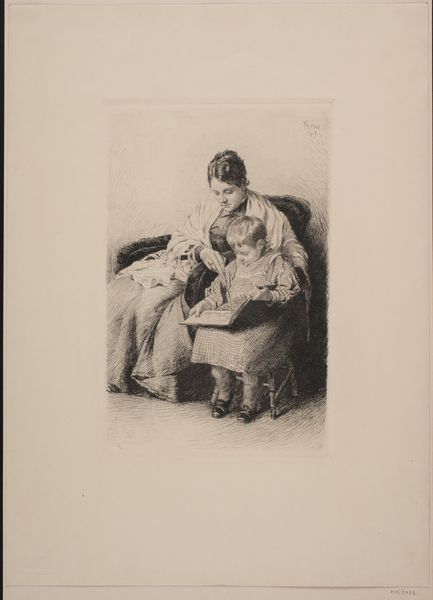
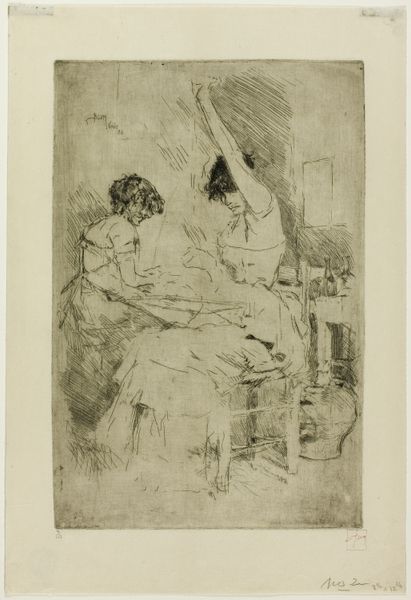
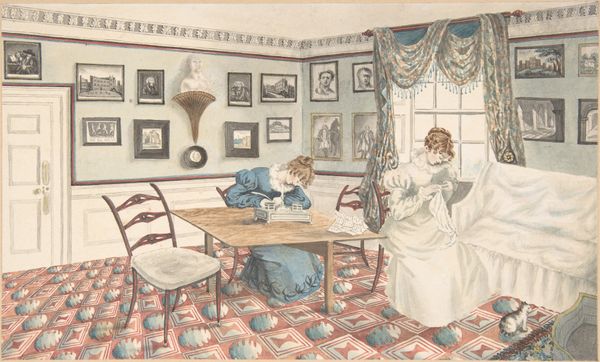
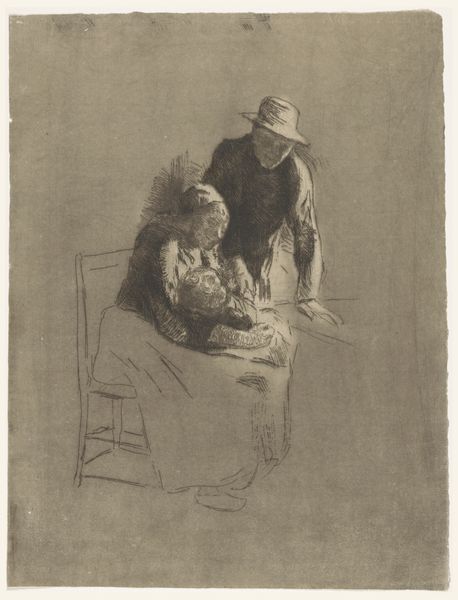
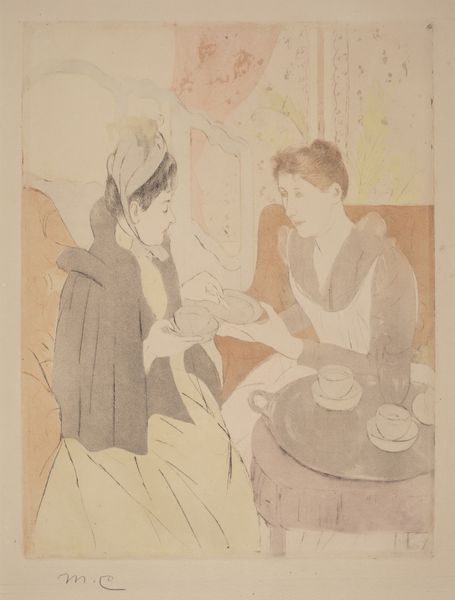
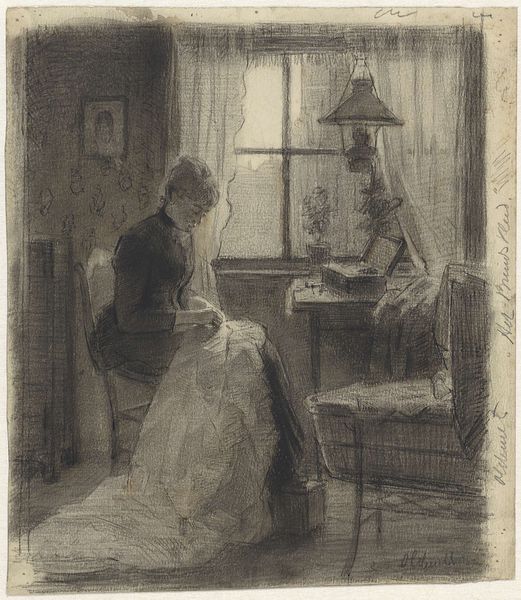
Curator: This etching, titled "Two Women looking at Prints," was created in 1898 by Manuel Robbe. The artist’s skill with the print medium is striking. Editor: I immediately notice the intimacy captured here. The composition directs our gaze toward the women; we're almost invited into their private space of art appreciation. Curator: Absolutely, and understanding the art market of that period provides further insights. Prints were becoming increasingly accessible, a far cry from paintings for the wealthy. Pieces like this reflected the era’s shifting artistic landscape. Editor: You’re right. It suggests a burgeoning middle class with more access to art and cultural experiences, a shift toward democratizing art consumption for women particularly. Curator: The arrangement itself evokes a shared cultural activity. Consider also Robbe's use of color in the print; how does it evoke a specific emotional state? Editor: I would describe it as muted and subdued, conveying calmness and contemplation. The soft hues reflect the delicate nature of art and create an inclusive visual dialogue for art lovers. Curator: We must recognize how women often faced exclusion from official art circles. Examining prints like these through a gendered lens allows us to unearth hidden histories and voices, providing new ways of challenging historical narratives. Editor: Indeed, seeing these women immersed in an artistic environment is a silent claim for representation and participation. What initially seems like a simple genre painting subtly challenges societal norms. Curator: This artwork serves as an important time capsule—a reminder of an era of cultural and artistic transition—making art accessible for the public to experience. Editor: Agreed. This unassuming print reveals larger truths about access, class, and the quiet revolutions brewing in the world of art and culture.
Comments
No comments
Be the first to comment and join the conversation on the ultimate creative platform.
 React
React Comment