
Curatorial notes
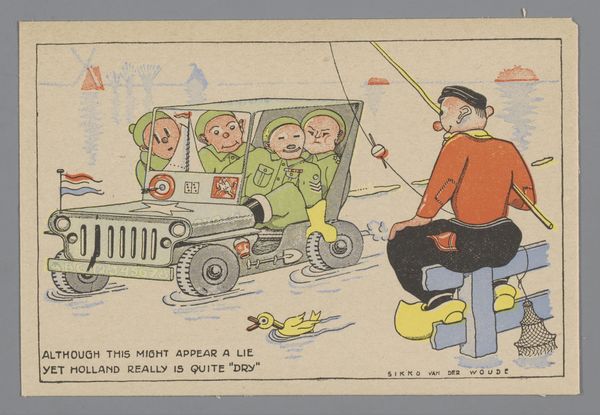
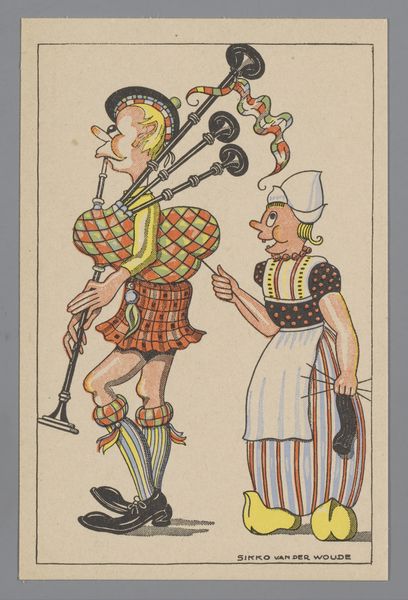
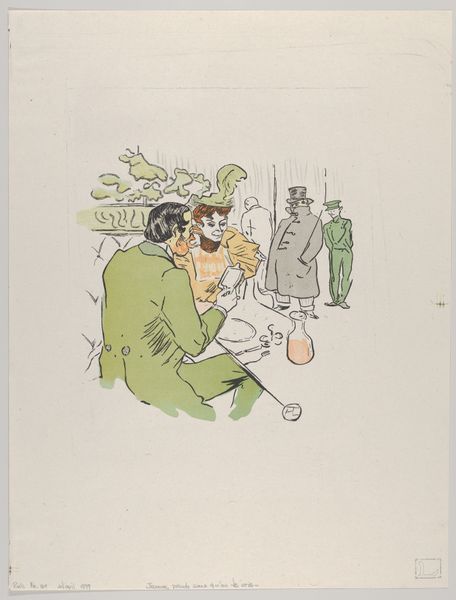
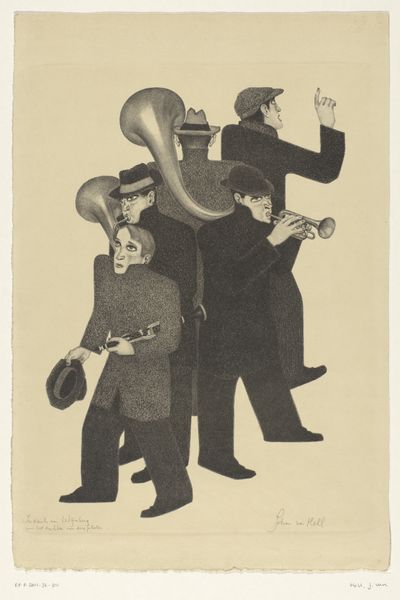
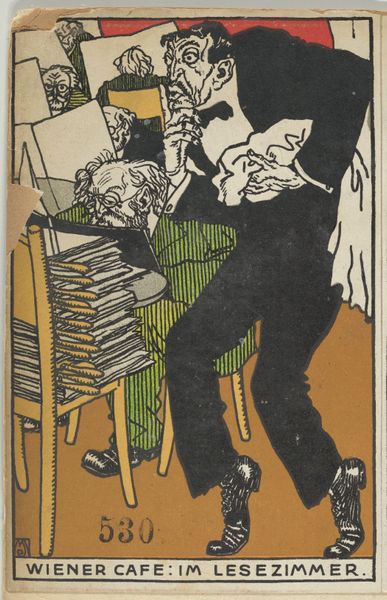
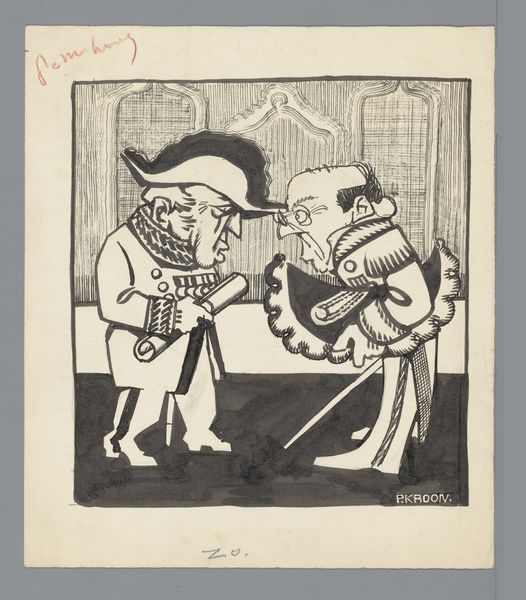
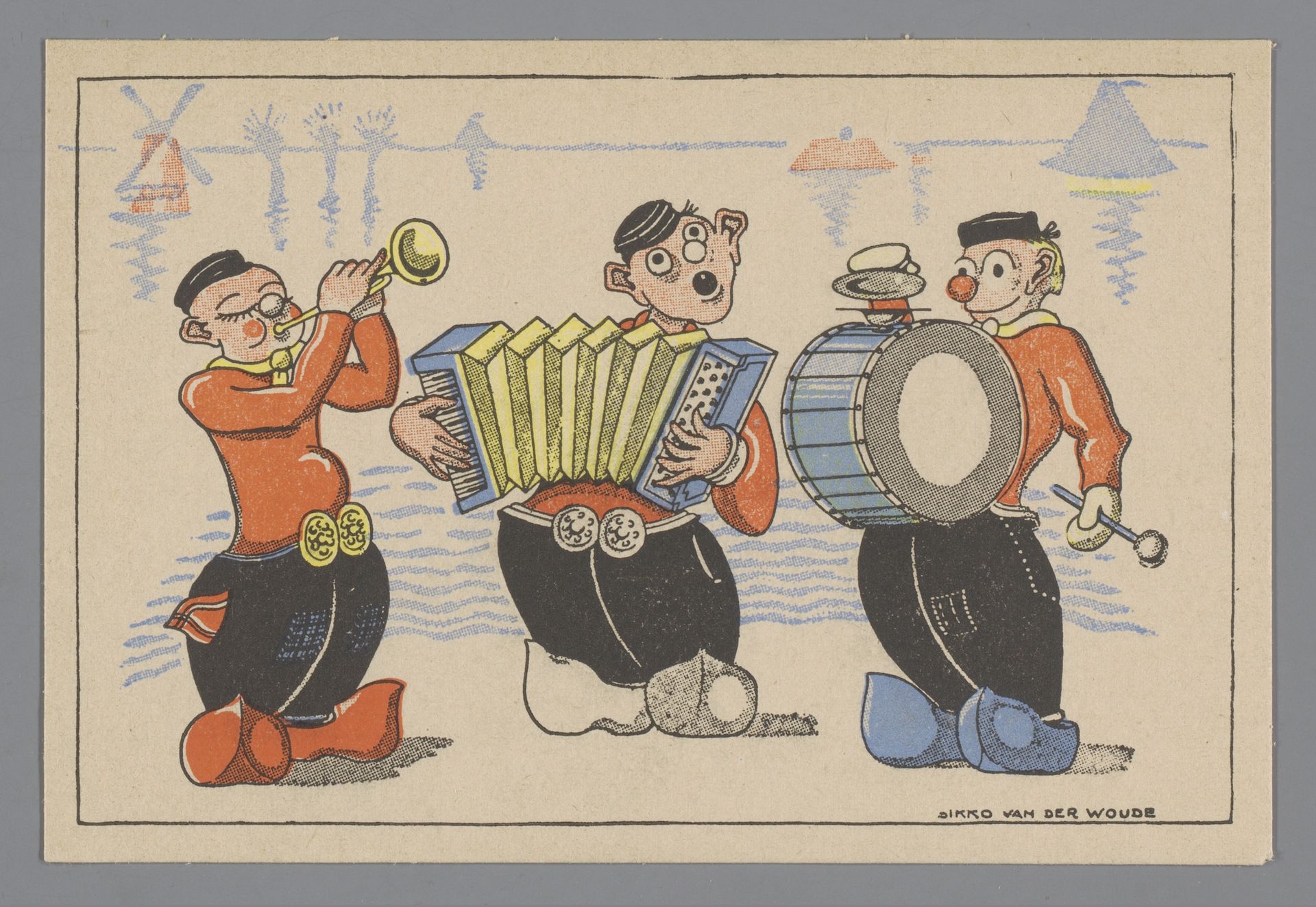
Editor: This is "Picture post card" by Sikko van der Woude, from 1945. It's a print on paper depicting three figures playing musical instruments, very cartoonish in style. There's something both charming and slightly unsettling about it. How do you interpret this work? Curator: It's interesting you find it unsettling. On the surface, it's a lighthearted caricature of Dutch folk musicians, playing trumpet, accordion, and drum against a stylized backdrop of windmills and water. But remember, this was made in 1945, the end of World War II. Considering that historical context, the seemingly innocent scene might be viewed as a form of cultural preservation or even resistance. Editor: Resistance, how so? Curator: Folk art often serves as a powerful symbol of national identity, especially during times of occupation or upheaval. In this case, these musicians could be seen as representing the enduring spirit of the Dutch people, a visual assertion of their cultural heritage against attempts at suppression. The artist uses a caricature, possibly making fun of the oppressors while preserving cultural identity. Editor: That’s a fascinating perspective. I was focusing on the almost surreal quality of the figures, especially the central musician’s wide-eyed expression, but viewing it through a political lens completely shifts the meaning. Did this artist have any particular interest in activism? Curator: While I wouldn't characterize Van der Woude solely as an activist, his work frequently engages with themes of Dutch identity and community, even if subtly. It is critical to examine how art is created in response to cultural norms or social/political conflict. Do you think the print's accessibility as a postcard factors into this interpretation? Editor: Absolutely. The fact that it's a postcard implies it was meant to circulate widely, spreading its message – whether consciously or unconsciously – to a broad audience. I didn't initially realize the subtle depth to this seemingly simple print. Curator: Exactly. This artwork reminds us that even seemingly lighthearted imagery can carry significant weight when considered within its historical and social context.