About this artwork
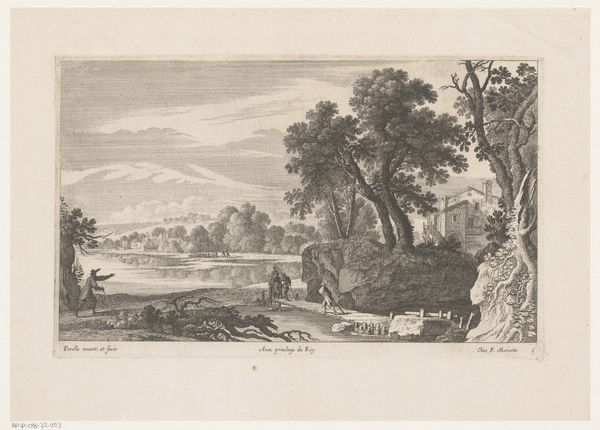
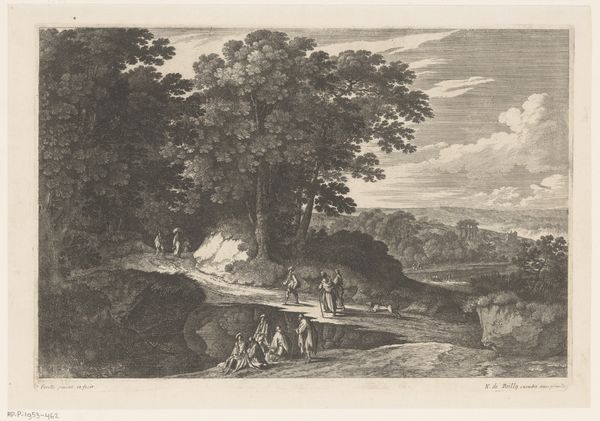
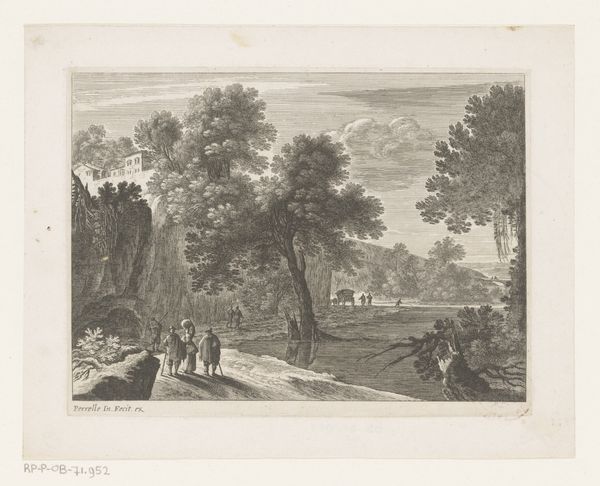
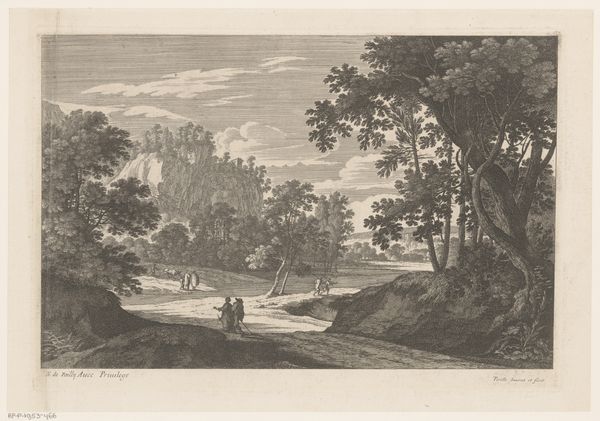
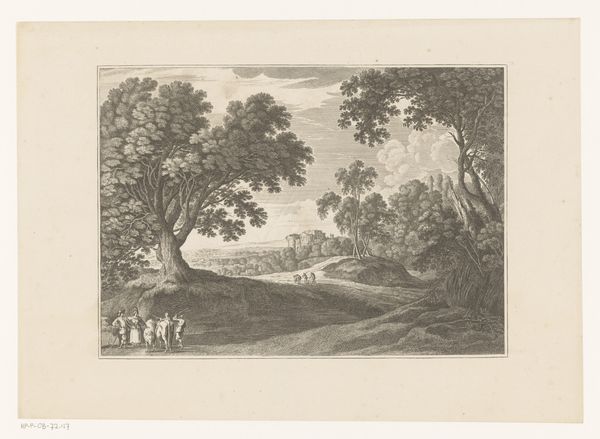
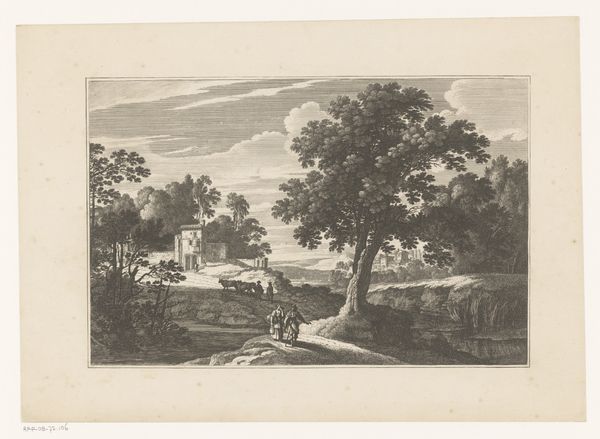
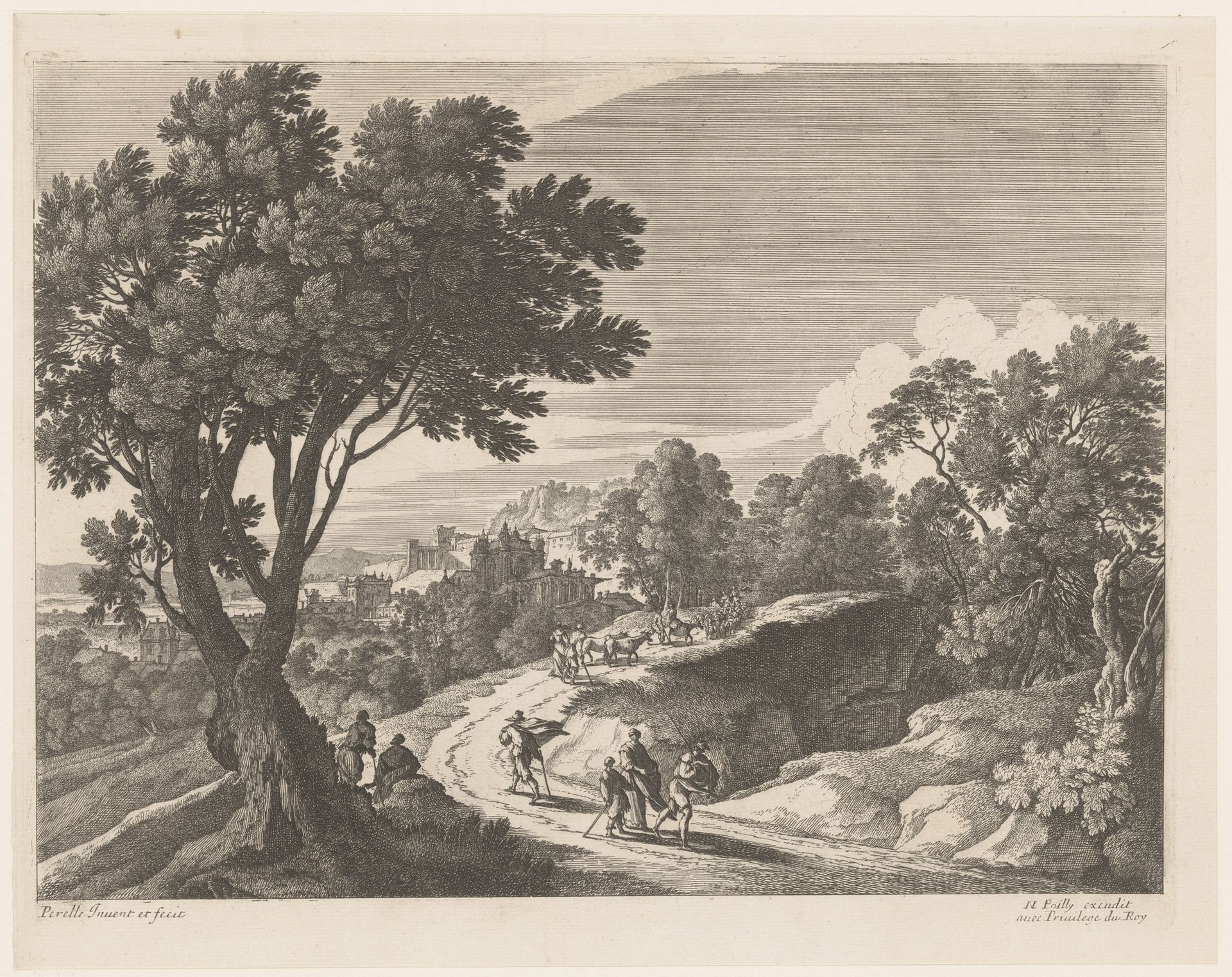
Nicolas Perelle created this print titled, *Landweg buiten een stad met figuren en vee*, which translates to, *Country road outside a city with figures and cattle*, sometime in the late 17th century. As the son and brother of artists, Perelle situated himself within a family legacy of printmaking during a time of significant social and political upheaval in France. In the 17th century France was rife with social inequality. The monarchy and aristocracy enjoyed lives of luxury, while the majority of the population, especially rural peasantry, struggled with poverty and hardship. Here, Perelle presents us with a scene that seemingly romanticizes rural life. But, who are these figures moving along the road? Are they merchants, peasants, or perhaps even refugees displaced by conflict? The ambiguity allows us to reflect on the lives of ordinary people, whose stories often go untold in grand historical narratives. It invites us to consider the complex relationship between idealized landscapes and the realities of the era.
Landweg buiten een stad met figuren en vee
1636 - 1696

Nicolas Perelle
1631 - 1695Location
RijksmuseumArtwork details
- Medium
- print, engraving
- Dimensions
- height 248 mm, width 326 mm
- Location
- Rijksmuseum
- Copyright
- Rijks Museum: Open Domain
Tags
Comments
Share your thoughts
About this artwork
Nicolas Perelle created this print titled, *Landweg buiten een stad met figuren en vee*, which translates to, *Country road outside a city with figures and cattle*, sometime in the late 17th century. As the son and brother of artists, Perelle situated himself within a family legacy of printmaking during a time of significant social and political upheaval in France. In the 17th century France was rife with social inequality. The monarchy and aristocracy enjoyed lives of luxury, while the majority of the population, especially rural peasantry, struggled with poverty and hardship. Here, Perelle presents us with a scene that seemingly romanticizes rural life. But, who are these figures moving along the road? Are they merchants, peasants, or perhaps even refugees displaced by conflict? The ambiguity allows us to reflect on the lives of ordinary people, whose stories often go untold in grand historical narratives. It invites us to consider the complex relationship between idealized landscapes and the realities of the era.
Comments
Share your thoughts