About this artwork
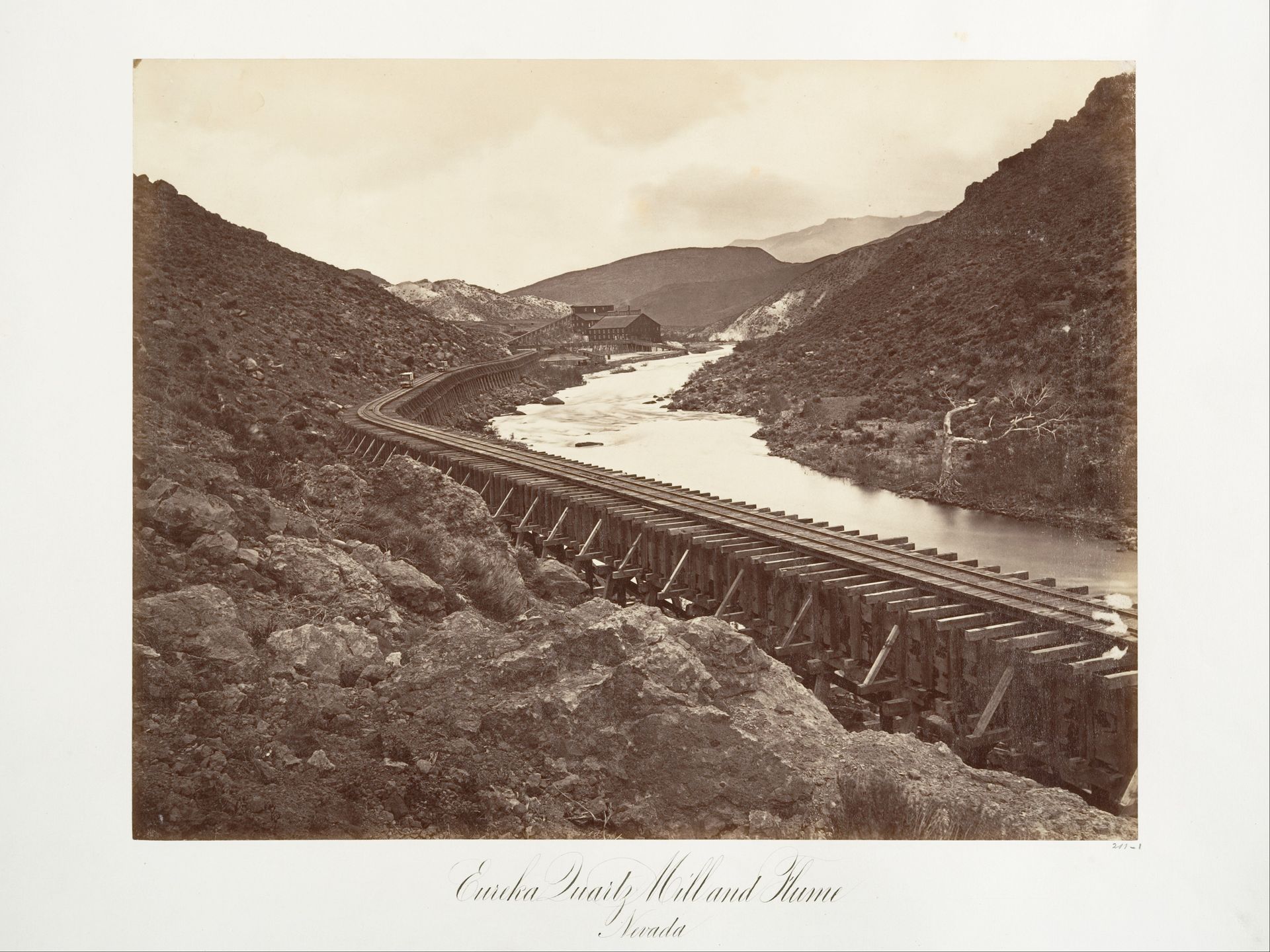
Carleton Watkins made this photograph of the Eureka Quartz Mill and Flume in Nevada using the wet plate collodion process, a technique that demanded both artistry and technical skill. The sepia tones and sharp detail highlight the contrast between the raw, rocky landscape and the constructed wooden flume. Note how the flume snakes through the valley, an insistent man-made form against the wildness of nature. This was no simple build. The timber was likely harvested locally, sawn, and meticulously assembled by skilled laborers. Watkins’ photograph isn’t just a landscape; it’s a document of resource extraction. This mill and flume were part of the vast industry transforming the West, driven by dreams of gold and quick profit. The image invites us to reflect on the labor, materials, and the environmental impact involved. It's a reminder that every image, like every object, carries a history of making and a set of social consequences.
Eureka Quartz Mill and Flume, Nevada 1875

Carleton E. Watkins
1829 - 1916
The Metropolitan Museum of Art
Metropolitan Museum of Art, New York, NYArtwork details
- Medium
- print, photography, albumen-print
- Location
- Metropolitan Museum of Art, New York, NY
- Copyright
- Public Domain
Tags
landscape
photography
albumen-print
Comments
No comments
About this artwork
Carleton Watkins made this photograph of the Eureka Quartz Mill and Flume in Nevada using the wet plate collodion process, a technique that demanded both artistry and technical skill. The sepia tones and sharp detail highlight the contrast between the raw, rocky landscape and the constructed wooden flume. Note how the flume snakes through the valley, an insistent man-made form against the wildness of nature. This was no simple build. The timber was likely harvested locally, sawn, and meticulously assembled by skilled laborers. Watkins’ photograph isn’t just a landscape; it’s a document of resource extraction. This mill and flume were part of the vast industry transforming the West, driven by dreams of gold and quick profit. The image invites us to reflect on the labor, materials, and the environmental impact involved. It's a reminder that every image, like every object, carries a history of making and a set of social consequences.
Comments
No comments