drawing, charcoal
#
drawing
#
landscape
#
charcoal drawing
#
charcoal art
#
charcoal
#
realism
Dimensions: 13 x 17 3/8 in. (33 x 44.1 cm)
Copyright: Public Domain
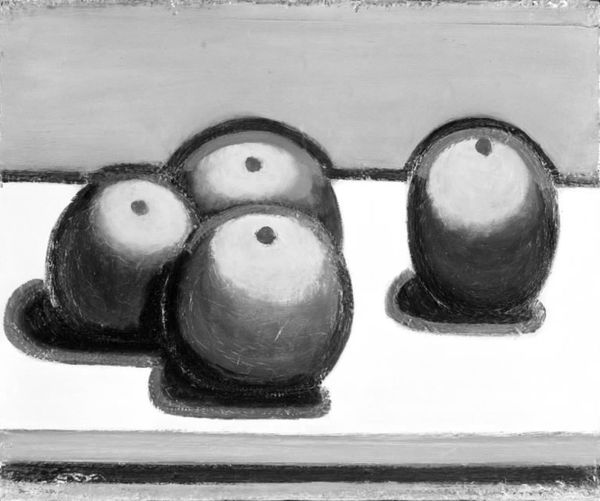
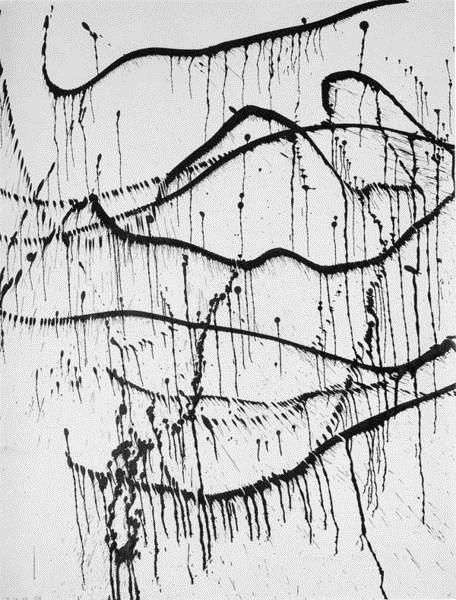
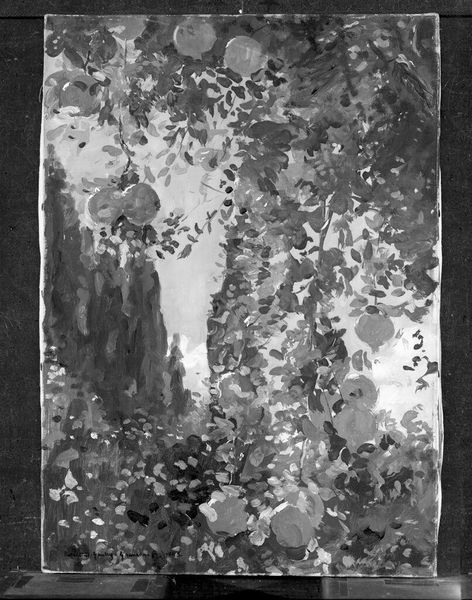
Curator: Today we are looking at “Apples” by Gustave Courbet, estimated to be from between 1850 and 1899. This charcoal drawing currently resides in the Metropolitan Museum of Art. Editor: It's interesting how such a simple subject can feel so substantial. The texture of the charcoal really makes the apples appear weighty, almost monumental, despite being just…apples. What is particularly striking to you in this piece? Curator: Consider how Courbet employed charcoal. Note the deep, velvety blacks contrasted against the almost blinding whites. This strong chiaroscuro, this contrast, serves to define the forms and give them volume. Further, observe the hatching and cross-hatching techniques. Where do you see the darkest concentrations of charcoal and how does that affect your reading of the form? Editor: Definitely at the back, to define the shape against what appears to be the wall. Curator: Precisely. Courbet manipulates value to create depth, placing the apples firmly within the picture plane, whilst also calling attention to the picture's materiality itself. It is charcoal on paper, yet he creates the illusion of volume. What philosophical concepts could relate to what the painting is showing? Editor: Maybe the essence of something, what it is made of, versus what it appears to be to the viewer. So how it is a balance between the artist's hand and the raw medium. Curator: Well put. And that push and pull is precisely where much of the dynamism lies. It exists, paradoxically, on a very quiet and still plane. This exercise has reaffirmed the significance of examining the interplay between form and content. The inherent qualities of the medium dictates so much! Editor: Absolutely, I now perceive this art work very differently, more clearly than I initially had. It encourages me to look beyond representation.
Comments
No comments
Be the first to comment and join the conversation on the ultimate creative platform.
 Collect
 React
React Comment
More like this