1822
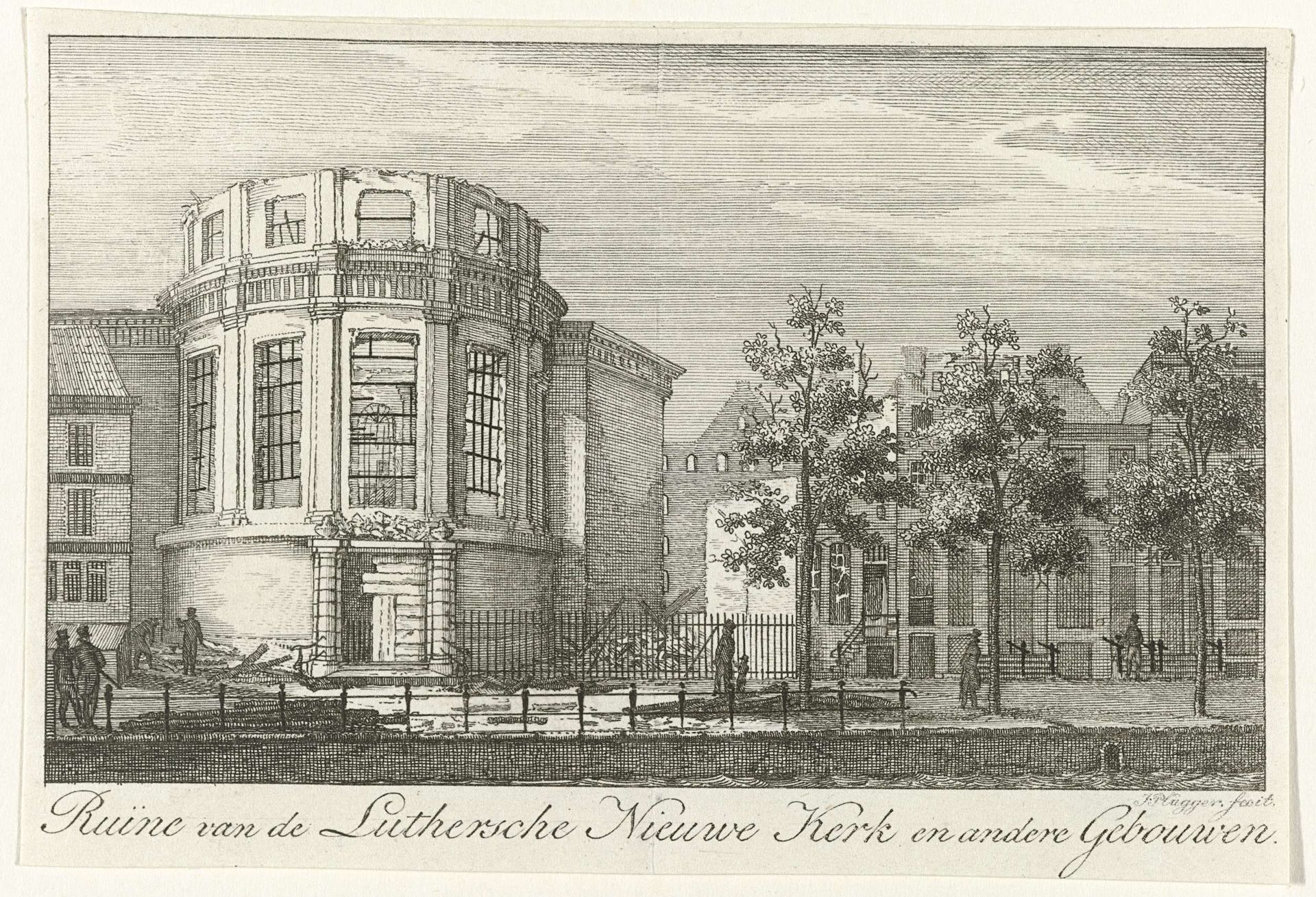
Ruïne van de Nieuwe Lutherse Kerk te Amsterdam, na de brand van 1822

Jacob Plügger
1795 - 1871Location
RijksmuseumListen to curator's interpretation
Curatorial notes
Curator: This evocative drawing, dating back to 1822, depicts the Ruïne van de Nieuwe Lutherse Kerk te Amsterdam, na de brand van 1822. The artist, Jacob Plügger, captured this cityscape using ink and engraving techniques, resulting in a detailed print. Editor: There's such a melancholic feel to it. The skeletal remains of the church set against the somewhat placid cityscape evokes a strong sense of loss and resilience, simultaneously. It almost looks theatrical, like a stage set. Curator: Indeed, the event itself likely attracted significant attention. The New Lutheran Church, reduced to ruins, serves as a very public, and politically charged, spectacle. Imagine the discussions this image ignited – debates about faith, the city’s vulnerability, the very notion of permanence. Prints like these helped disseminate news but also shaped public opinion regarding disaster and recovery. Editor: I see the ravaged church as a potent symbol, really. Fire has always held multifaceted symbolic weight. Its destructive force is evident, but within that ruin, one might also discern the potential for rebirth, purification through trial. The surviving architecture retains a kind of tragic grandeur, subtly questioning mortality. Curator: The choice of perspective matters. Plügger frames the ruins against the more intact buildings across the canal, creating a dialogue between destruction and continuity. This speaks volumes about the city’s response—acknowledging loss while highlighting enduring structures, both physical and societal. Editor: And look at the figures populating the scene—mere silhouettes going about their daily routines, seemingly unfazed by the desolation surrounding them. Or are they? The print masterfully uses them as visual anchors, subtly asking us how communities grapple with trauma and find ways to move forward amid the ruins. It really asks what will remain after us. Curator: It’s easy to focus on the visual impact, but it’s worth remembering that the materiality itself—the print, the ink—made this tragedy reproducible and widely accessible. It wasn’t just about witnessing the ruins; it was about participating in the shared memory of the event through its dissemination and discussion. Editor: This exploration really made the symbolic dialogue between destruction and the promise of rebirth more tangible. And reflecting on Plügger's cityscape in ink made me wonder: What symbols from our current times will endure?