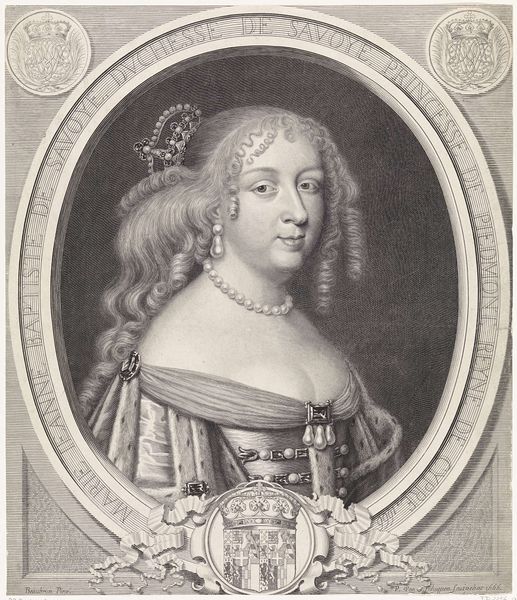
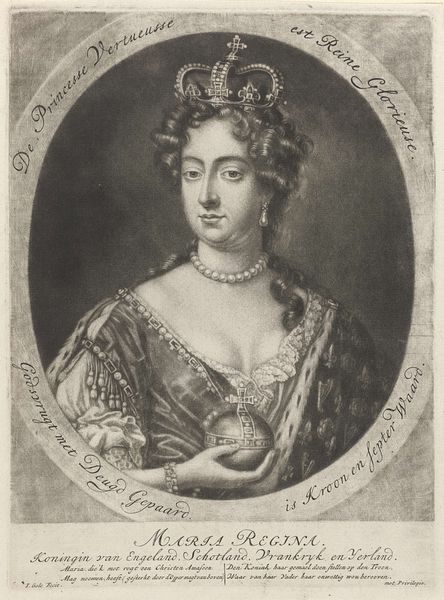
Portret van Anne Marie Louise d'Orléans, hertogin van Montpensier 1666

pietervanschuppen
Rijksmuseum
print, engraving
portrait
baroque
framed image
line
engraving
Dimensions: height 335 mm, width 262 mm
Copyright: Rijks Museum: Open Domain
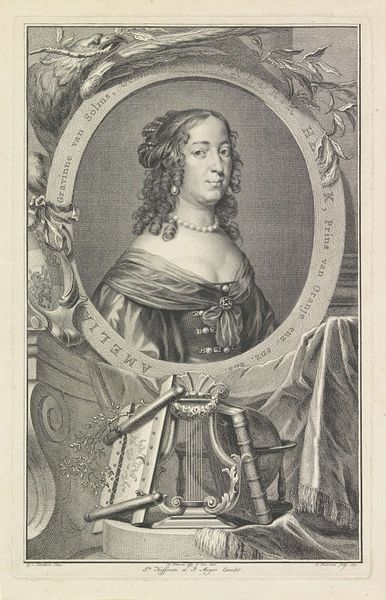
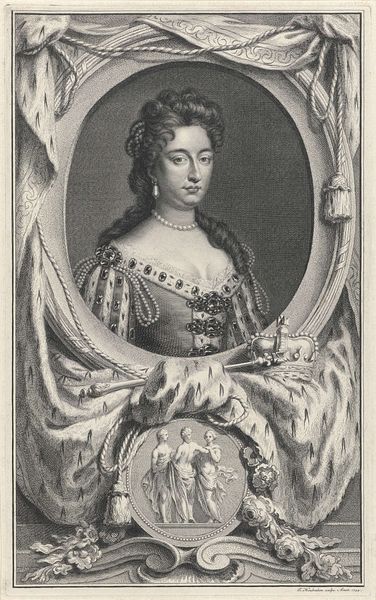
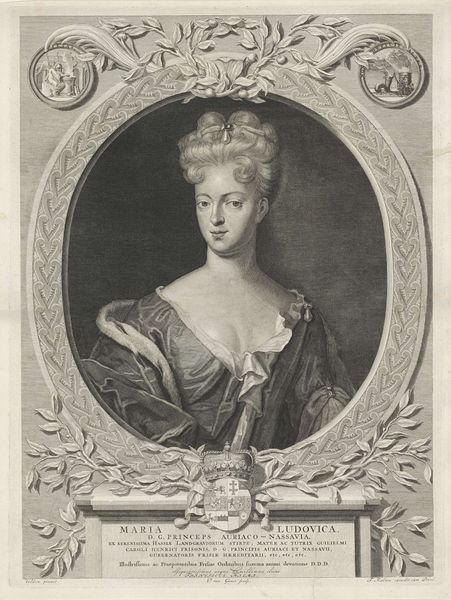
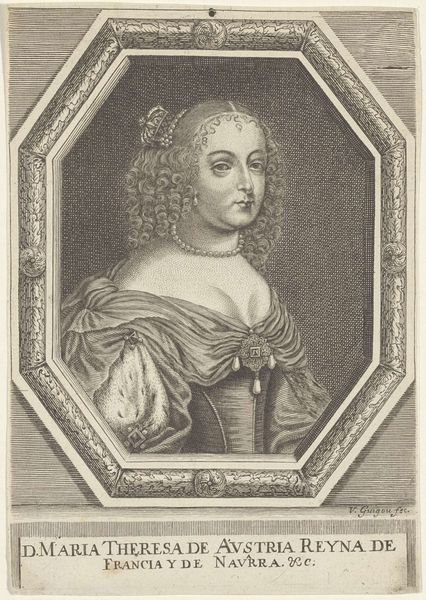
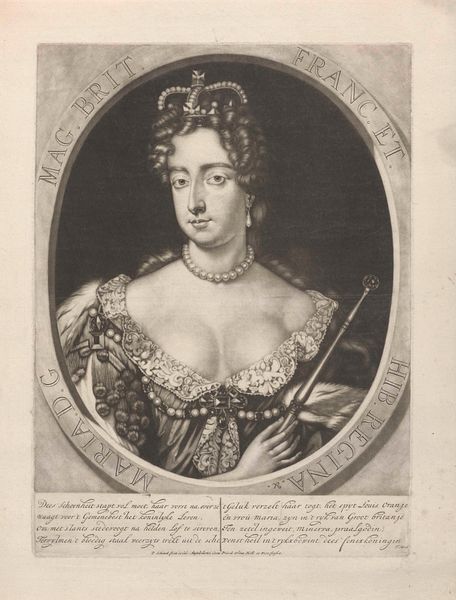
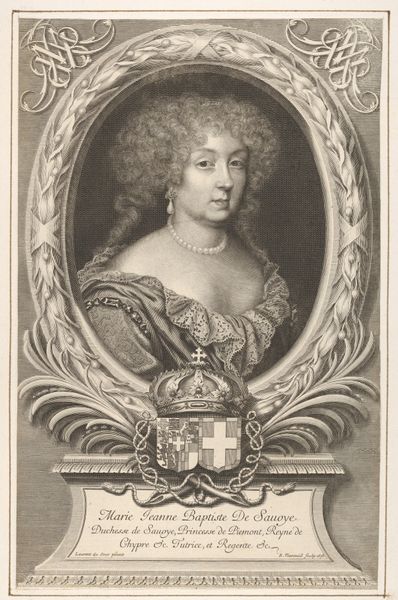
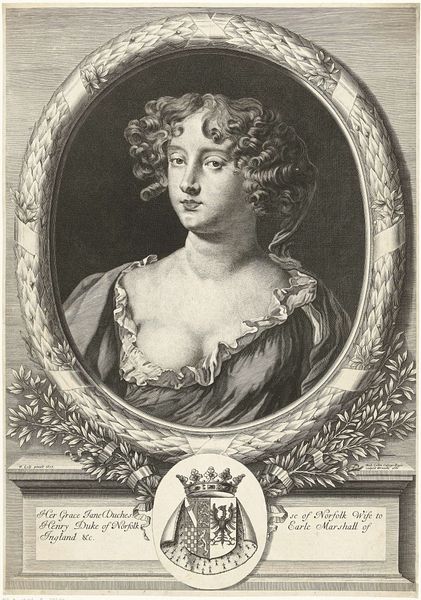
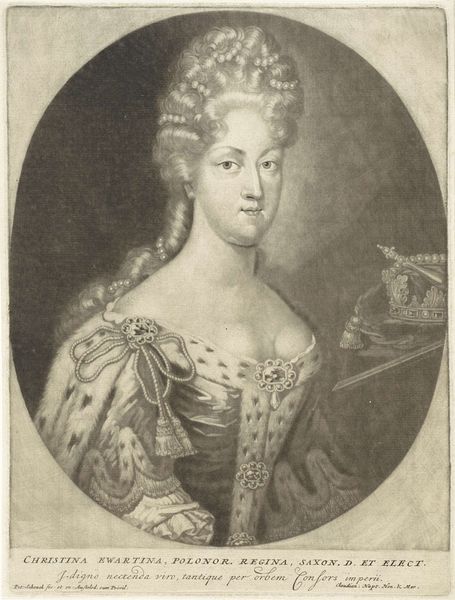
Curator: Looking at this image, I immediately feel the weight of 17th-century French aristocracy. Editor: Indeed. Here we have a print from 1666, attributed to Pieter van Schuppen after G. J. Tassaert. It's titled, "Portrait of Anne Marie Louise d'Orléans, Duchess of Montpensier.” Curator: Her gaze is very direct, almost challenging. The baroque flourishes give it an air of theatricality, but there's a coolness in her eyes, a sense of calculated power. Editor: Let's unpack that. This image exists within a broader framework of royal portraiture where representations were tools for establishing status, dynastic continuity, and shaping public image. Consider how the print medium itself allows for widespread dissemination. Curator: Exactly. It is the way visual statements cement power. And a critical lens tells me her clothing and ornamentation become signifiers of wealth and privilege during a period of immense social stratification. What does it mean to have access and control over visual culture? Editor: Furthermore, Van Schuppen was a key figure in Parisian printmaking circles. The stylistic choices--the delicate lines of the engraving, the composition that highlights the opulence, it all served a function for communicating her political positioning in the court of the Sun King. Curator: It goes beyond simple representation, right? I mean, look at the ornate frame surrounding the portrait – it’s another layer that emphasizes her separation and elevation from society’s less fortunate. I'm considering who and what she protects. Editor: So it's less about accurate representation and more about constructing a particular kind of aristocratic ideal and leveraging the Baroque artistic tendencies into a communication of soft power. Curator: Right, considering who this image might have served – the elites who benefited from the status quo and what role gender and sexuality may have had in these visual choices of who to empower and elevate. Editor: That makes me look at this print in a new light. There’s so much more happening here than a simple portrait. Curator: It always comes down to what these portraits communicated, how they worked in their context and who could be influenced. Thanks for joining me.
Comments
No comments
Be the first to comment and join the conversation on the ultimate creative platform.
 React
React Comment