painting, oil-paint
#
portrait
#
self-portrait
#
baroque
#
painting
#
oil-paint
#
oil painting
#
genre-painting
Dimensions: height 17 cm, width 12.5 cm, depth 4.1 cm
Copyright: Rijks Museum: Open Domain
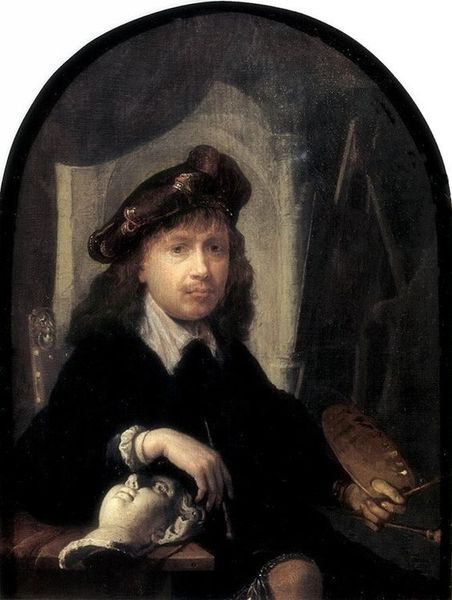
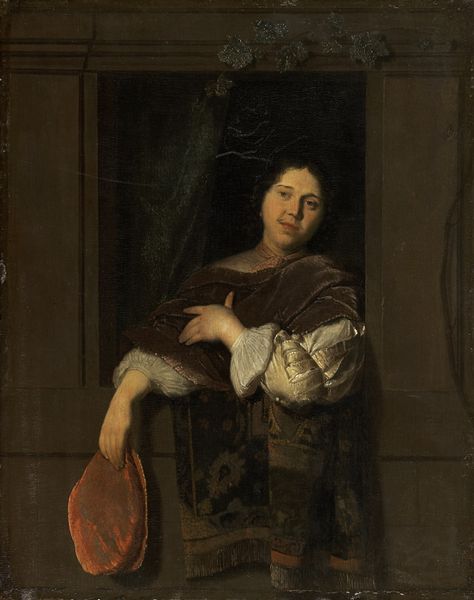
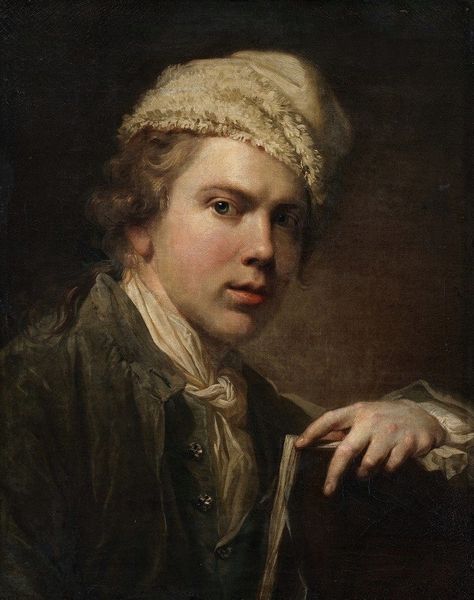
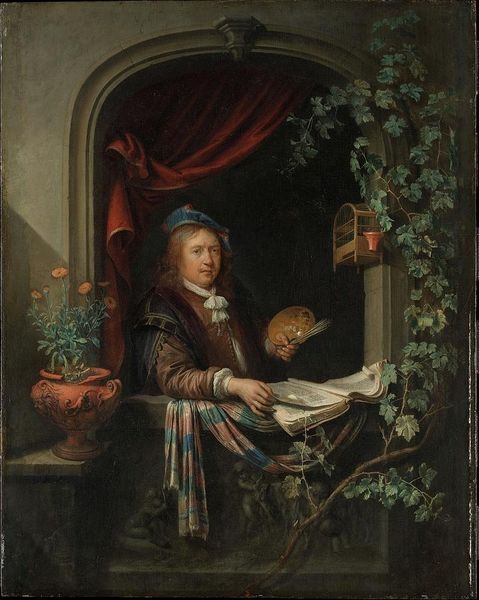
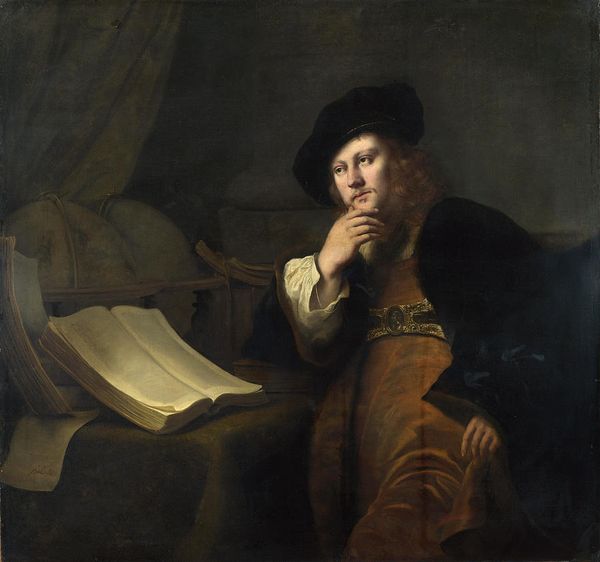
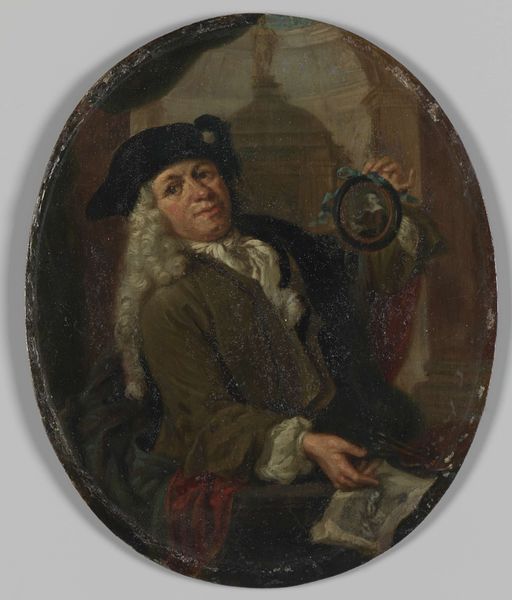
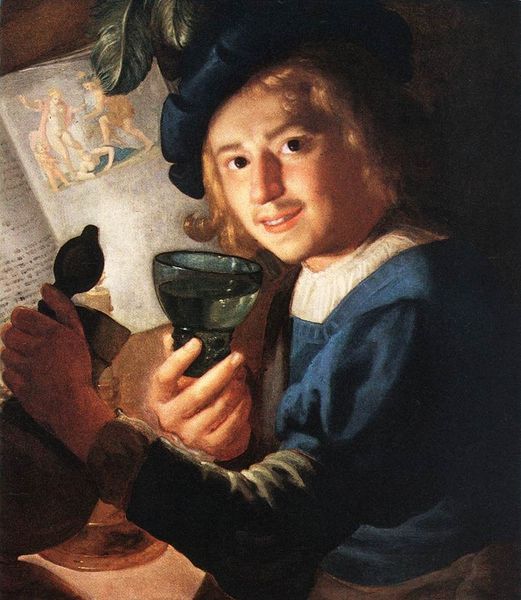
Curator: Adriaen van der Werff’s “A young Painter,” dating from around 1670 to 1690, offers us an intimate glimpse into the world of an artist. Currently residing here at the Rijksmuseum, it presents a self-aware depiction, wouldn't you agree? Editor: Indeed! My first impression is one of striking self-assurance. The play of light, the direct gaze... it conveys a real sense of creative confidence. I'm also immediately drawn to the texture—the lush velvet robe, the bristles of the brushes—a feast for the eyes, really. Curator: It is certainly rich in materiality. The artist's choice of oil paint is crucial; it allows him to depict the textures and light with remarkable fidelity. And considering the social context of the late 17th century, such garments and artist tools were symbols of craftmanship and social standing, indicating a deliberate construction of identity and labor. Editor: I can see your point about the materials serving social functions here. But to my eyes, there’s a delightful tension in the composition, a semiotic dance, if you will. The subject’s gaze meets ours, his tools on display, and this little artwork he displays beside him as well—it is quite the self-aware expression. It's a layered visual argument about what an artist *is.* Curator: An argument presented through carefully crafted materials, reflecting the economy and perception of artistic labor in the Dutch Golden Age. Did you know the artist's choice of the smaller framed scene features figures is quite an ode to classicism for his patron base? It goes back to what society desired the artist and his role to be within a social and societal framework. Editor: Fascinating! It underscores how art making, the process, even, could serve a vital social purpose as cultural currency during that time. Now looking at the semiotics in the Baroque tradition of the era and the interplay between depth and surface—it invites the viewer to engage with notions of illusionism. The composition guides our eye from the sharp lines to the muted, warm hues—quite masterfully achieved! Curator: And what is interesting here too is Van der Werff’s understanding and play within artistic materials like paint, and canvas allowed him entry into affluent social circles, so this self-portrait served not just to reflect the means, methods, and perception, but as access, literally to certain stratospheres in society. Editor: This conversation truly changes how I will appreciate this work and see how a painter chooses to place themselves in society through canvas and gaze!
Comments
No comments
Be the first to comment and join the conversation on the ultimate creative platform.
 Collect
 React
React Comment
More like this