Dimensions: support: 445 x 356 mm
Copyright: CC-BY-NC-ND 4.0 DEED, Photo: Tate
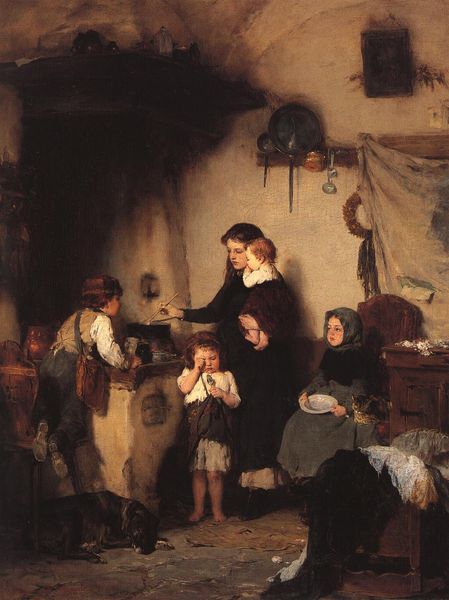
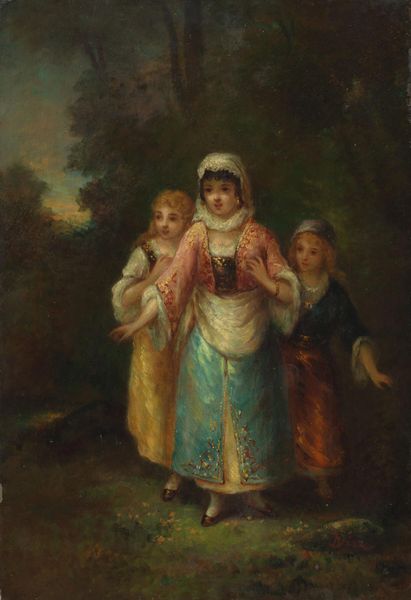
Curator: William Frederick Witherington’s "The Hop Garland," from the Tate Collections, offers a glimpse into a past time, measuring about 445 by 356 mm. Editor: It feels so idyllic, doesn’t it? The light is soft, and there's such a sense of familial connection. Curator: Absolutely. Hop garlands were common decorations, but here they become a symbol. The garland, typically associated with harvest, hints at growth, prosperity, and even celebration. Note the careful arrangement of the hops by the girl, almost ritualistic. Editor: It's fascinating how the scene is constructed. Witherington uses the act of adornment as a marker of social bonds, the garland acting as a symbol of childhood innocence amidst the backdrop of agricultural life. Curator: Indeed, and the hop, historically tied to brewing, also carries a subtle undercurrent of communal activity and industry. These symbols evoke a nostalgic sentimentality. Editor: I see it as a commentary on society, too, where nature and childhood intertwine, creating a visual narrative that speaks to the value of simple, rural life. Curator: A gentle reminder, perhaps, of simpler times evoked through enduring symbols. Editor: Precisely. A fleeting image, but resonating with layers of meaning.
Comments

tate 11 months ago
⋮
http://www.tate.org.uk/art/artworks/witherington-the-hop-garland-n00421


Join the conversation
Join millions of artists and users on Artera today and experience the ultimate creative platform.
tate 11 months ago
⋮
During the eighteenth and nineteenth centuries the hop gardens of Kent, Sussex and Surrey provided artists with a rich source of subject matter. The picking season, when many families migrated from London for paid employment and fresh air, was a modest English equivalent of the more exotic French and Italian grape harvest or vintage. Witherington was a popular painter of scenes from rural life. He painted several works inspired by the picturesque sights of hop-pickers at work and at play. Here he shows young workers at rest while they garland a younger companion with the yellow hop flowers. A writer in the 'Art Journal' thought this was Witherington's best picture. Gallery label, August 2004
 Collect
More like this