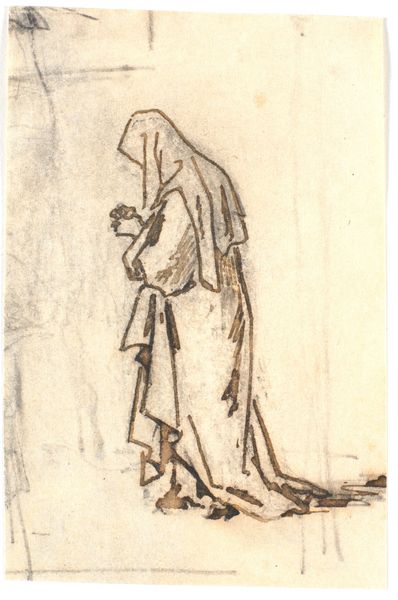
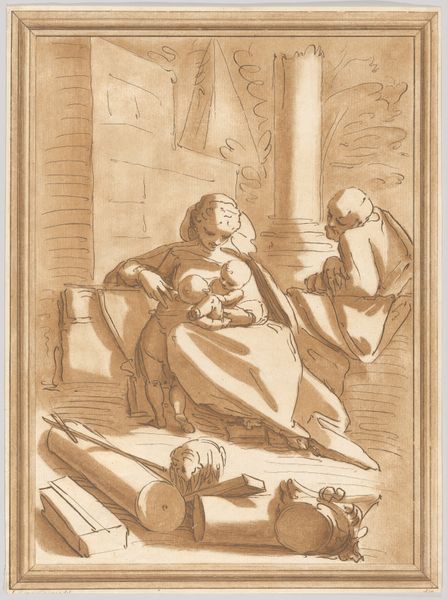
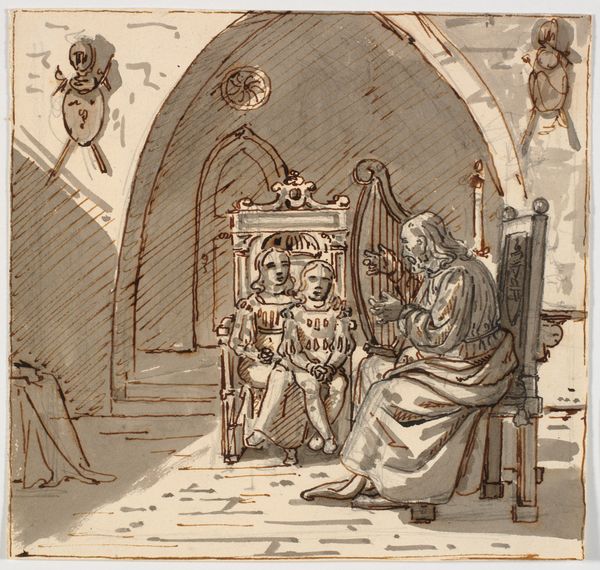
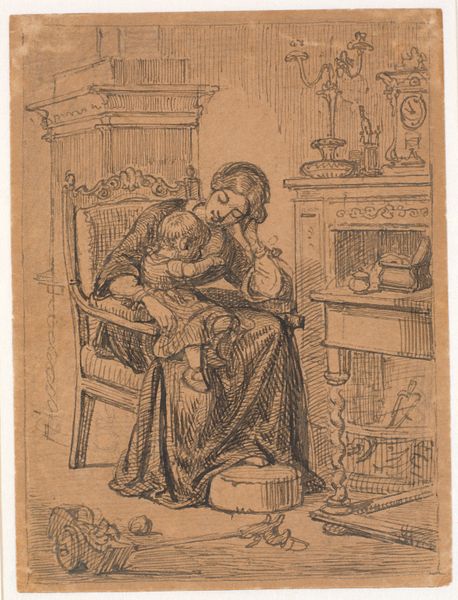
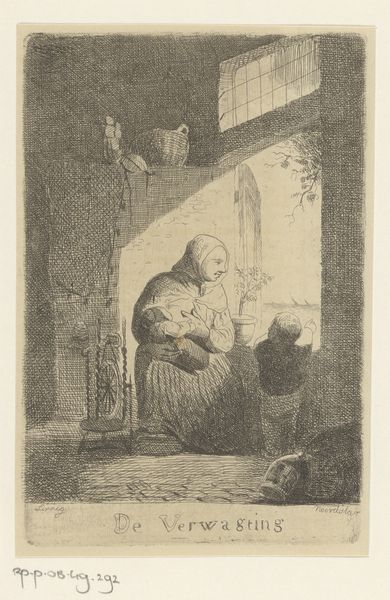
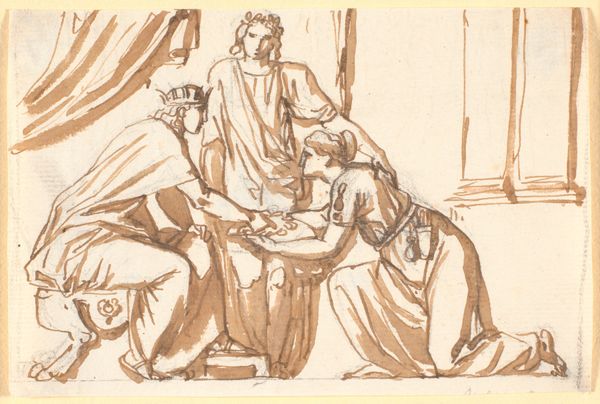
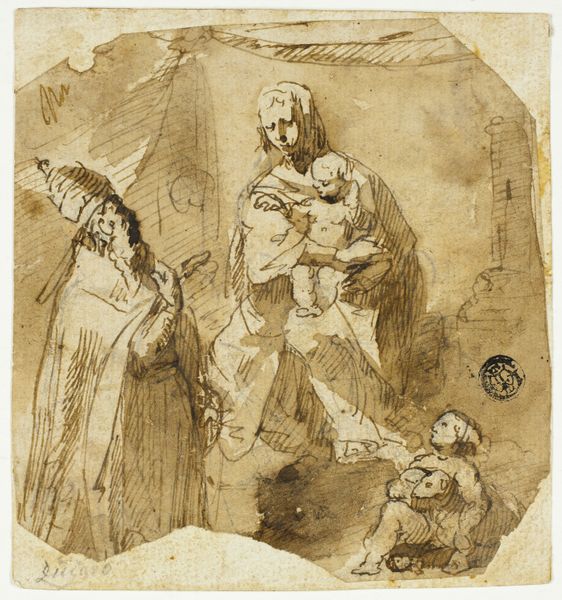
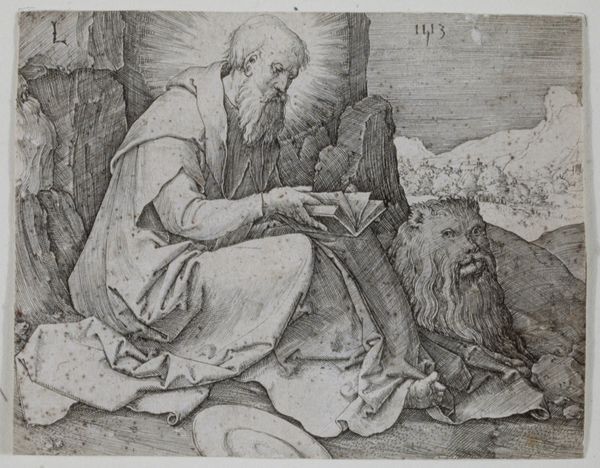
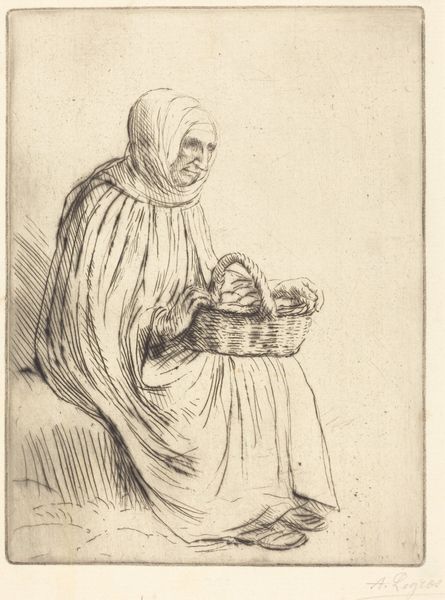
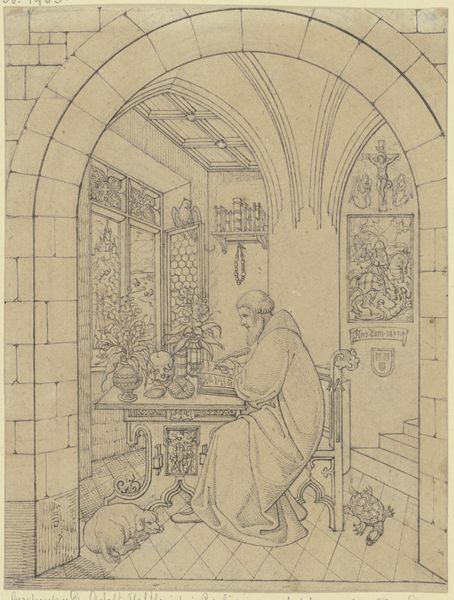
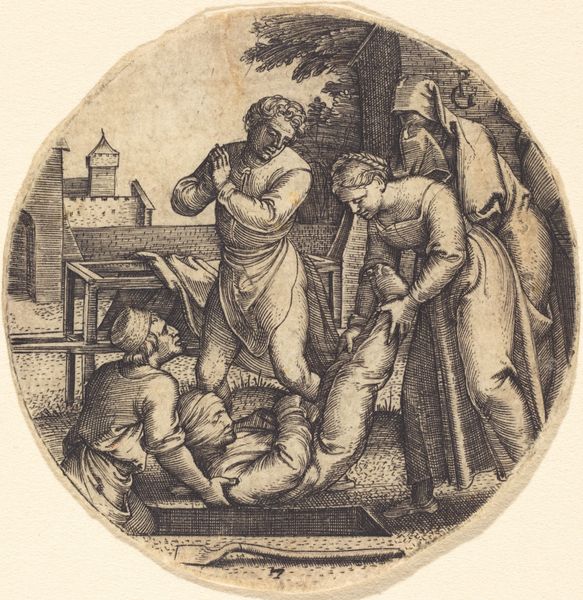
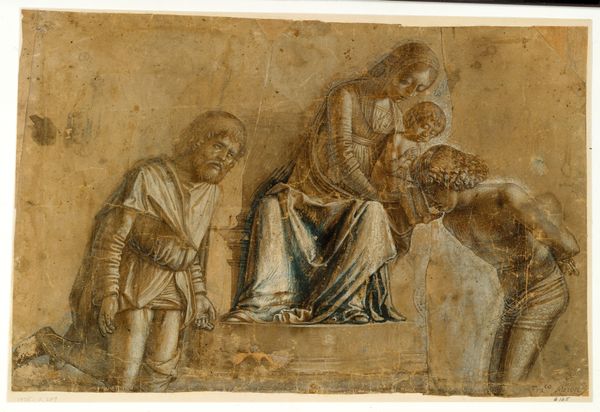
Illustration til "Halvhundrede Fabler for Børn" af Hey 1834
0:00
0:00


drawing, print, pen, engraving
#
drawing
#
medieval
#
narrative-art
# print
#
figuration
#
line
#
pen
#
genre-painting
#
engraving
#
realism
Dimensions: 87 mm (height) x 118 mm (width) (bladmaal)
Editor: What a remarkably delicate rendering of everyday life. Curator: Indeed. This is an illustration, precisely an engraving and pen drawing on paper, created by Martinus Rørbye in 1834. It served as an illustration for "Halvhundrede Fabler for Børn" by Hey. Editor: I am drawn to the immediate impression of this image. The composition emphasizes the quotidian—a woman seemingly interrupted in her chores by the presence of a small creature, rendered with careful detail and a certain austerity, if I may add. Curator: An apt observation. The artist's engagement with realism is evident in his detailed portrayal of the kitchen environment and its furnishings. Notice how the use of line emphasizes texture and form, imbuing this genre scene with an undeniable sense of realism. Editor: Certainly. It begs a materialist consideration, if I may be permitted to inquire on it: what kind of labor is at play here? One could discuss at length the unseen labor of creating this print but also of the unseen laborious production, in an economical key, of the environment around the figures in the print. Curator: It reflects the artistic sensibilities of its era. And yes, let’s not miss the thematic complexity in this piece – we could observe the narrative between its figuration, balanced by an exploration between style and line, it evokes medieval narrative conventions. This balance invites an intellectual interpretation in its play of visual semiotics. Editor: I must note, regarding the labor behind print-making, this reveals the historical context of art as commodity – not just for wealthy consumers but reflecting increasing commodification. It challenges preconceived boundaries in an approach of labor, skills, craft and social interactions within production itself, thus blurring distinctions between high art and labor’s more 'earthly' functions! Curator: Yes, absolutely. Examining this piece through both lenses—the formal and the material—enriches our understanding not only of Rørbye’s skill but also the broader cultural landscape in which it was created. Editor: Yes, understanding the process involved makes me value the work of the artisan even more now!
Comments
No comments
Be the first to comment and join the conversation on the ultimate creative platform.
 Collect
 React
React Comment
More like this