About this artwork
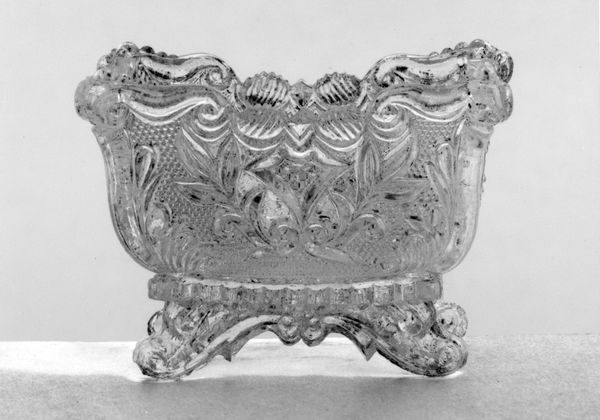
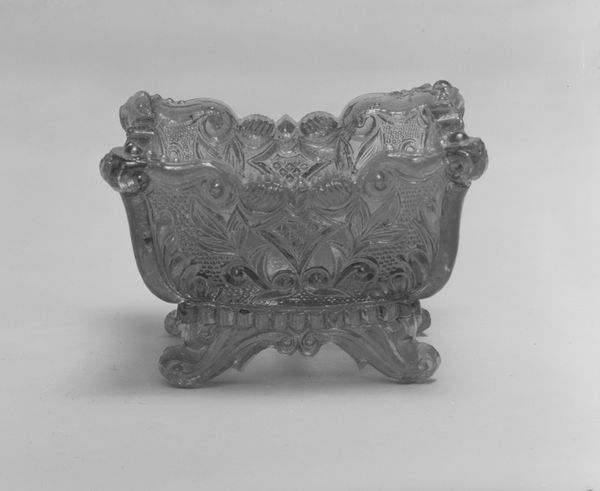
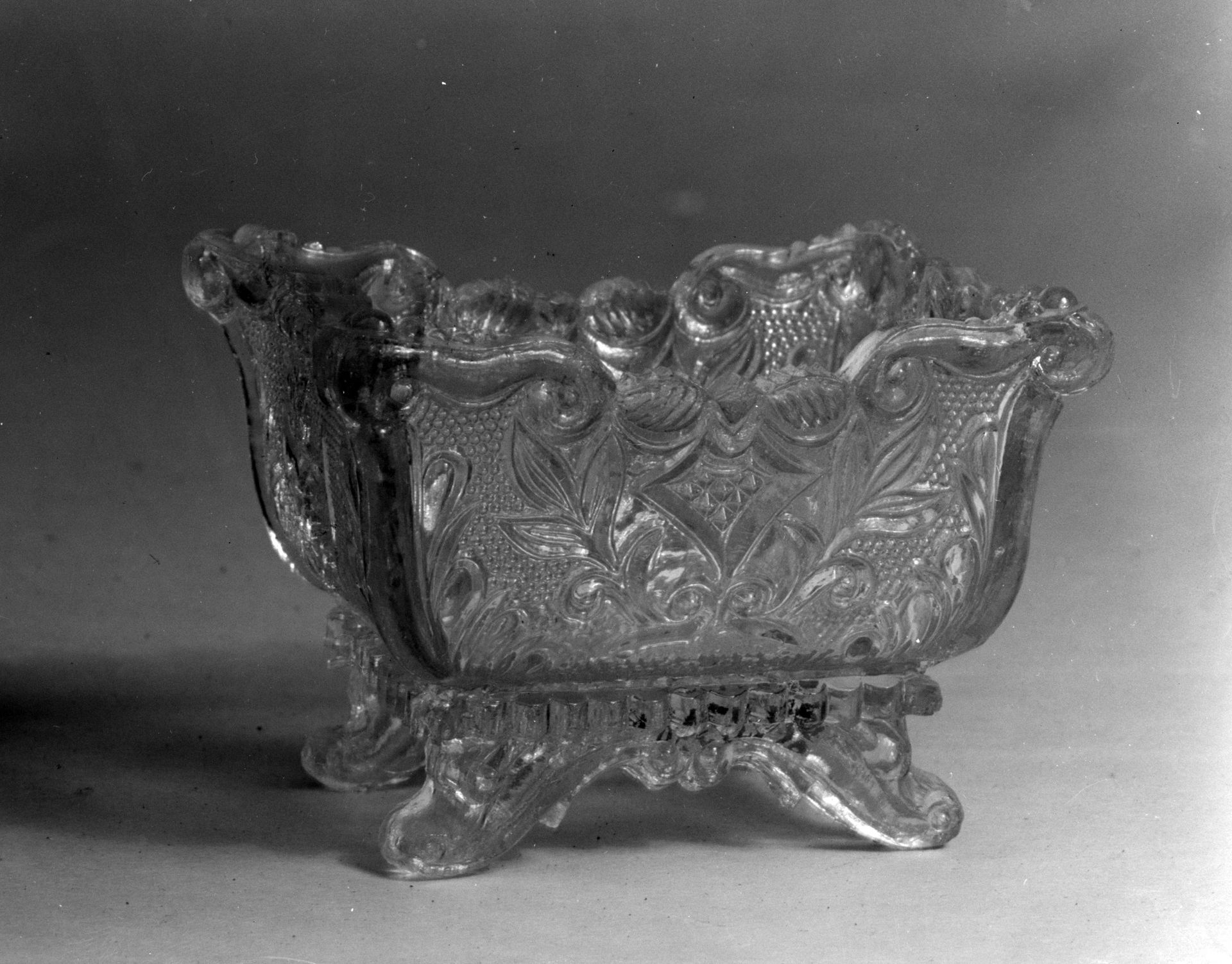
This glass salt dish was crafted by Providence Flint Glass Works between 1830 and 1833. Notice the delicate leaf and floral motifs that adorn its surface. Floral ornamentation, like the leaves seen here, has ancient roots, symbolizing life, growth, and prosperity across cultures. We see echoes of these botanical forms in Roman frescos, medieval tapestries, and even the Art Nouveau movement, each era reinterpreting nature's bounty through its unique lens. Consider the acanthus leaf, a recurring motif in classical architecture, believed to bring good fortune and protection. Its stylized form, much like those on this glass dish, transcends mere decoration, resonating with our deep-seated desire for well-being. This enduring appeal speaks to the powerful role of collective memory, where symbols evoke emotional responses passed down through generations, reminding us of our connection to the natural world and our shared human experience.
Salt
1827 - 1870

Providence Flint Glass Works
1830 - 1833
The Metropolitan Museum of Art
Metropolitan Museum of Art, New York, NYArtwork details
- Medium
- glass, sculpture
- Dimensions
- 2 3/16 x 3 in. (5.6 x 7.6 cm)
- Location
- Metropolitan Museum of Art, New York, NY
- Copyright
- Public Domain
Tags
sculpture
glass
sculpture
decorative-art
Comments
Be the first to share your thoughts about this work.
About this artwork
This glass salt dish was crafted by Providence Flint Glass Works between 1830 and 1833. Notice the delicate leaf and floral motifs that adorn its surface. Floral ornamentation, like the leaves seen here, has ancient roots, symbolizing life, growth, and prosperity across cultures. We see echoes of these botanical forms in Roman frescos, medieval tapestries, and even the Art Nouveau movement, each era reinterpreting nature's bounty through its unique lens. Consider the acanthus leaf, a recurring motif in classical architecture, believed to bring good fortune and protection. Its stylized form, much like those on this glass dish, transcends mere decoration, resonating with our deep-seated desire for well-being. This enduring appeal speaks to the powerful role of collective memory, where symbols evoke emotional responses passed down through generations, reminding us of our connection to the natural world and our shared human experience.
Comments
Be the first to share your thoughts about this work.