About this artwork
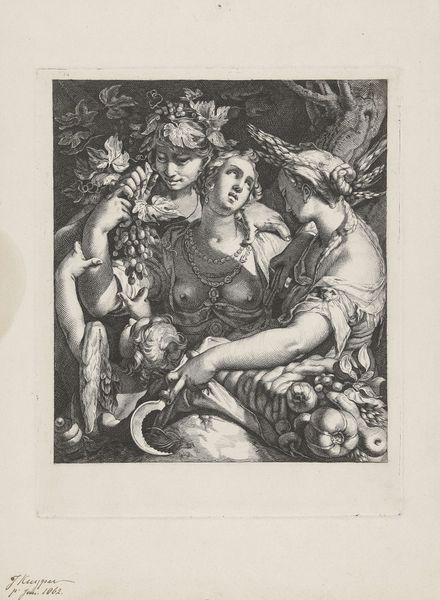
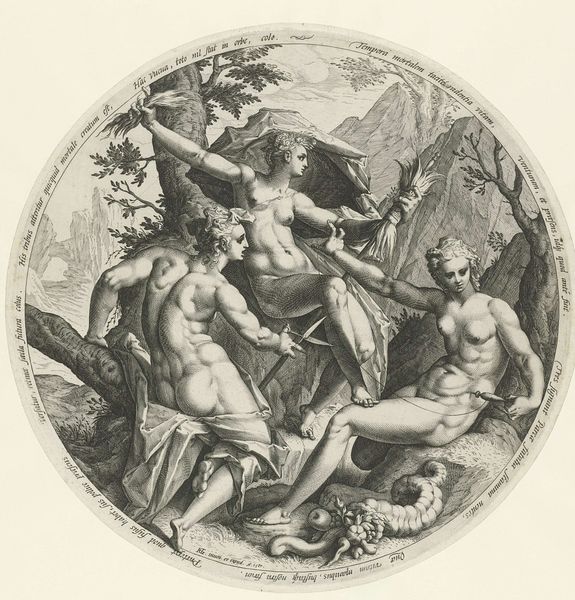
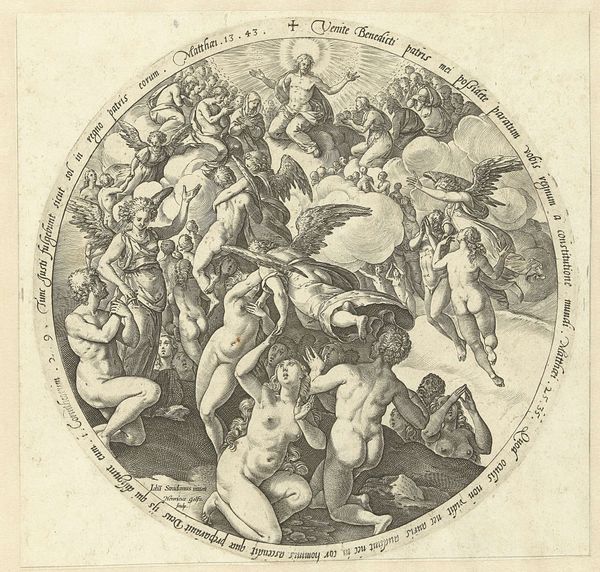
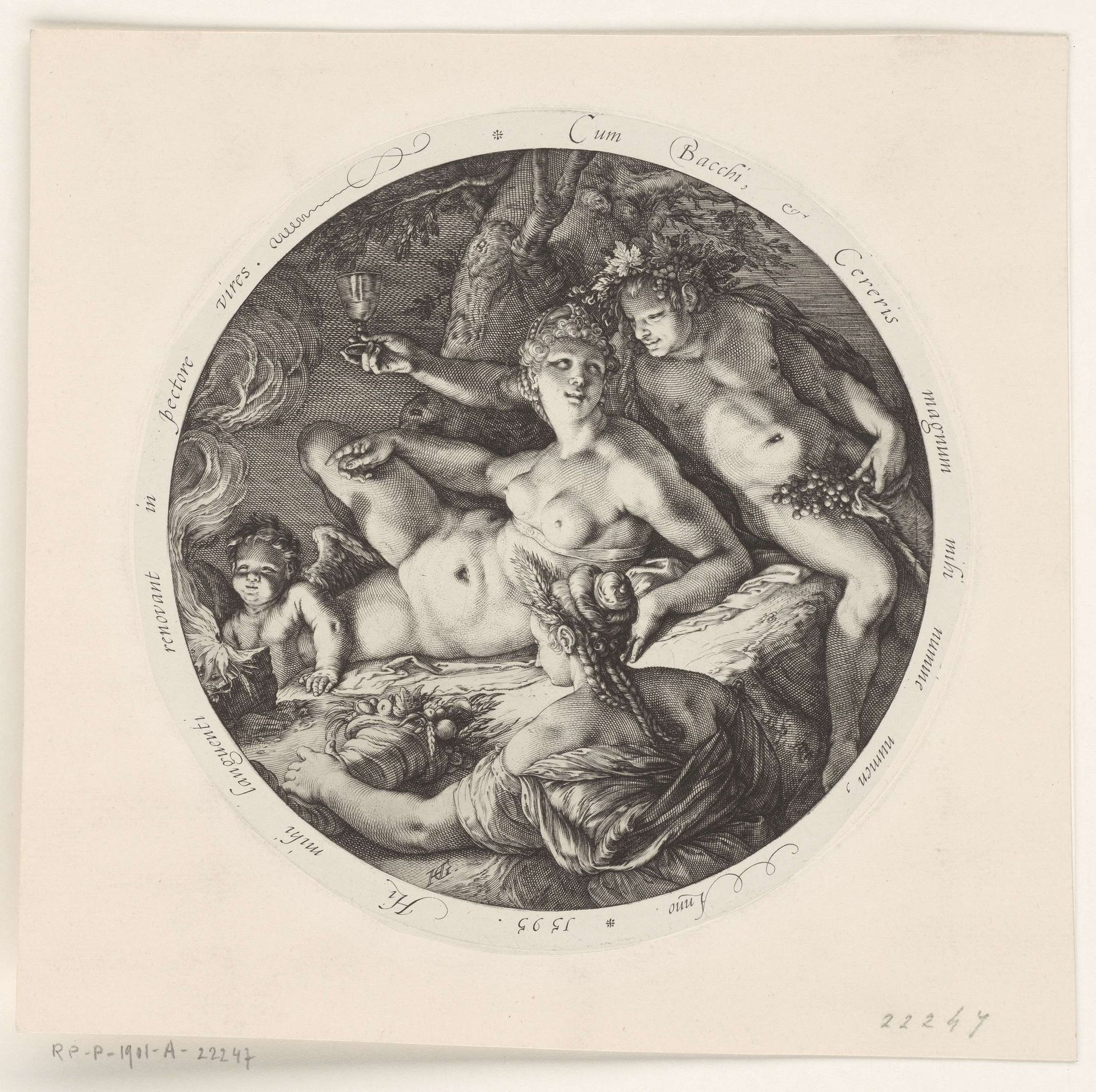
Hendrick Goltzius created this engraving titled "Bacchus, Ceres, and Venus" in 1595. It's dominated by the contrast between light and shadow, a technique called chiaroscuro, to model the figures and create depth. The circular composition and the arrangement of figures within it create a dynamic yet harmonious structure. The semi-nude figures of Bacchus, Ceres, and Venus, are intertwined, suggesting themes of fertility and abundance. The artist uses line and form to create a sense of movement and sensuality. The surrounding inscription acts as a frame but also adds another layer to the composition. This work destabilizes traditional artistic hierarchies by merging classical mythological themes with a dynamic, almost Mannerist style. Its complex interplay of form and content invites ongoing interpretation.

Artwork details
- Medium
- print, engraving
- Location
- Rijksmuseum
- Copyright
- Rijks Museum: Open Domain
Tags
Comments
Share your thoughts
About this artwork
Hendrick Goltzius created this engraving titled "Bacchus, Ceres, and Venus" in 1595. It's dominated by the contrast between light and shadow, a technique called chiaroscuro, to model the figures and create depth. The circular composition and the arrangement of figures within it create a dynamic yet harmonious structure. The semi-nude figures of Bacchus, Ceres, and Venus, are intertwined, suggesting themes of fertility and abundance. The artist uses line and form to create a sense of movement and sensuality. The surrounding inscription acts as a frame but also adds another layer to the composition. This work destabilizes traditional artistic hierarchies by merging classical mythological themes with a dynamic, almost Mannerist style. Its complex interplay of form and content invites ongoing interpretation.
Comments
Share your thoughts