1589 - 1590
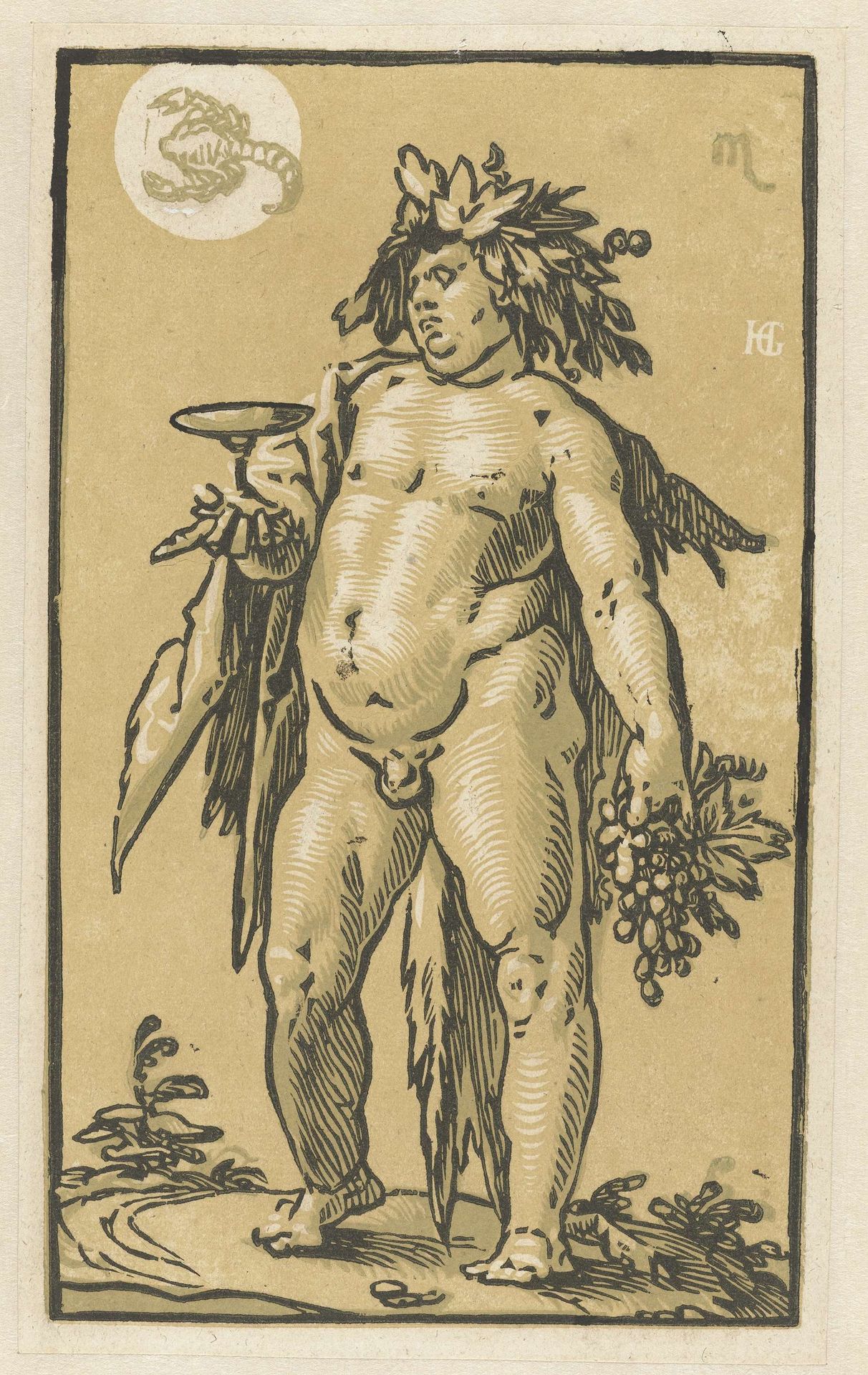
Bacchus

Hendrick Goltzius
1558 - 1617Location
RijksmuseumListen to curator's interpretation
Curatorial notes
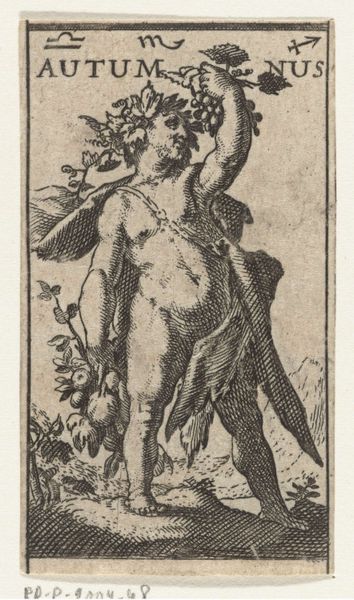
Hendrick Goltzius created this print of Bacchus, using woodcut in chiaroscuro, a technique employing contrasts of light and shadow to achieve a three-dimensional effect. The god of wine stands centrally, flanked by the textures of his attributes: grapes and vines, and the cup that signifies celebration. Consider the composition. Goltzius masterfully uses line and form to direct our gaze across the figure. Look at the patterns of the lines which model the curves of Bacchus’s body, giving him a sculptural weight. Note how the light falls unevenly and the shadows define shape, adding depth to the figure. This interplay of light and shadow is not just a technical exercise; it reflects a broader artistic interest in the dramatization of form, that was common in late 16th century Mannerism. The surface of the print itself becomes a stage, where light animates form and invites us to explore the sensuality of the subject. The materiality of the print reminds us that our experience is mediated – a flat object bringing depth to life.