c. mid 18th century
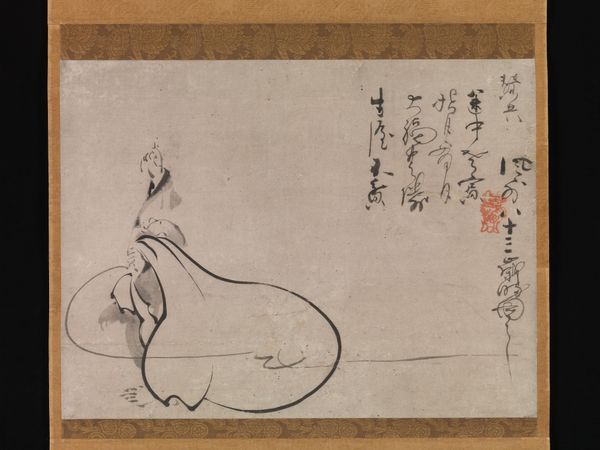
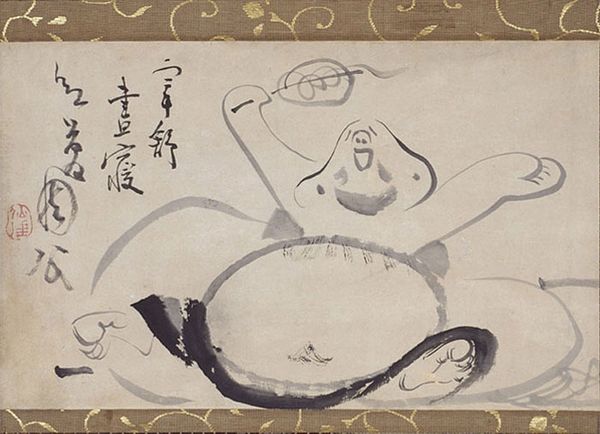
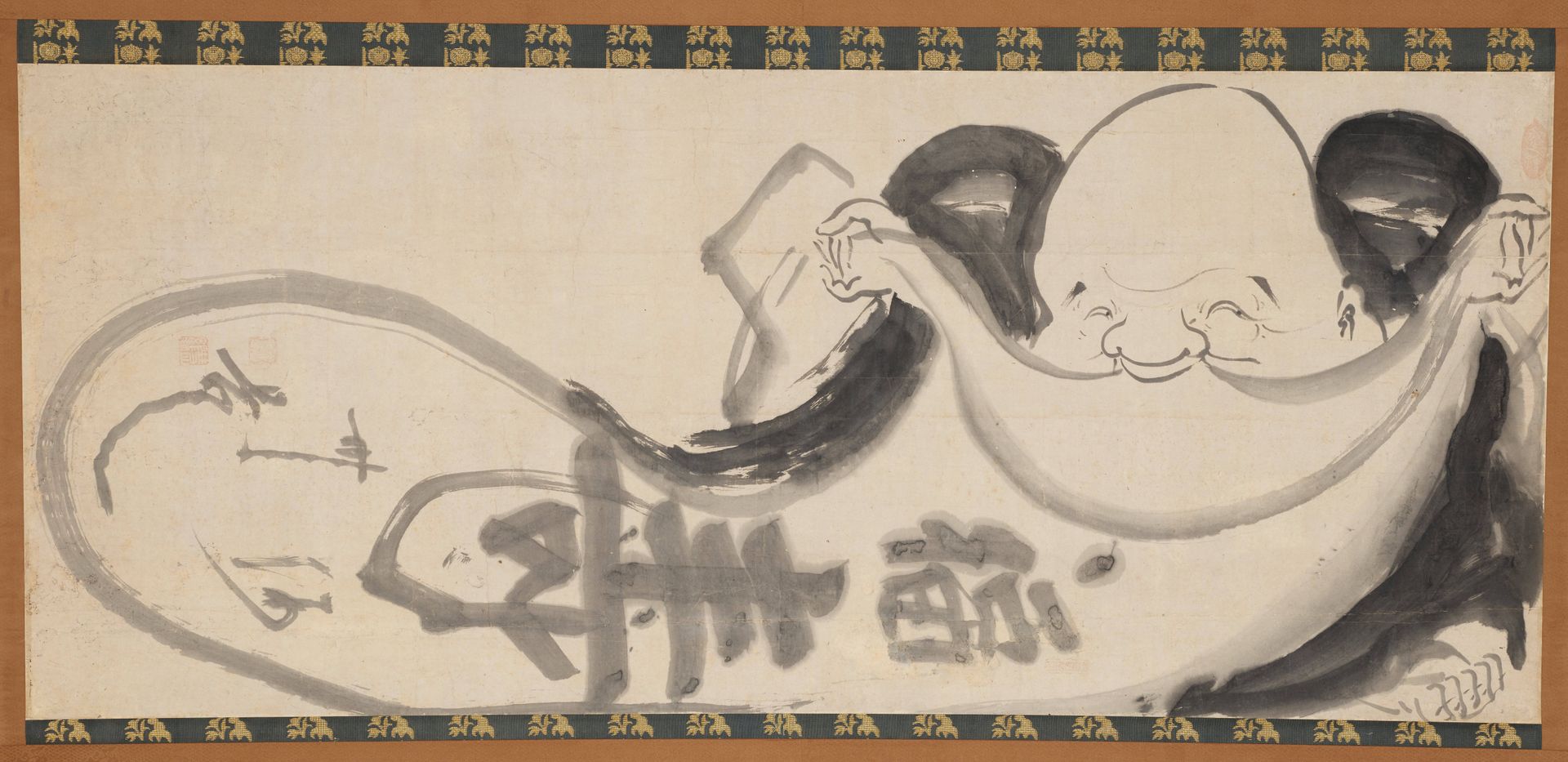
Budai Opening His Sack


Listen to curator's interpretation
Curatorial notes
Curator: Hakuin Ekaku's "Budai Opening His Sack," likely created in the mid-18th century, employs ink on paper to depict a jubilant scene. Editor: He's so jolly! I immediately get a sense of playful abundance. The sweeping ink strokes create a sense of lightness, even with all that, ahem, girth. Curator: Precisely. Note how the composition balances the figure of Budai, the large sack, and the calligraphy. It creates a unified visual field, a complex interplay between image and text. Editor: It's almost like the brushstrokes themselves are laughing! There’s something incredibly confident, even Zen-like, in the economy of line. Like the artist captured the essence of joy with the fewest possible gestures. Curator: It reflects the characteristics of Zen painting, also known as Zenga, which focuses on immediacy and intuition. The materiality of the ink, the texture of the paper support... everything becomes a vital signifier of the artist's intent. Editor: I can practically hear him chuckling! What's so fascinating to me is how this figure embodies contentment despite, or perhaps because of, his worldly possessions literally overflowing. There’s wisdom in that image, for sure. Curator: Certainly, the imagery invites consideration of Buddhist ideals alongside the formal elegance that characterizes so many portraits of the era. Budai is presented outside the confines of traditional religious imagery, as a human form, rather. Editor: Yes! The piece transcends the simply devotional—it’s humorous, it’s thought-provoking… It’s a gentle poke at our obsession with "more." A very nice poke indeed. Curator: It's a piece that benefits from and encourages sustained looking, rewarding multiple readings of its pictorial and philosophical intent. Editor: Absolutely. Each time I look at it, I discover another nuance. It's like Budai himself keeps giving, his sack never quite empty.