About this artwork
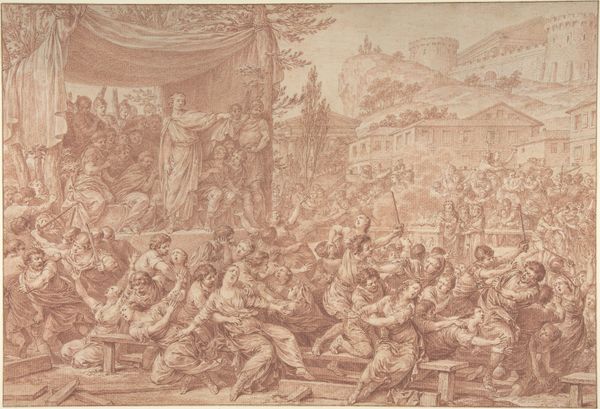
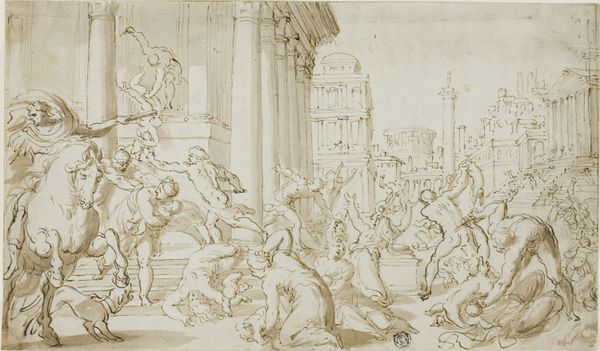
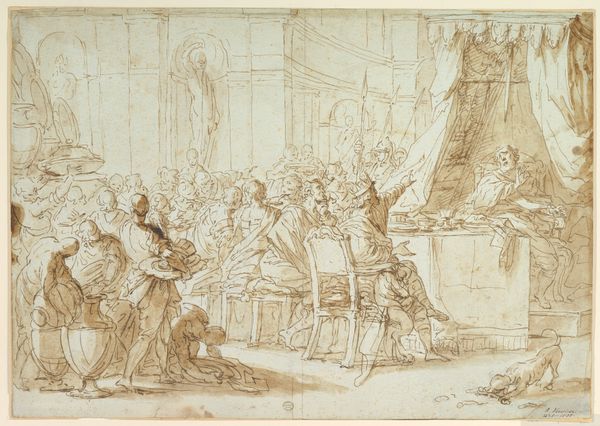
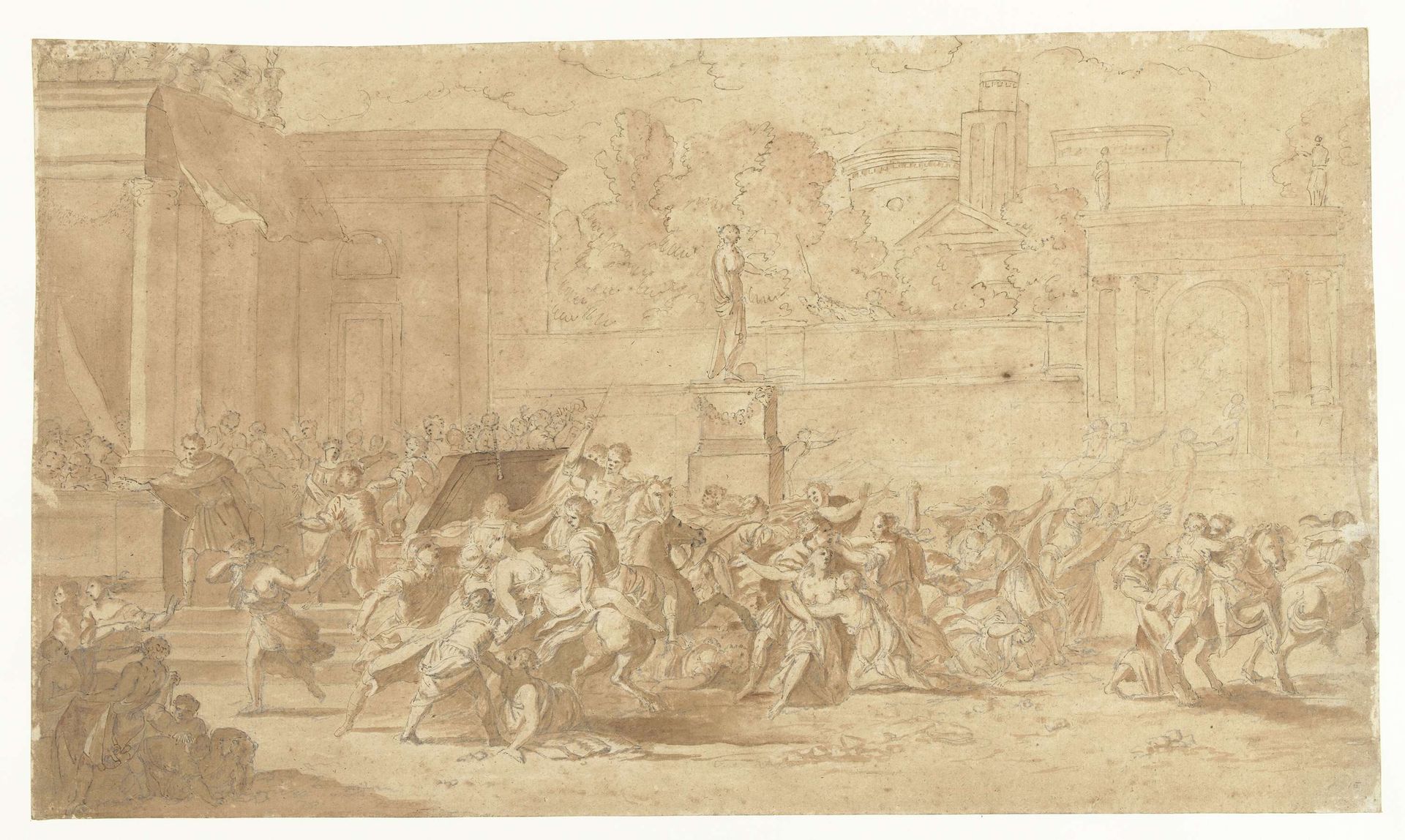
Mattheus Terwesten rendered this drawing of the Rape of the Sabine Women with pen in brown ink sometime before his death in 1757. Here, the figures, frozen in chaos, enact a foundational myth of Rome. At the center, the abduction is underway, a symbol of the primal act of establishing community through force and desire. This motif echoes through time. In Renaissance bronzes, we see the same frantic energy, the spiraling forms of captors and captives locked in an eternal dance. Consider how the raised arms, the desperate grasp, recur—gestures of fear, resistance, and the will to survive. Such imagery taps into a deep well of collective memory, stirring subconscious fears and desires. This drawing, with its classical undertones, reveals the cyclical nature of history. The myth resurfaces, each time filtered through the anxieties and aspirations of a new era, speaking to the enduring human drama of power, possession, and the forging of identity.

Artwork details
- Medium
- drawing, ink
- Dimensions
- height 331 mm, width 568 mm
- Location
- Rijksmuseum
- Copyright
- Rijks Museum: Open Domain
Tags
drawing
narrative-art
baroque
figuration
ink
history-painting
Comments
No comments
About this artwork
Mattheus Terwesten rendered this drawing of the Rape of the Sabine Women with pen in brown ink sometime before his death in 1757. Here, the figures, frozen in chaos, enact a foundational myth of Rome. At the center, the abduction is underway, a symbol of the primal act of establishing community through force and desire. This motif echoes through time. In Renaissance bronzes, we see the same frantic energy, the spiraling forms of captors and captives locked in an eternal dance. Consider how the raised arms, the desperate grasp, recur—gestures of fear, resistance, and the will to survive. Such imagery taps into a deep well of collective memory, stirring subconscious fears and desires. This drawing, with its classical undertones, reveals the cyclical nature of history. The myth resurfaces, each time filtered through the anxieties and aspirations of a new era, speaking to the enduring human drama of power, possession, and the forging of identity.
Comments
No comments