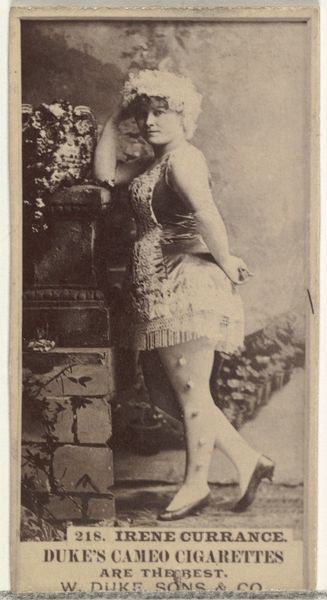
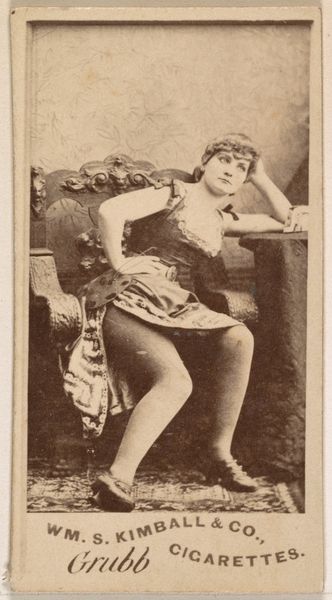
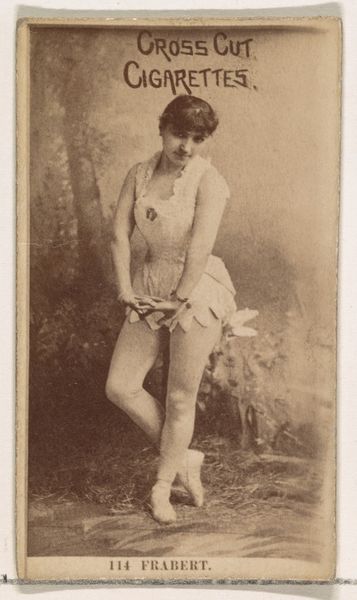
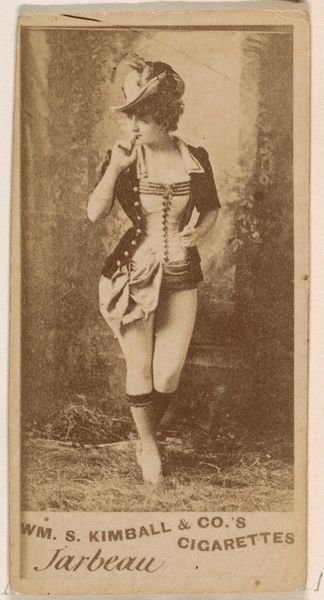
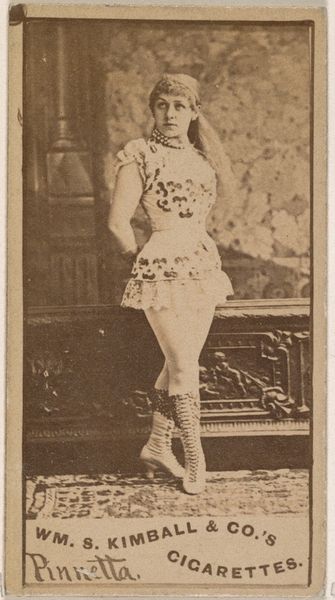
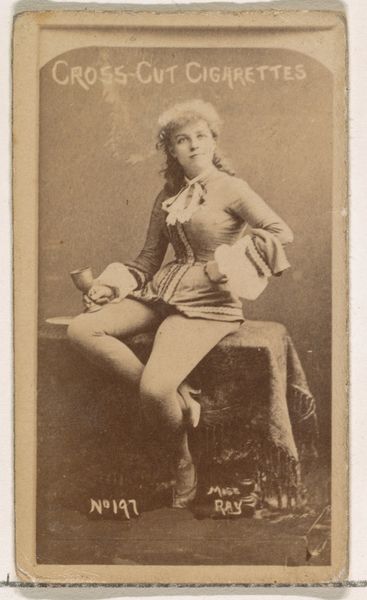
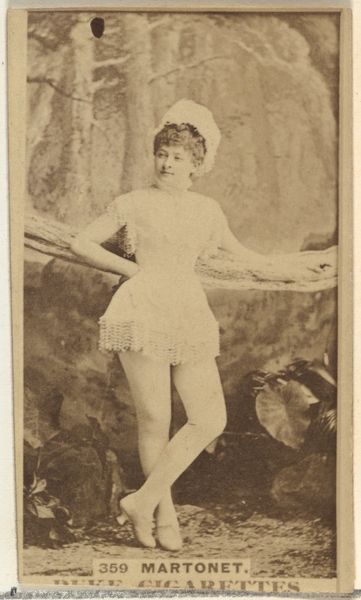
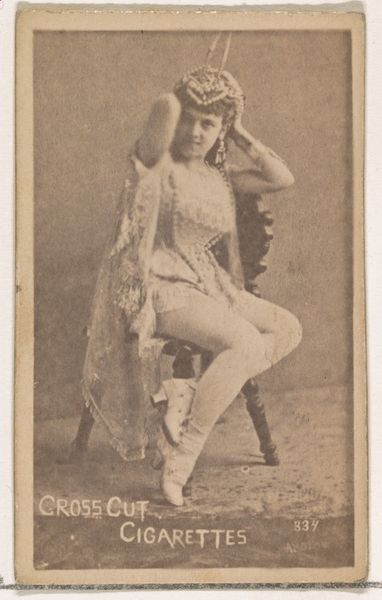
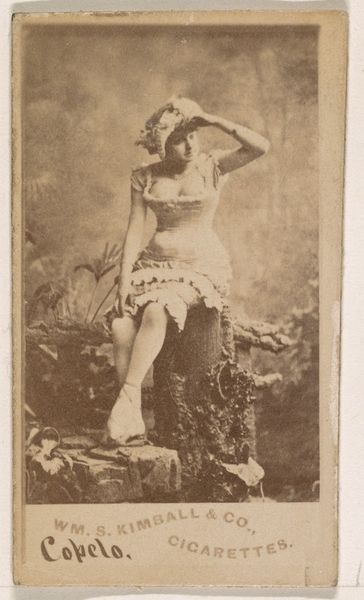
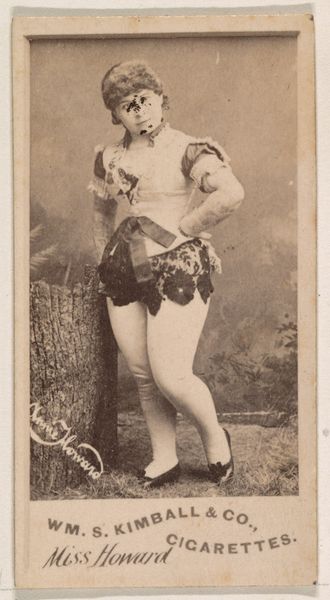
Card Number 356, Miss Elmore, from the Actors and Actresses series (N145-5) issued by Duke Sons & Co. to promote Cameo Cigarettes 1880s
0:00
0:00


drawing, print
#
portrait
#
pencil drawn
#
drawing
#
toned paper
#
light pencil work
# print
#
pencil sketch
#
charcoal drawing
#
charcoal art
#
pencil drawing
#
coloured pencil
#
men
#
watercolour illustration
#
watercolor
Dimensions: Sheet: 2 11/16 × 1 3/8 in. (6.8 × 3.5 cm)
Copyright: Public Domain
Editor: Here we have “Card Number 356, Miss Elmore,” a promotional print from the 1880s by W. Duke, Sons & Co. There's something so theatrical about this. It feels like a glimpse behind the curtain, a performer captured between acts. What symbols or hidden meanings do you see in this piece? Curator: Ah, yes, the captivating Miss Elmore! It's intriguing to consider this image within the context of advertising. What does Miss Elmore represent as a symbol for the "Cameo Cigarettes" brand? She embodies glamour and allure, clearly, but beyond that? Editor: Well, the attire feels like playful transgression; suggesting a loosening of social constraints. Maybe the cigarette brand aimed for the modern consumer? Curator: Precisely! Her playful, almost androgynous attire, while stylized, challenges conventional Victorian ideals. It's not just about fleeting entertainment; this card offered a subtle invitation. Cigarettes and performers alike provided liberation, even rebellion. This particular depiction, capturing a performer poised, offers both intimacy and distance. The soft focus also seems to tap into dreams and aspirations. Do you agree? Editor: Yes, the out-of-focus adds to the dreamy mood. What a smart way to promote the "Cameo Cigarettes"! Curator: Indeed! This card acts as a tiny portal to a different world. We see not only a performer, but a glimpse of societal transformation playing out. Editor: I never thought about the layers of symbolism within an advertisement before. It makes you wonder about current day promotional art. Thanks!
Comments
No comments
Be the first to comment and join the conversation on the ultimate creative platform.
 Collect
 React
React Comment
More like this