1796
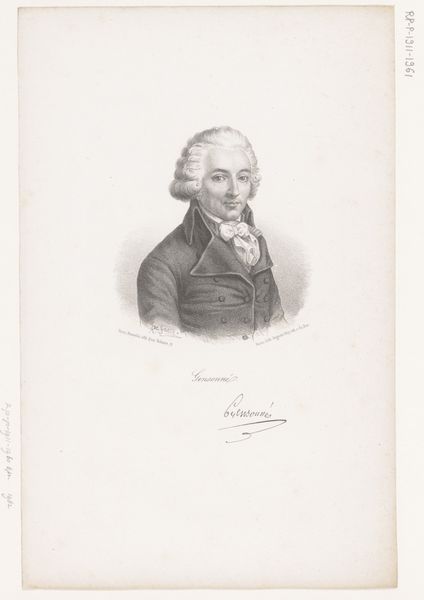
Portret van Charles François Dumouriez

Friedrich Wilhelm Bollinger
1777 - 1825Location
RijksmuseumListen to curator's interpretation
Curatorial notes
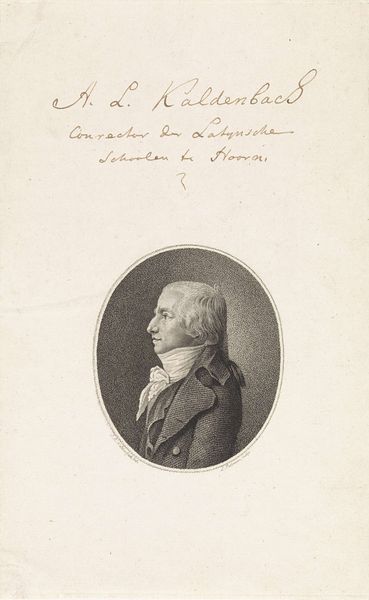
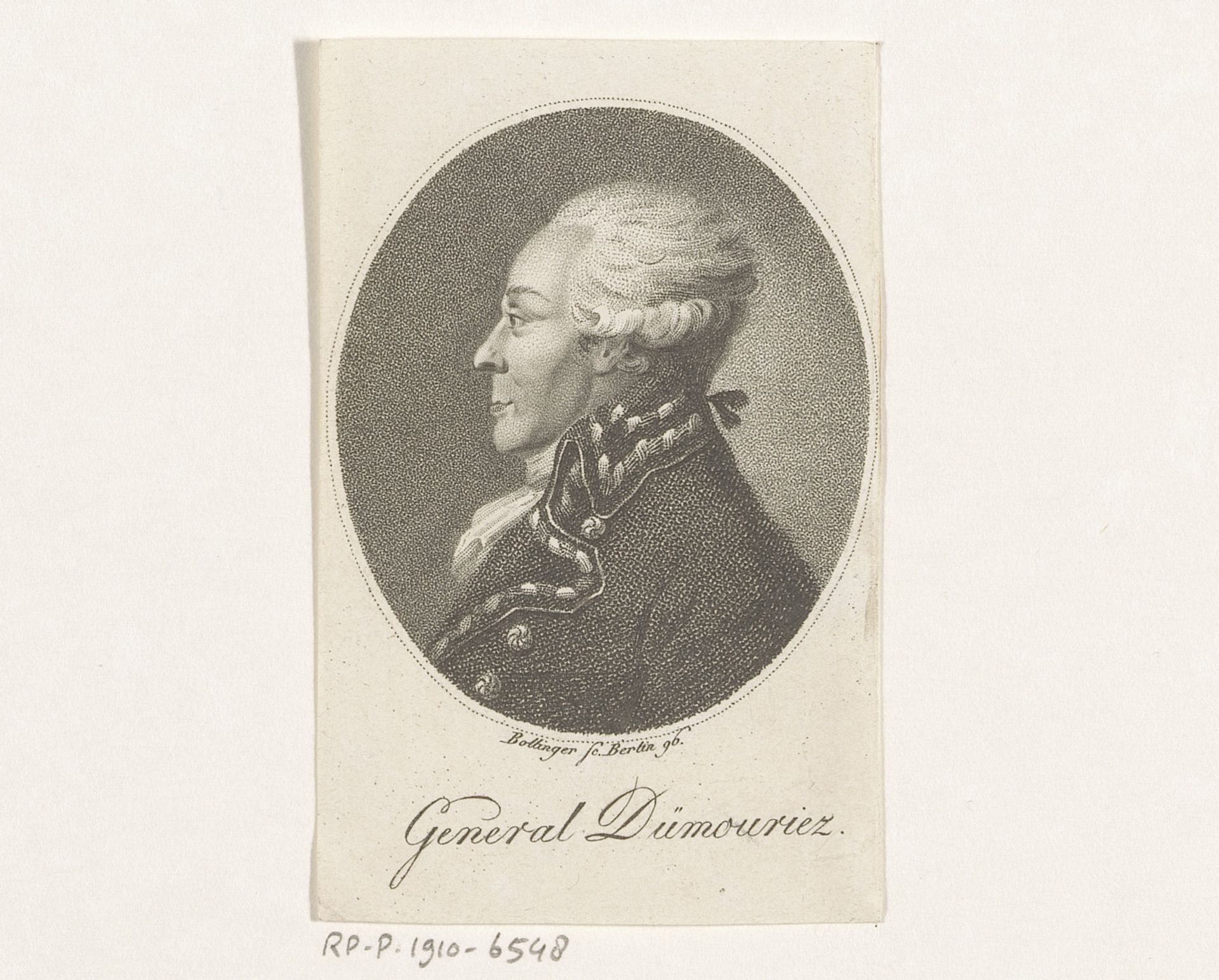
Curator: Looking at this print, titled "Portret van Charles François Dumouriez," created in 1796 by Friedrich Wilhelm Bollinger, the starkness of the lines immediately brings a sense of historical distance. Editor: Yes, there's a formality about it. The material—engraving, so reliant on craft—gives it a weight, doesn't it? A clear indication of its purpose, its role in conveying an image of power. It's incredible that with so little ink, there's so much precision of texture. Curator: Dumouriez was a complex figure—a general during the French Revolution who later defected to the royalists. I’m interested in how the image serves to present him: his gaze averted, caught in profile within this oval frame. The subject is a fascinating paradox: a military leader and, ultimately, a traitor. The portrait must be analyzed with this complex political environment as backdrop. Editor: And think of the process involved in the production of an engraving like this. It's a skill, a trade. It's labor. Look at the lines, each one deliberately etched. This isn’t some fleeting sketch; it's a conscious act of representation. It implies intention, production, skill. It speaks to a different class that isn't usually considered in this era of art. Curator: That labor is particularly relevant when considering Dumouriez's eventual exile. Was this image an attempt to recast him? The soft strokes attempt to show his noble qualities perhaps? Did Bollinger intentionally portray a traitor differently from someone heroic? What kind of narrative is produced? Editor: Perhaps also the social circles it was destined for – domestic display. Imagine a middle-class family in possession of it and the discussion they have as a result. Its dissemination would’ve involved a network of print sellers, merchants, and distributors – a whole social stratum dedicated to the making and sharing of images. So many levels of labour involved in the end product! Curator: That intersection between material, dissemination, and subject gives another layer to understand the complex political messaging inherent in 1790s portraiture, showing how someone's image may have influenced history. Editor: I’ve developed a new appreciation for what went into the creation of what appeared to be simple portrait. Thank you.