drawing, coloured-pencil, lithograph, print, paper, pen
#
portrait
#
drawing
#
coloured-pencil
#
lithograph
# print
#
asian-art
#
indigenism
#
paper
#
pen
#
genre-painting
#
academic-art
Dimensions: height 383 mm, width 458 mm
Copyright: Rijks Museum: Open Domain
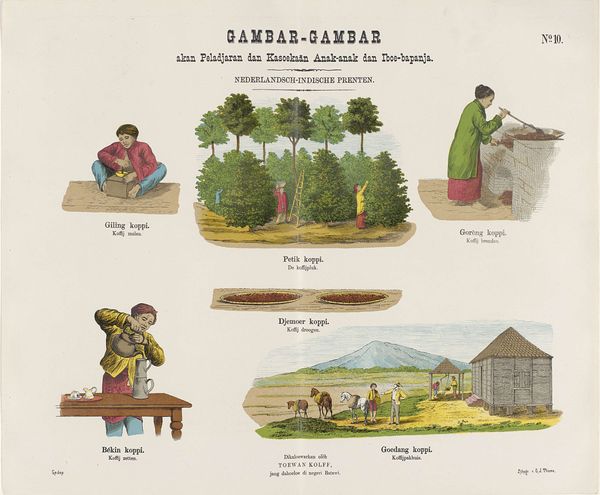
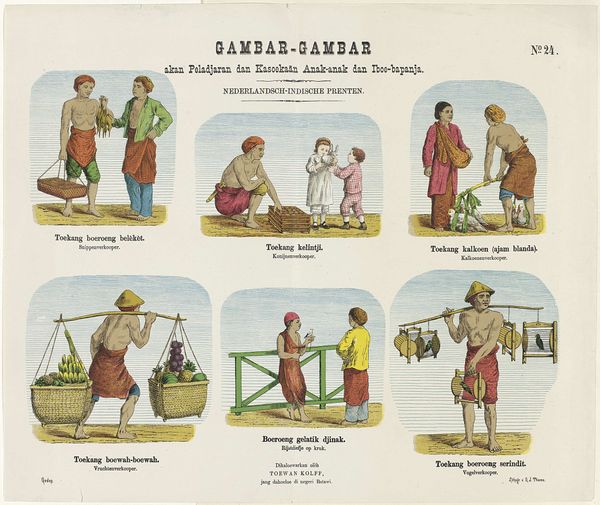
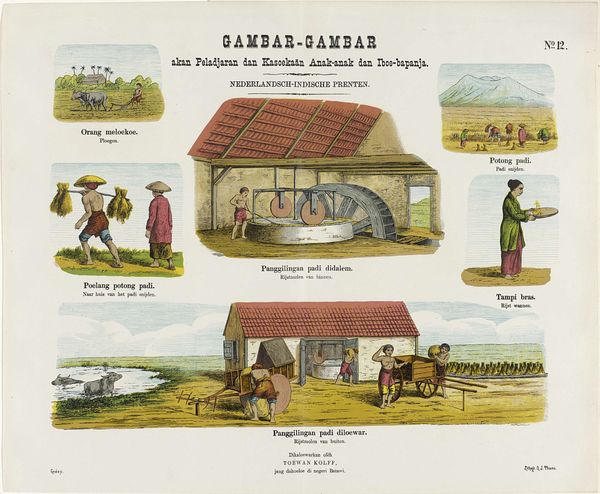
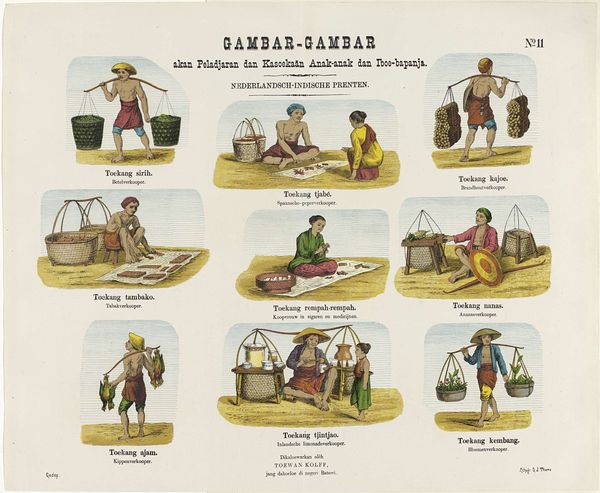
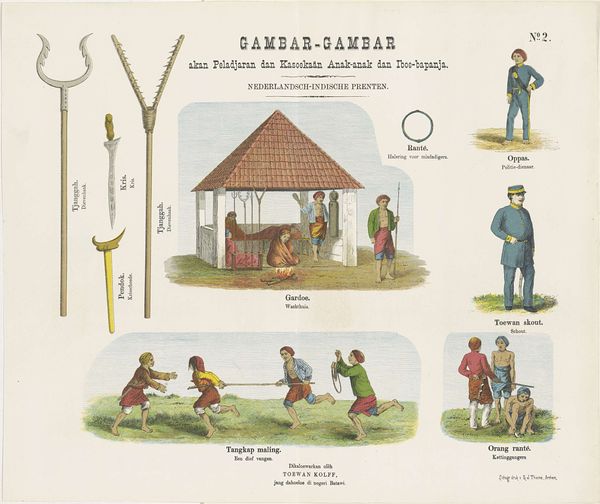
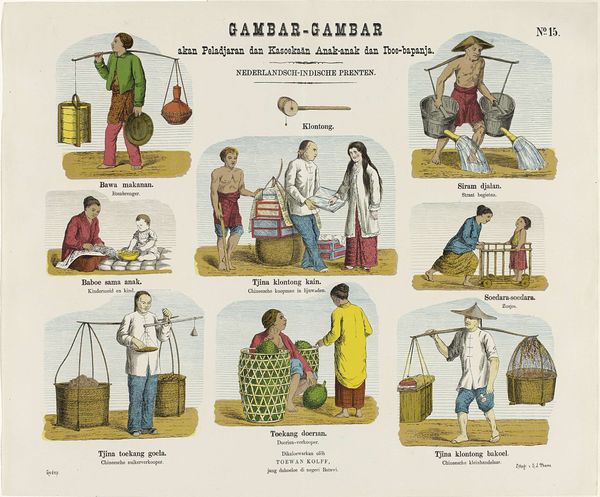
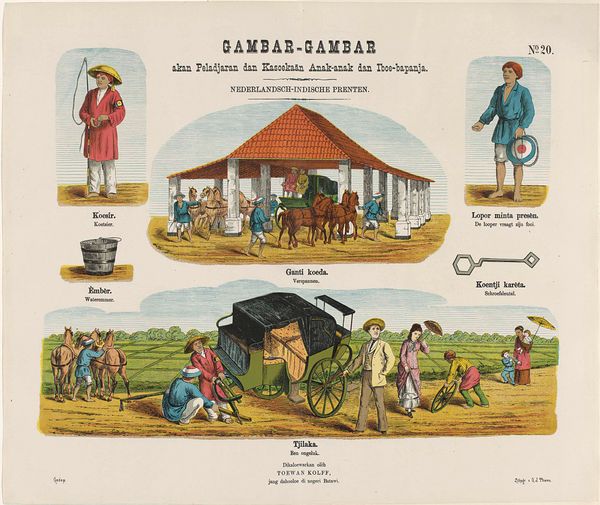
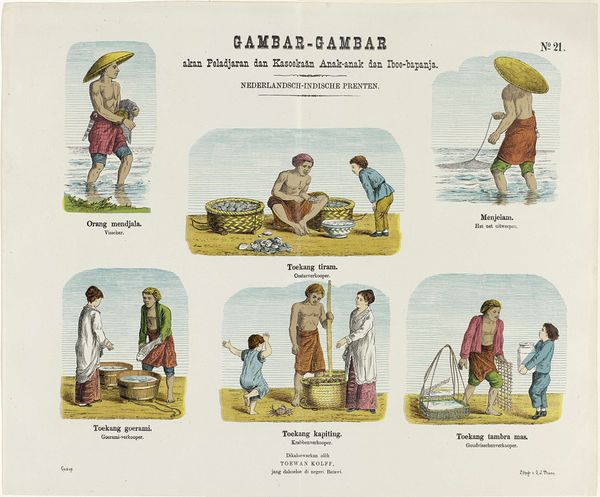
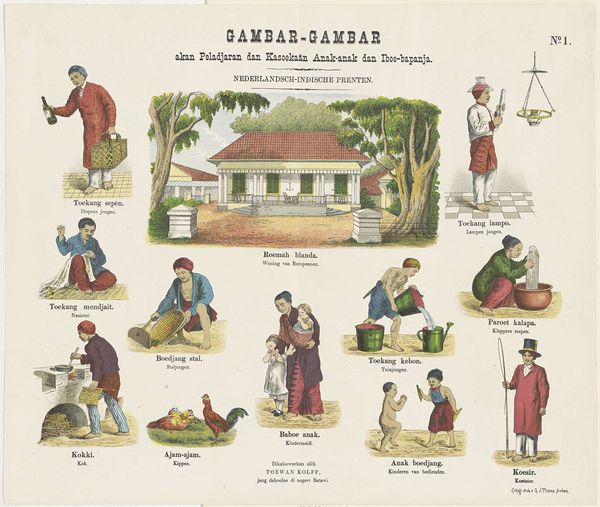
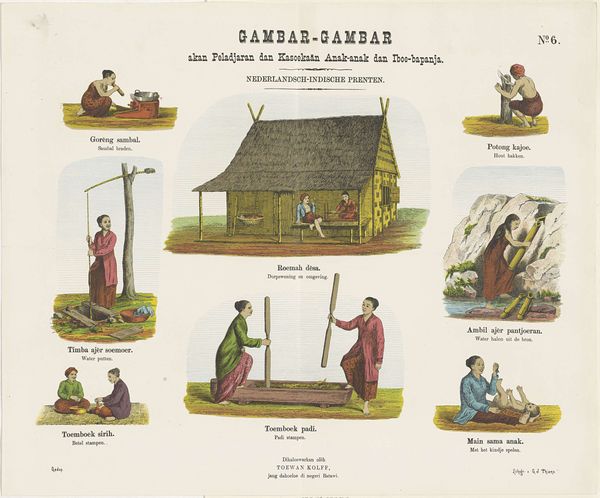
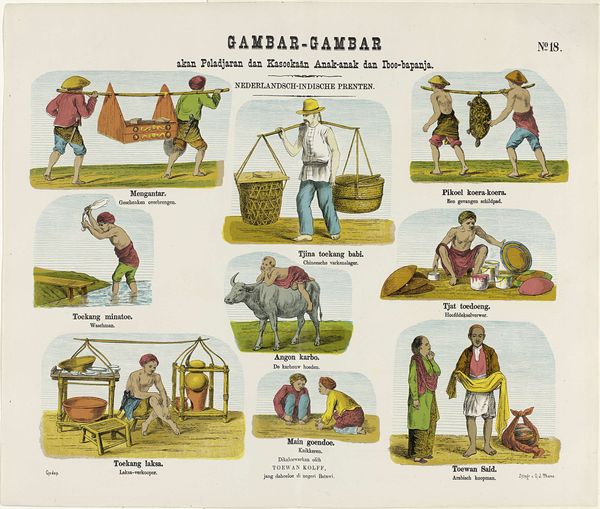
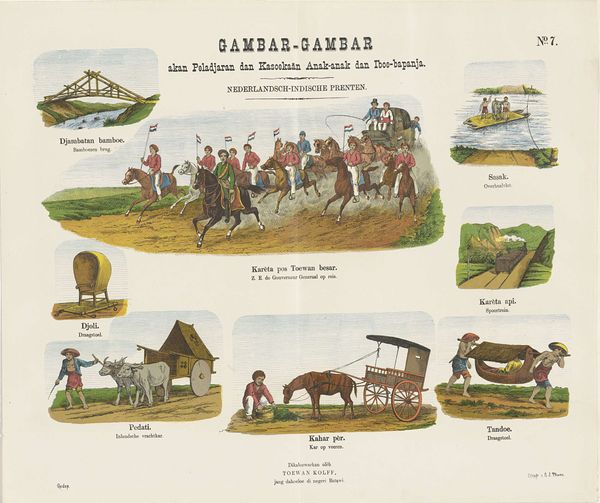
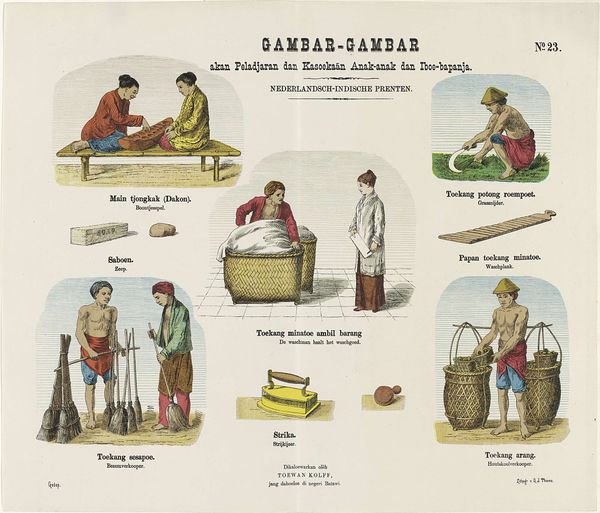
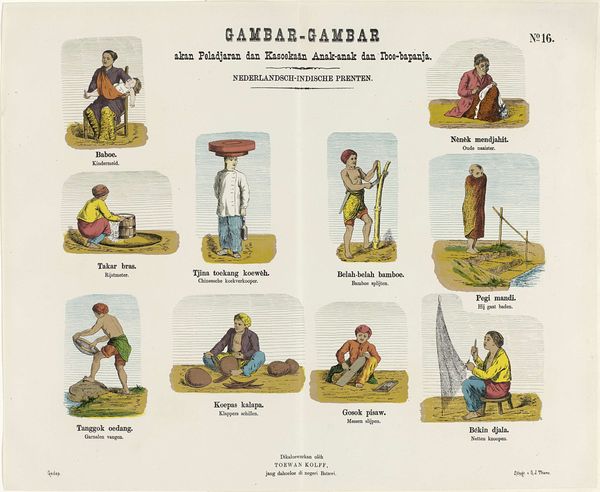
Editor: Here we have "Warung," made sometime between 1868 and 1881 by Gualtherus Kolff, a lithograph and coloured-pencil drawing printed on paper. It feels almost like a page from a children's book, with all the carefully labelled objects. What do you see in this piece beyond the surface, some deeper story perhaps? Curator: Oh, this isn’t just a picture, is it? It whispers of cross-cultural exchange, a Dutch artist observing life in the Indies, filtering it through a Western lens. Colonialism's tricky dance! The academic style clashes with the indiginism in a way that really speaks volumes. Don’t you feel that tension between objective documentation and romanticized portrayal? Editor: Absolutely, it's that juxtaposition that grabs attention. The neat rows of objects versus the scene in the 'Warung' itself. Almost a desire to categorise the 'other'. I guess what feels weird is how detached those objects are? Curator: Precisely! It's like pinning butterflies. These are meant to teach something; notice how everything's labeled in Dutch and Malay. What do you make of the central scene depicting figures under the roof? What narratives are hiding within its thatched structure? Editor: It’s quite an everyday moment, really: some people chatting, someone drawing water. I wonder if Kolff realised the deeper implications. The quiet ordinary-ness feels at odds with the heavy colonial context somehow. Curator: That's it, isn't it? In that simple portrayal of life, there is indeed complexity. Looking closely, it shows how a single image can tell different tales, like shadows playing on a wall, shifting with the light of history. What has this unveiled for you? Editor: I now see the layers beyond its textbook quality. It is now something of a portal into a specific time with complicated history.
Comments
No comments
Be the first to comment and join the conversation on the ultimate creative platform.
 Collect
 React
React Comment
More like this