About this artwork
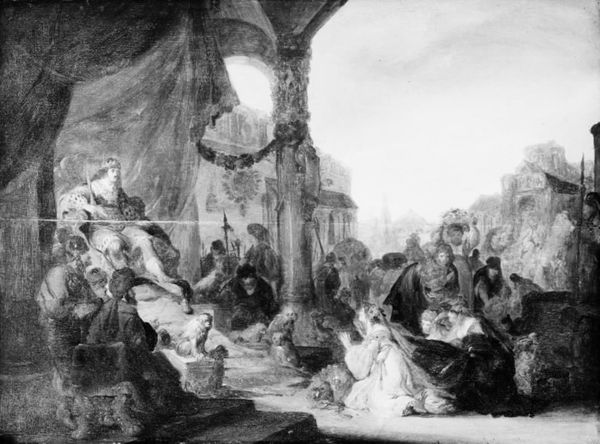
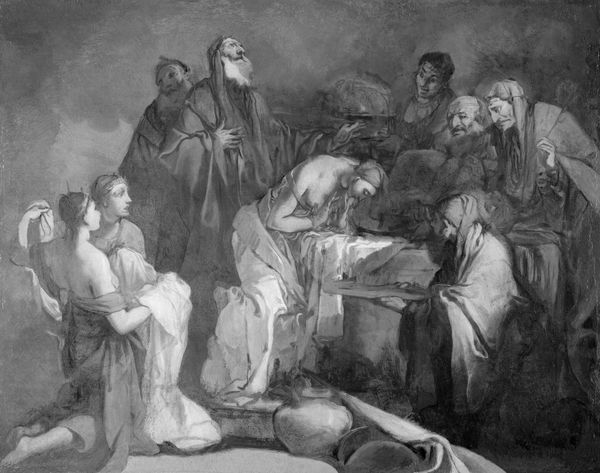
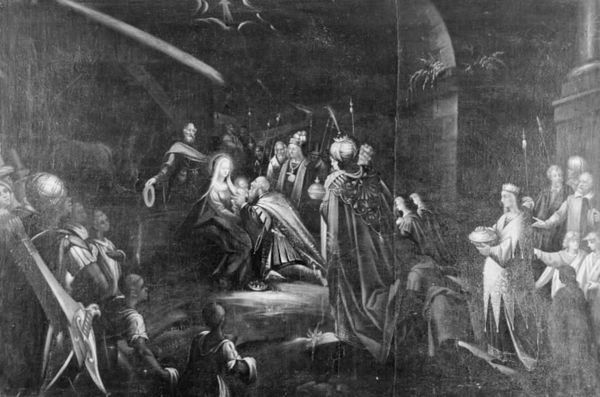
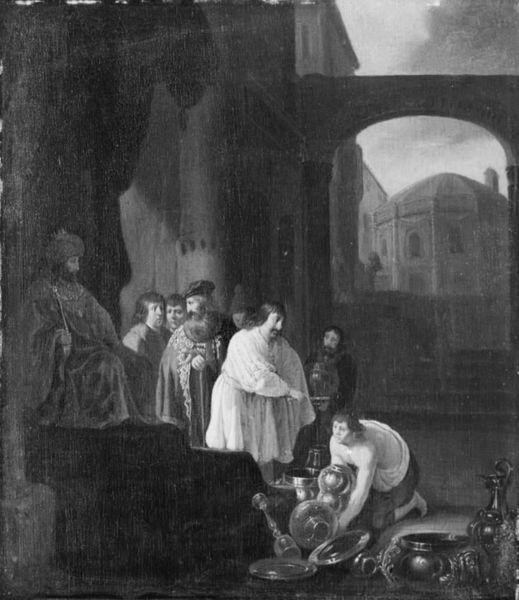
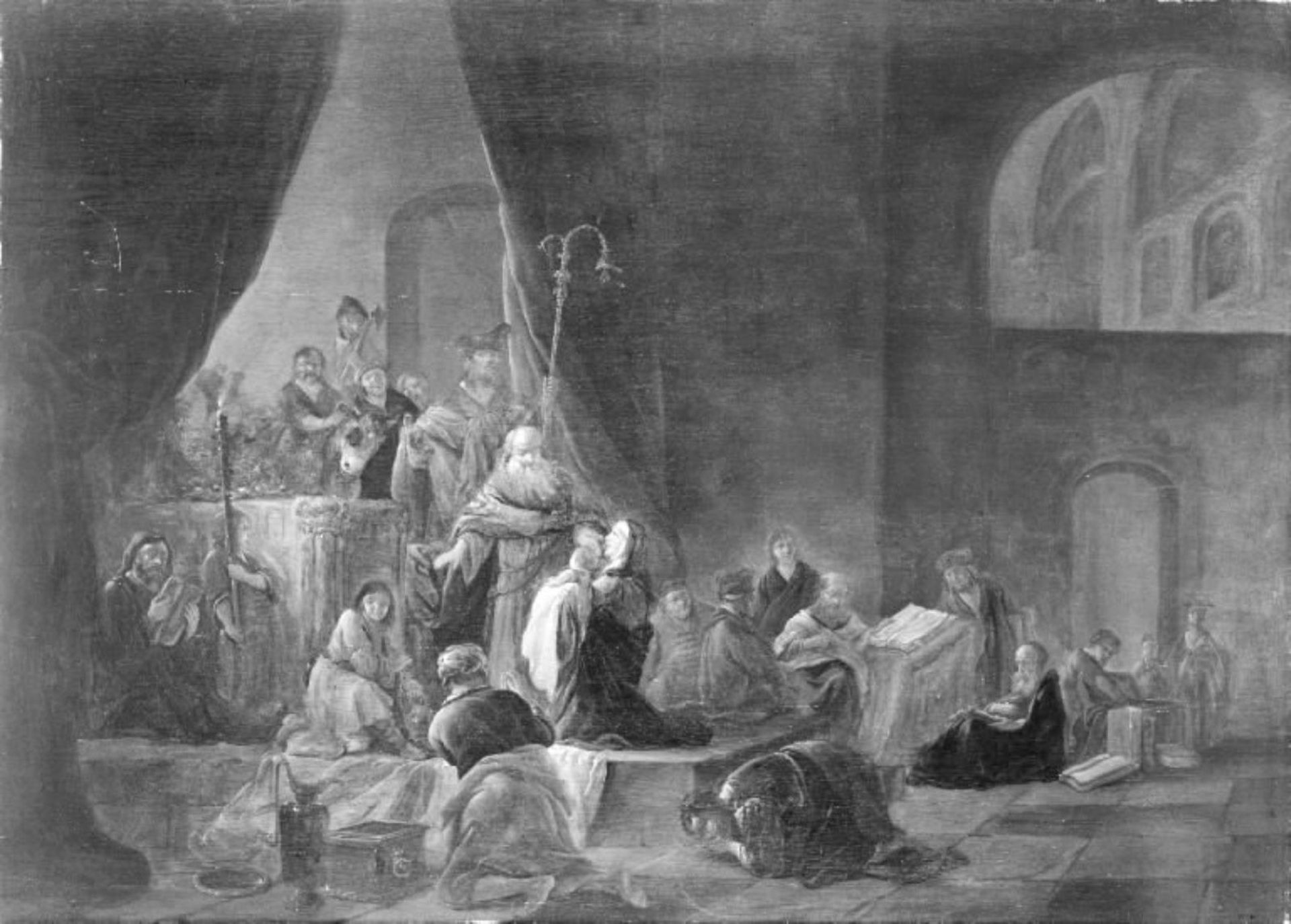
Gerrit de Wet created "The Presentation in the Temple" with oil on canvas. The painting is composed of a solemn scene cast in a monochromatic palette. The eye is drawn to the temple steps, where the central figures are bathed in a soft glow, accentuating their venerated action. De Wet’s composition is not merely representational but structured around the interplay of light and shadow. The temple's architecture, with its arches and heavy drapery, creates a stage-like setting where the figures become players in a carefully choreographed narrative. It's as if the very structure of the temple is a framework for the unfolding of a sacred event. The use of space is also significant. The figures are arranged in a way that emphasizes their relationship to one another and to the architecture. This invites us to consider how the individual’s role is defined within the broader context of religious structure and tradition. The painting isn't just a depiction, but a meditation on structure and the human experience.
The Presentation in the Temple
1640 - 1674


Artwork details
- Medium
- painting, wood
- Dimensions
- 61 cm (height) x 84 cm (width) (Netto)
- Location
- SMK - Statens Museum for Kunst
Tags
Comments
Share your thoughts
About this artwork
Gerrit de Wet created "The Presentation in the Temple" with oil on canvas. The painting is composed of a solemn scene cast in a monochromatic palette. The eye is drawn to the temple steps, where the central figures are bathed in a soft glow, accentuating their venerated action. De Wet’s composition is not merely representational but structured around the interplay of light and shadow. The temple's architecture, with its arches and heavy drapery, creates a stage-like setting where the figures become players in a carefully choreographed narrative. It's as if the very structure of the temple is a framework for the unfolding of a sacred event. The use of space is also significant. The figures are arranged in a way that emphasizes their relationship to one another and to the architecture. This invites us to consider how the individual’s role is defined within the broader context of religious structure and tradition. The painting isn't just a depiction, but a meditation on structure and the human experience.
Comments
Share your thoughts