About this artwork
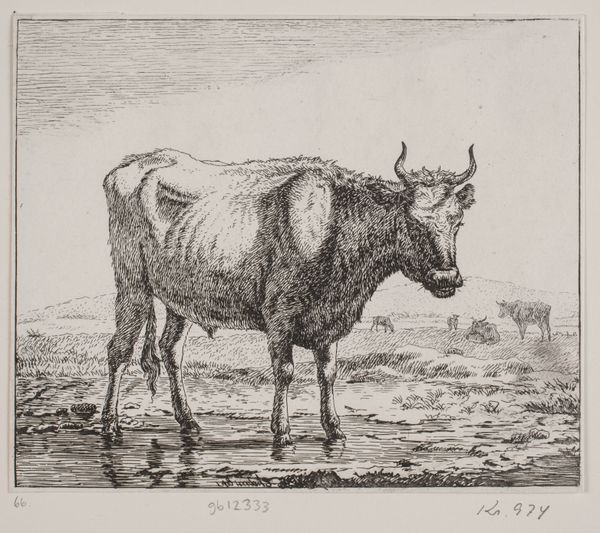
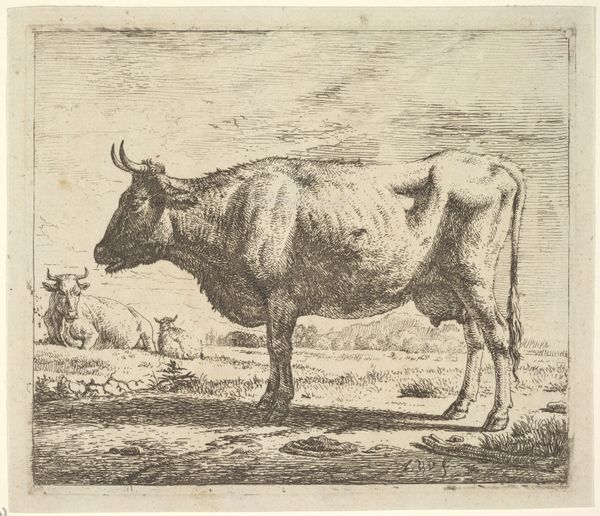
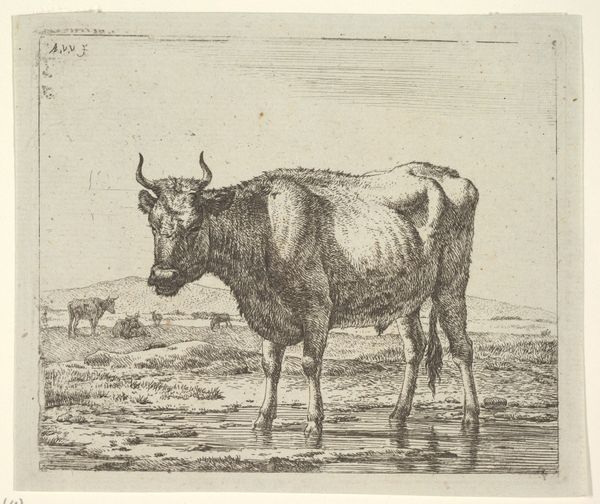
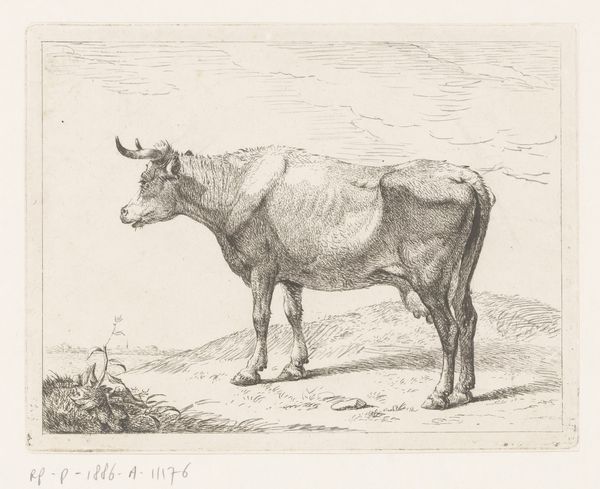
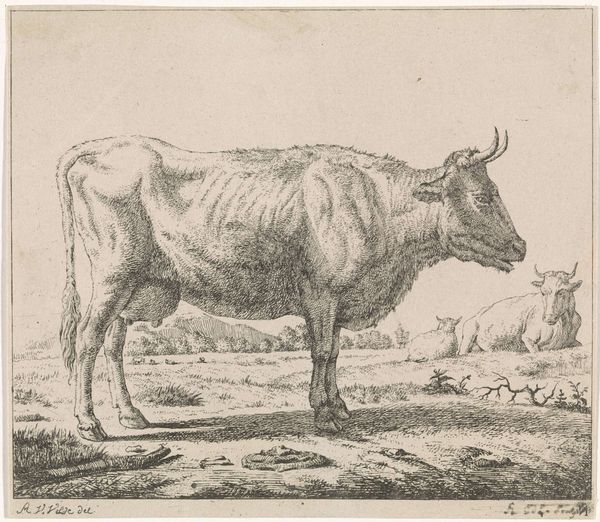
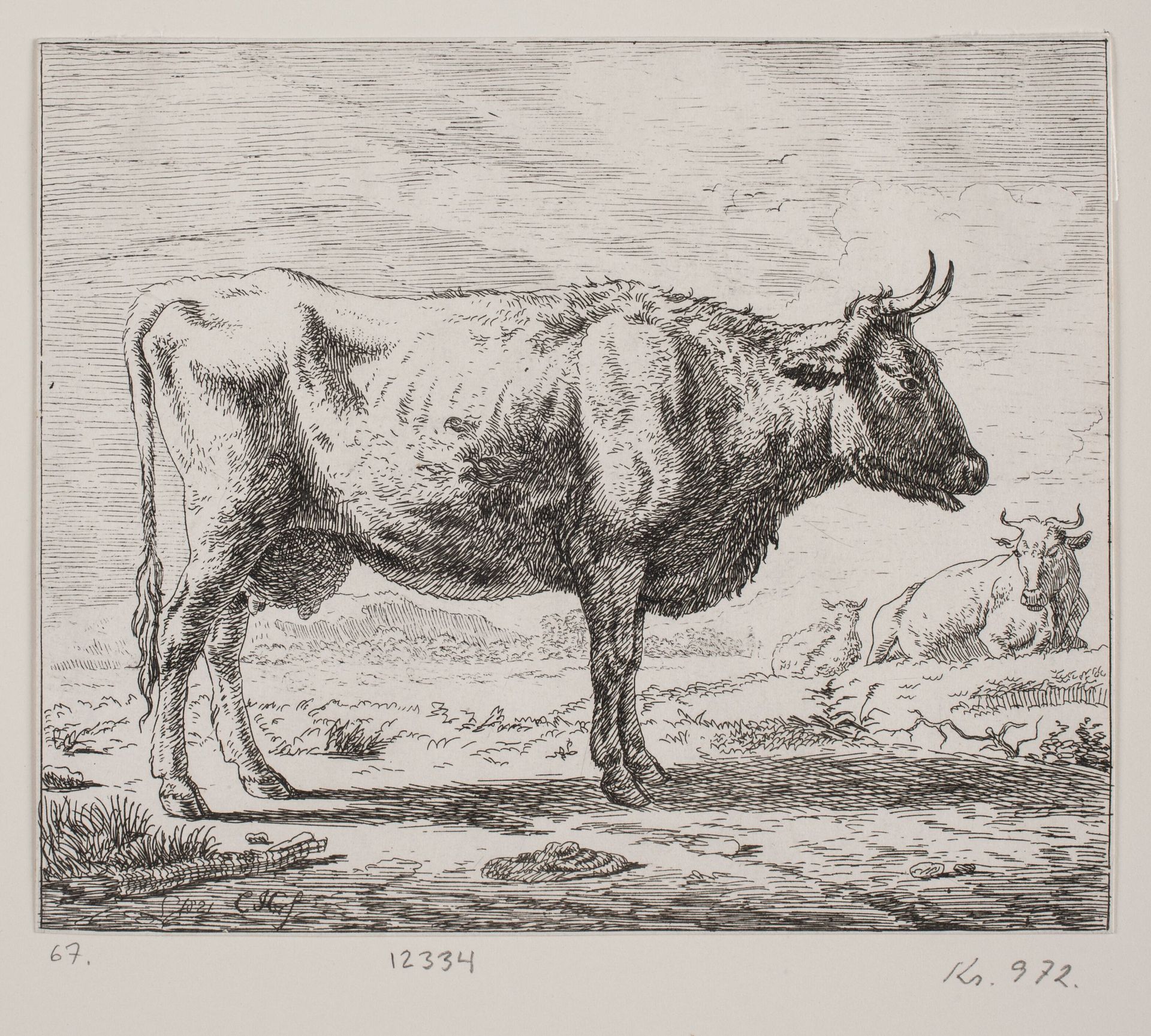
Christian Holm created "Ko i profil", or "Cow in Profile", using etching, a printmaking technique. What strikes you first is likely the density of lines, a kind of controlled chaos that somehow resolves into recognizable forms. Look closely at how Holm uses hatching and cross-hatching. These aren't just techniques for shading; they create texture, volume and a play of light and shadow. See how the linear marks follow the contours of the cow, giving it a sense of three-dimensionality? The cow standing is carefully posed, compared to the cow lying in the background which is barely perceivable. Consider that during Holm's time, the rise of industrialization caused shifts in how people perceived nature and rural life. Holm’s careful detailing could be interpreted as a desire to preserve and study a pastoral subject with scientific precision. Art, in this light, becomes a way of categorizing and understanding the natural world. It raises questions about how we perceive, classify, and assign meaning to the world around us.
Ko i profil 1821


Artwork details
- Medium
- print, engraving
- Dimensions
- 108 mm (height) x 130 mm (width) (bladmaal)
- Location
- SMK - Statens Museum for Kunst
Tags
landscape
geometric
engraving
realism
Comments
No comments
About this artwork
Christian Holm created "Ko i profil", or "Cow in Profile", using etching, a printmaking technique. What strikes you first is likely the density of lines, a kind of controlled chaos that somehow resolves into recognizable forms. Look closely at how Holm uses hatching and cross-hatching. These aren't just techniques for shading; they create texture, volume and a play of light and shadow. See how the linear marks follow the contours of the cow, giving it a sense of three-dimensionality? The cow standing is carefully posed, compared to the cow lying in the background which is barely perceivable. Consider that during Holm's time, the rise of industrialization caused shifts in how people perceived nature and rural life. Holm’s careful detailing could be interpreted as a desire to preserve and study a pastoral subject with scientific precision. Art, in this light, becomes a way of categorizing and understanding the natural world. It raises questions about how we perceive, classify, and assign meaning to the world around us.
Comments
No comments