drawing, pencil
#
portrait
#
drawing
#
charcoal drawing
#
figuration
#
pencil
#
portrait drawing
#
academic-art
#
nude
#
portrait art
#
erotic-art
Copyright: Modern Artists: Artvee
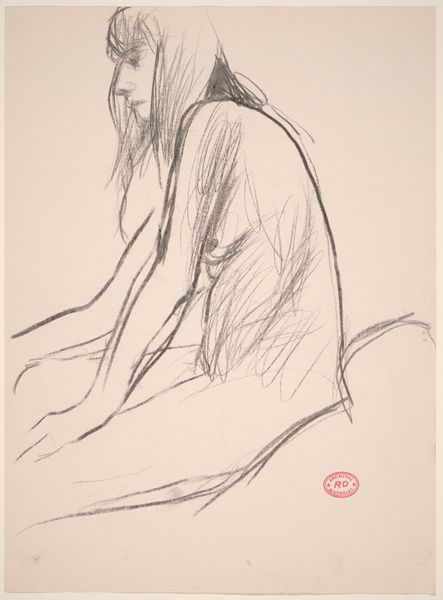
Editor: So, this drawing is "Did I Show You Love" by Soey Milk, created in 2017. The delicacy of the pencil work combined with the starkness of the subject, this almost-nude figure... creates a kind of melancholy. How do you interpret this piece? Curator: Well, let’s consider the title first: “Did I Show You Love”. That question is almost a plea, and it's directed at the viewer, placing us in the position of judge, jury, perhaps even lover. Notice how the figure's gaze is averted. Where does she look? Editor: Downward, towards the flowers. And she's surrounded by those creamy blossoms, peonies, maybe? They almost seem to be weighing her down. Curator: Indeed. Flowers have a rich history in art as symbols of fertility, fragility, and the ephemeral nature of beauty. The ribbons binding her seem to constrain and offer some structural stability in light of a burden; but more curiously, consider how they appear like an umbilical cord, tying her to what exactly? Editor: Maybe it's tying her to those traditional expectations of femininity, like beauty and nurturing. And is it just me, or is there something almost classical about the pose? Curator: You're spot on. The contrapposto, that subtle curve of the spine... it echoes ancient sculptures of goddesses, but with a decidedly modern twist. Think about the vulnerability she expresses alongside that echoing traditional form of classical representation. The seal at the bottom also subtly acknowledges a long history of printmaking traditions. Editor: So, it’s this dialogue between tradition and modern intimacy... really interesting. Curator: Exactly. It uses the language of classical art to speak to very contemporary feelings of vulnerability, desire, and the complex burden of love. Editor: It’s fascinating how Milk uses these historical visual cues to convey such personal, introspective emotion. Curator: Precisely. By engaging with those well-worn symbols, she recharges them with fresh emotional significance, reminding us that certain human experiences are truly timeless, no matter what changes superficially through cultural transmission over time.
Comments
No comments
Be the first to comment and join the conversation on the ultimate creative platform.
 Collect
 React
React Comment
More like this