About this artwork
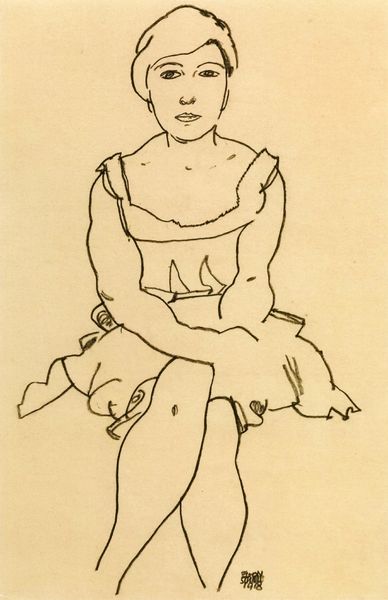
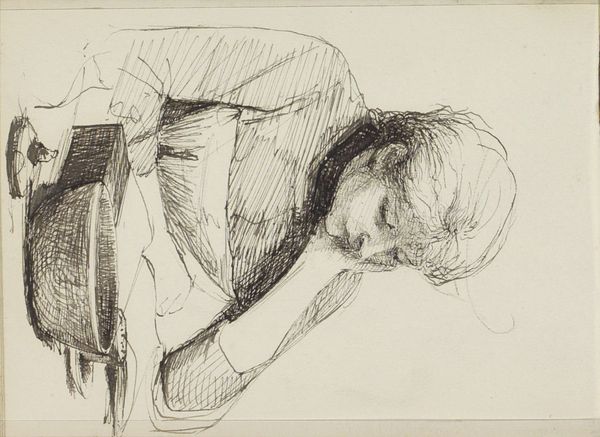
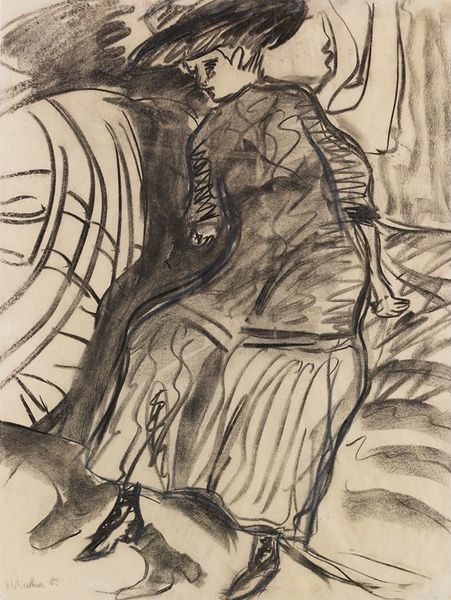
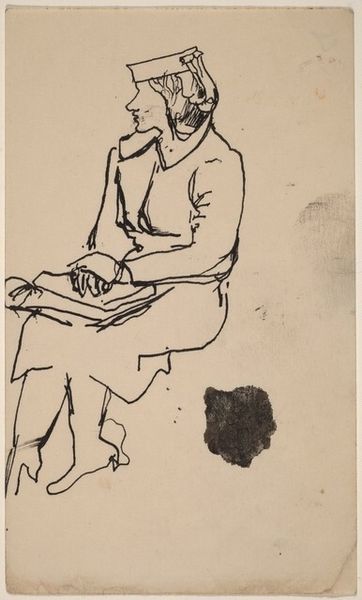
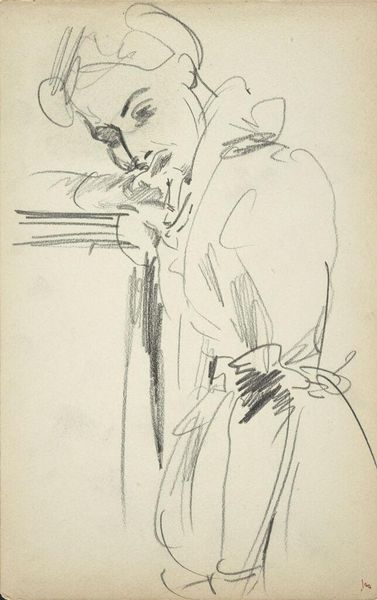
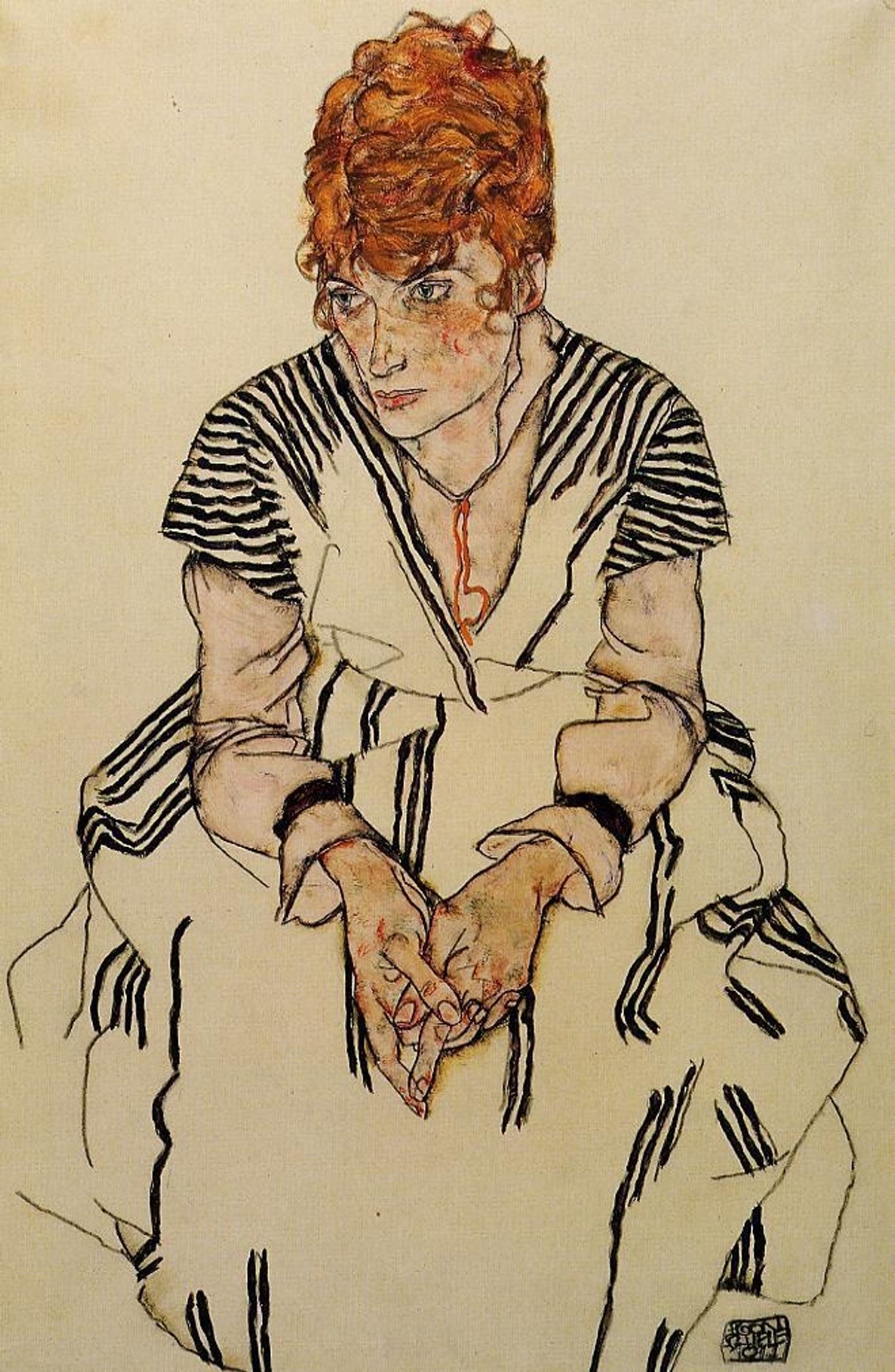
Editor: We're looking at Egon Schiele's "The Artist's Sister-in-Law in a Striped Dress," a pencil drawing from 1917, currently housed in the Albertina in Vienna. The figure seems introspective, almost burdened. What stands out to you? Curator: The starkness of the drawing, the visible anxiety in her posture—it’s classic Schiele. But what's fascinating is its social context. Consider 1917 Vienna: a city grappling with war, social upheaval, and a distinct sense of fin-de-siècle anxiety. Does the drawing capture that historical unease for you? Editor: Absolutely. Her downcast eyes and clasped hands suggest a deep worry. Was portraiture of family members common during this time, or was Schiele using his sister-in-law to convey broader societal anxieties? Curator: Both. While artists often depicted their families, Schiele's portraits often transcend mere likeness. They become studies of psychological states, commenting on the individual's role within a society in crisis. What do you make of the striped dress? Does that uniform-like pattern carry meaning? Editor: That's an interesting point! It’s so repetitive. Almost as if she is caged? Could it represent the societal constraints placed on women at the time? Curator: Precisely! These repetitive elements can be interpreted as visual metaphors for social structures, highlighting the restricted roles and expectations imposed upon individuals, especially women, within early 20th-century Austrian society. Consider the public reception of his works, then and now. Has it changed, do you think? Editor: I imagine that its raw emotionality might have shocked viewers then, while today, it is appreciated for its honesty. This look at art and culture really contextualized it. Curator: Agreed. It is through the lens of history that we understand not only the artwork but also ourselves.
The Artist's Sister in Law in a Striped Dress
1917


Artwork details
- Medium
- drawing, pencil
- Location
- Albertina, Vienna, Austria
- Copyright
- Public domain
Tags
Comments
Share your thoughts
About this artwork
Editor: We're looking at Egon Schiele's "The Artist's Sister-in-Law in a Striped Dress," a pencil drawing from 1917, currently housed in the Albertina in Vienna. The figure seems introspective, almost burdened. What stands out to you? Curator: The starkness of the drawing, the visible anxiety in her posture—it’s classic Schiele. But what's fascinating is its social context. Consider 1917 Vienna: a city grappling with war, social upheaval, and a distinct sense of fin-de-siècle anxiety. Does the drawing capture that historical unease for you? Editor: Absolutely. Her downcast eyes and clasped hands suggest a deep worry. Was portraiture of family members common during this time, or was Schiele using his sister-in-law to convey broader societal anxieties? Curator: Both. While artists often depicted their families, Schiele's portraits often transcend mere likeness. They become studies of psychological states, commenting on the individual's role within a society in crisis. What do you make of the striped dress? Does that uniform-like pattern carry meaning? Editor: That's an interesting point! It’s so repetitive. Almost as if she is caged? Could it represent the societal constraints placed on women at the time? Curator: Precisely! These repetitive elements can be interpreted as visual metaphors for social structures, highlighting the restricted roles and expectations imposed upon individuals, especially women, within early 20th-century Austrian society. Consider the public reception of his works, then and now. Has it changed, do you think? Editor: I imagine that its raw emotionality might have shocked viewers then, while today, it is appreciated for its honesty. This look at art and culture really contextualized it. Curator: Agreed. It is through the lens of history that we understand not only the artwork but also ourselves.
Comments
Share your thoughts