About this artwork
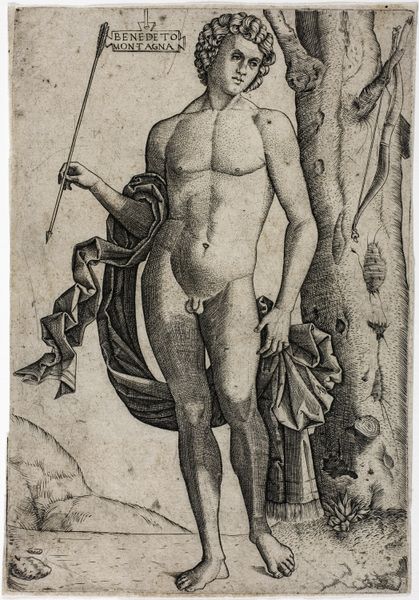
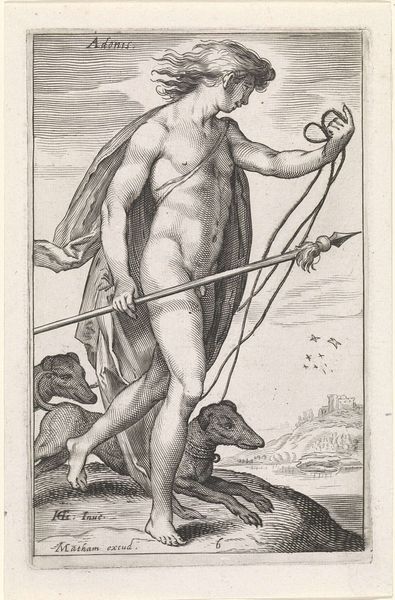
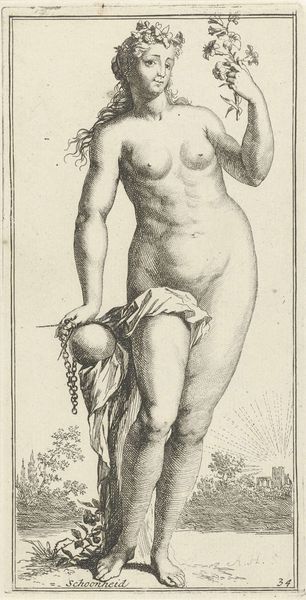
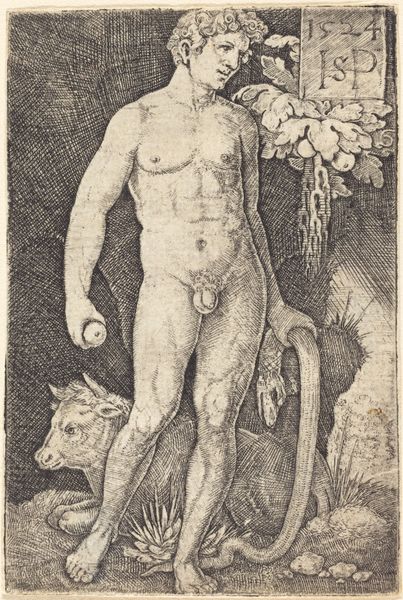
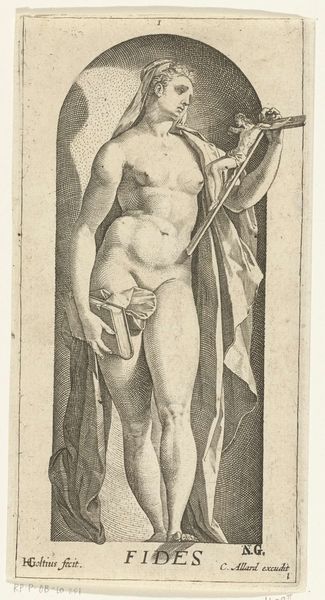
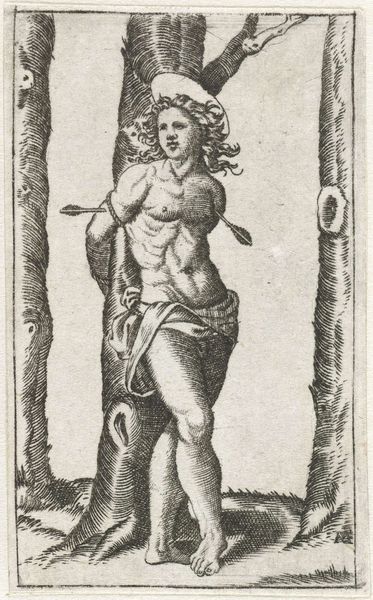
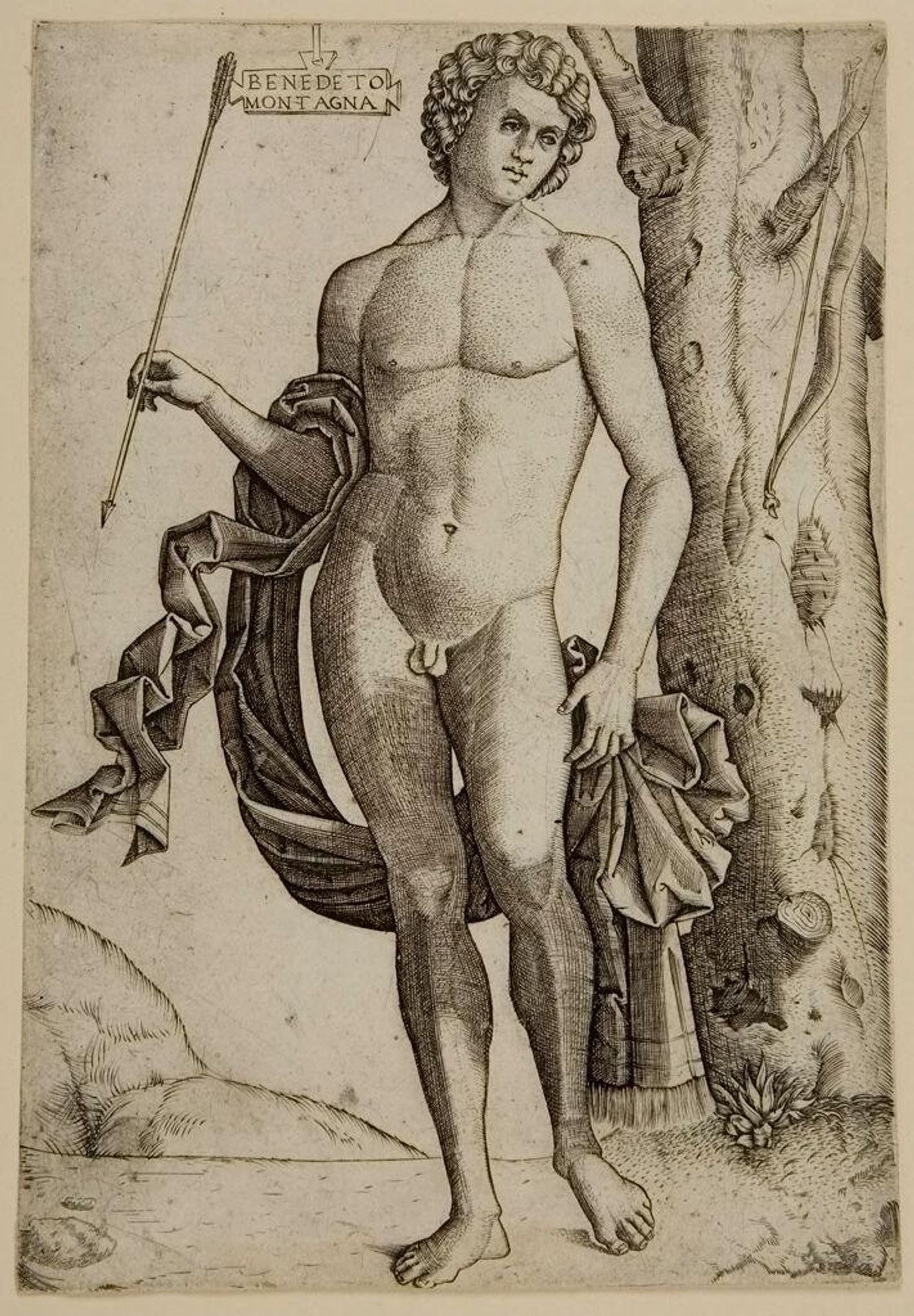
Curator: Looking at Benedetto Montagna's "Man with an Arrow," made around the early 16th century, I'm struck by its ambiguous power dynamic. Editor: Immediately, I read it as a modern-day pastiche, a commentary on the male gaze and vulnerability through the classical symbol of the arrow. It's both alluring and slightly unsettling. Curator: The figure's nudity and arrow evoke classical ideals and pagan mythology, certainly, but I also see the work negotiating ideas of gender and power, particularly as the subject is presented in a passive, almost vulnerable stance. Editor: Yes, his pose references classical forms, but there's a modern twist. The arrow could symbolize not just power, but also the piercing gaze of the viewer, the objectification he faces. Curator: Exactly! Montagna's piece anticipates later conversations about the body and its representation, pointing towards the politicization of the figure. Editor: It's fascinating how a centuries-old image can still resonate with contemporary dialogues about gender, identity, and the legacy of representation. It really makes you think.
Man with an Arrow c. 1510


Artwork details
- Dimensions
- 20.9 Ã 14.2 cm (8 1/4 Ã 5 9/16 in.)
- Location
- Harvard Art Museums
- Copyright
- CC0 1.0
Comments
No comments
About this artwork
Curator: Looking at Benedetto Montagna's "Man with an Arrow," made around the early 16th century, I'm struck by its ambiguous power dynamic. Editor: Immediately, I read it as a modern-day pastiche, a commentary on the male gaze and vulnerability through the classical symbol of the arrow. It's both alluring and slightly unsettling. Curator: The figure's nudity and arrow evoke classical ideals and pagan mythology, certainly, but I also see the work negotiating ideas of gender and power, particularly as the subject is presented in a passive, almost vulnerable stance. Editor: Yes, his pose references classical forms, but there's a modern twist. The arrow could symbolize not just power, but also the piercing gaze of the viewer, the objectification he faces. Curator: Exactly! Montagna's piece anticipates later conversations about the body and its representation, pointing towards the politicization of the figure. Editor: It's fascinating how a centuries-old image can still resonate with contemporary dialogues about gender, identity, and the legacy of representation. It really makes you think.
Comments
No comments