About this artwork
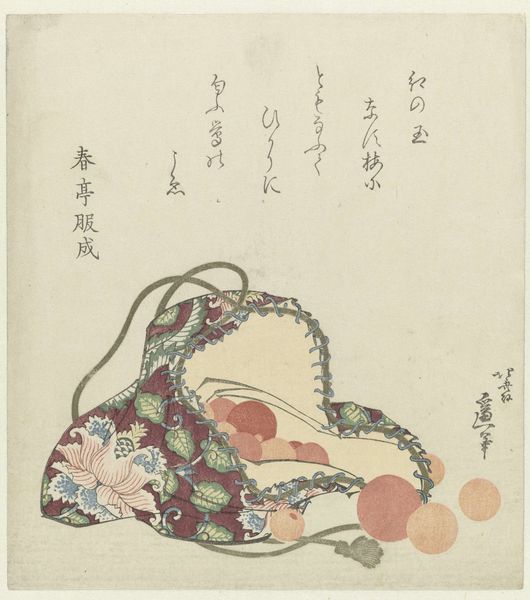
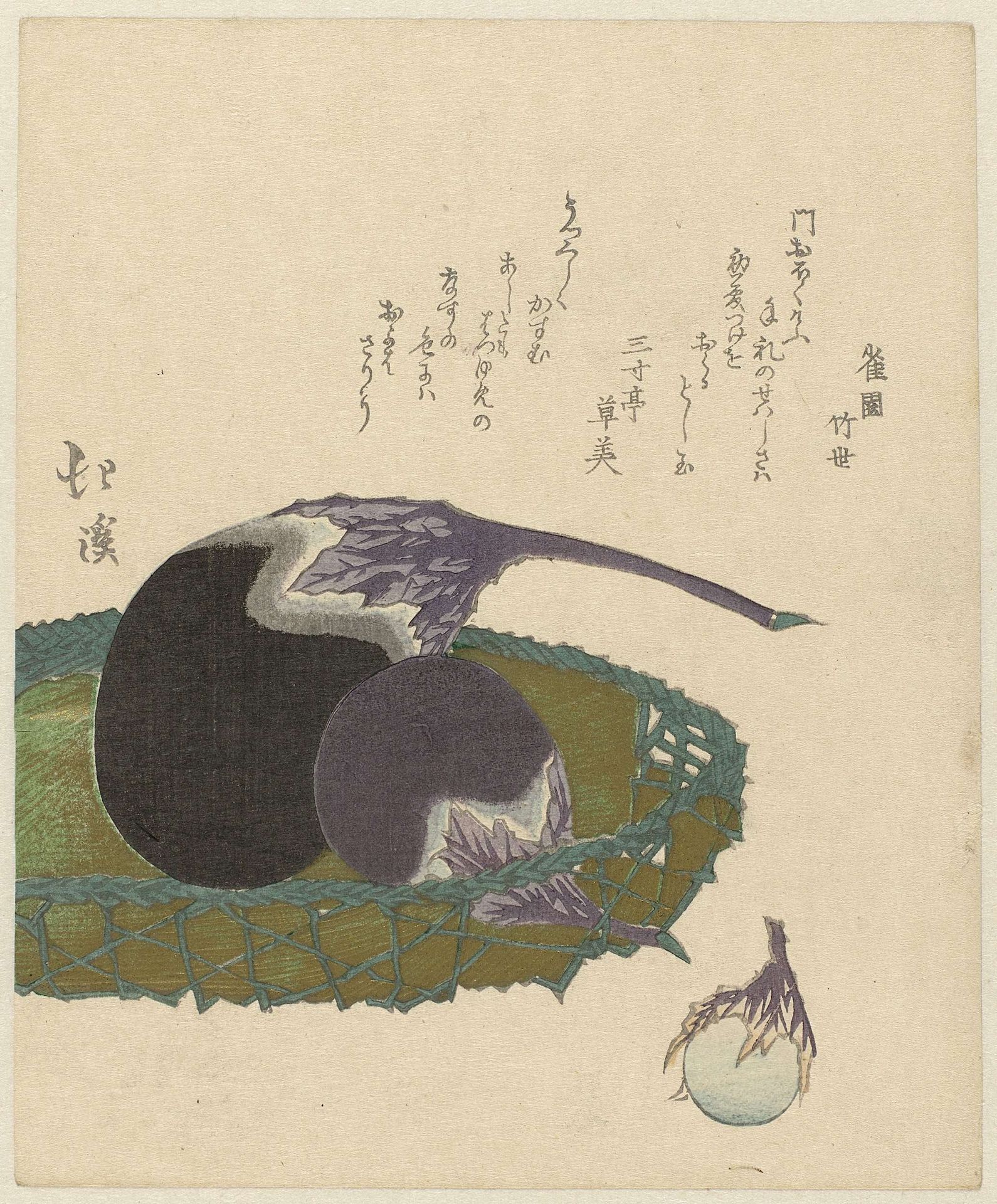
This woodblock print of eggplants in a basket was created by Totoya Hokkei in the early 19th century. Here, the eggplant, or ‘nasu,’ is not simply a vegetable, but a symbol deeply rooted in cultural beliefs. In Japanese tradition, the eggplant is associated with good fortune, particularly when dreamt of at the beginning of the New Year. Its plump form mirrors that of the sacred jewel, embodying wealth and prosperity. We see echoes of this symbolism in Renaissance depictions of fruit, where abundance signals divine favor, yet the eggplant carries a particularly Japanese nuance of quiet, domestic well-being. The arrangement within the basket, a common motif in still life across cultures, speaks to a desire for order and containment. This humble scene of eggplants, laden with cultural significance, provides a potent, subconscious engagement with symbols of luck and prosperity, resonating through the ages.

Artwork details
- Dimensions
- height 210 mm, width 185 mm
- Location
- Rijksmuseum
- Copyright
- Rijks Museum: Open Domain
Comments
Share your thoughts
About this artwork
This woodblock print of eggplants in a basket was created by Totoya Hokkei in the early 19th century. Here, the eggplant, or ‘nasu,’ is not simply a vegetable, but a symbol deeply rooted in cultural beliefs. In Japanese tradition, the eggplant is associated with good fortune, particularly when dreamt of at the beginning of the New Year. Its plump form mirrors that of the sacred jewel, embodying wealth and prosperity. We see echoes of this symbolism in Renaissance depictions of fruit, where abundance signals divine favor, yet the eggplant carries a particularly Japanese nuance of quiet, domestic well-being. The arrangement within the basket, a common motif in still life across cultures, speaks to a desire for order and containment. This humble scene of eggplants, laden with cultural significance, provides a potent, subconscious engagement with symbols of luck and prosperity, resonating through the ages.
Comments
Share your thoughts