About this artwork
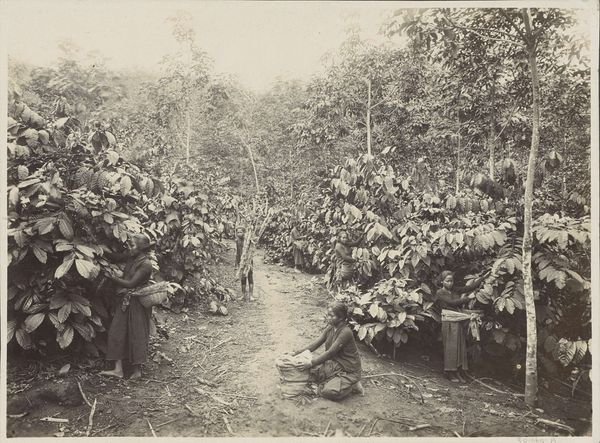
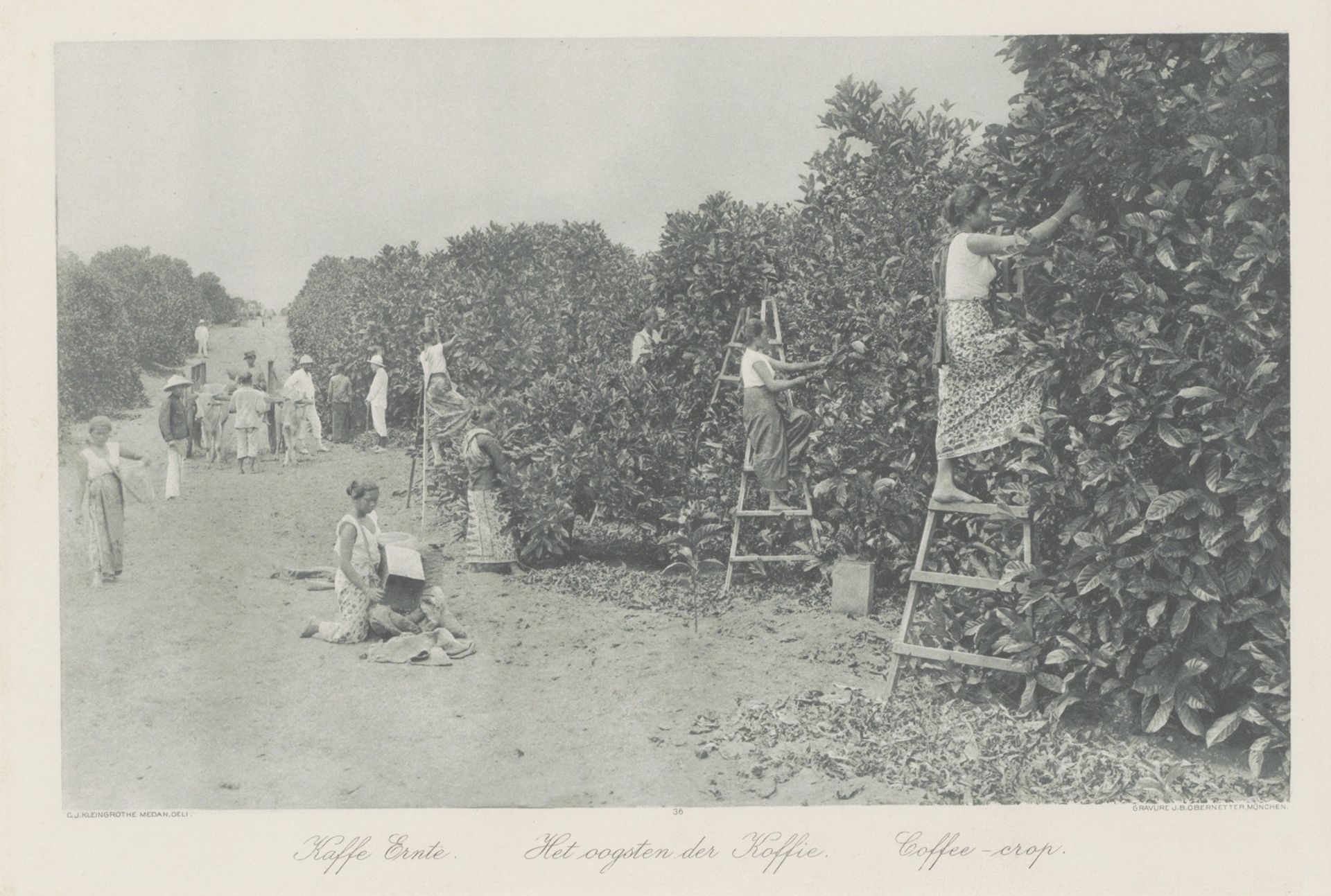
Carl Kleingrothe made this photogravure called "Koffiepluksters op een plantage te Sumatra" which translates to "Coffee pickers on a plantation in Sumatra." Sumatra, now part of Indonesia, was then part of the Dutch East Indies, and the photograph offers us a glimpse into the colonial era's labor practices. The image captures a scene of women harvesting coffee beans, some standing on ladders, others on the ground, and all under the watchful eyes of overseers. The composition subtly reveals the racial and class hierarchies inherent in the colonial system. The women, likely local Sumatran laborers, are central to the coffee production that fueled the European economy. It invites us to consider their personal stories, their daily struggles, and the complex relationship between their labor and the global demand for coffee. This photograph serves not only as a historical record but also as a reminder of the human cost of colonialism and the unequal power dynamics that shaped the lives of so many.
Koffiepluksters op een plantage te Sumatra
before 1898

Carl J. Kleingrothe
1864 - 1925Location
RijksmuseumArtwork details
- Dimensions
- height 286 mm, width 179 mm
- Location
- Rijksmuseum
- Copyright
- Rijks Museum: Open Domain
Comments
Share your thoughts
About this artwork
Carl Kleingrothe made this photogravure called "Koffiepluksters op een plantage te Sumatra" which translates to "Coffee pickers on a plantation in Sumatra." Sumatra, now part of Indonesia, was then part of the Dutch East Indies, and the photograph offers us a glimpse into the colonial era's labor practices. The image captures a scene of women harvesting coffee beans, some standing on ladders, others on the ground, and all under the watchful eyes of overseers. The composition subtly reveals the racial and class hierarchies inherent in the colonial system. The women, likely local Sumatran laborers, are central to the coffee production that fueled the European economy. It invites us to consider their personal stories, their daily struggles, and the complex relationship between their labor and the global demand for coffee. This photograph serves not only as a historical record but also as a reminder of the human cost of colonialism and the unequal power dynamics that shaped the lives of so many.
Comments
Share your thoughts