About this artwork
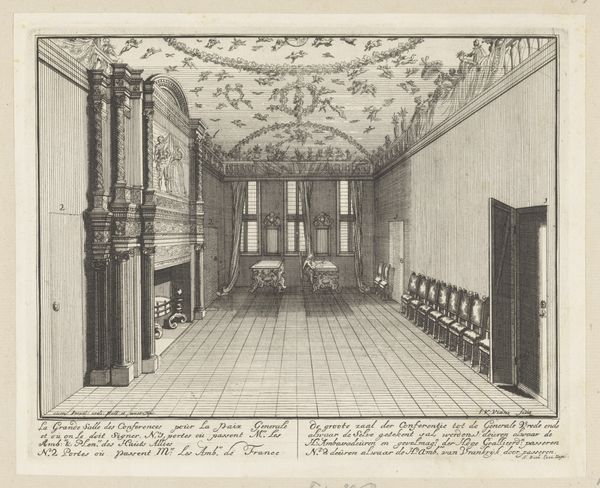
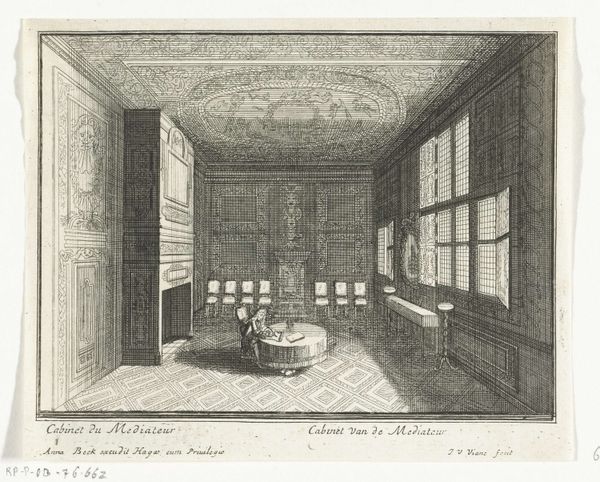
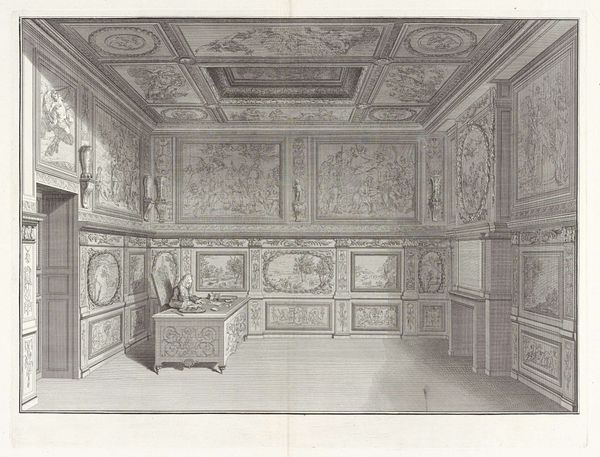
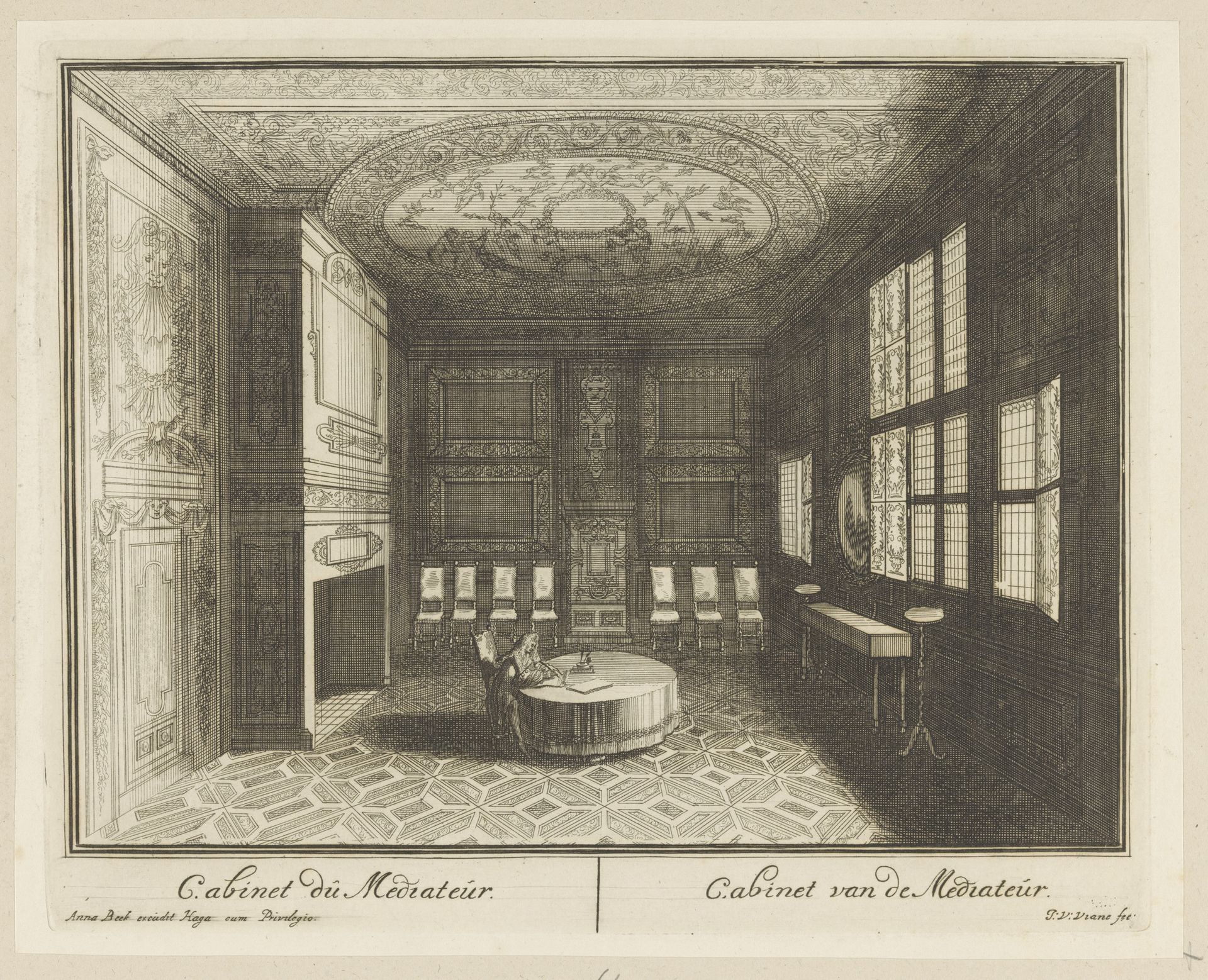
Jan van Vianen made this print in 1697, depicting the interior of the House ter Nieuburch in Rijswijk. The image presents us with a space meticulously arranged for diplomatic proceedings. It's useful to know that the House ter Nieuburch was the site where the Treaty of Rijswijk was signed, marking the end of the Nine Years' War. Van Vianen’s print offers a glimpse into the cultural and political theater of 17th-century European diplomacy, where the setting itself played a role in conveying power and authority. The symmetry, the ornamentation, the carefully placed chairs - all these details speak to the importance of protocol and decorum in these negotiations. Art historians might look into architectural plans, diplomatic records, and even fashion plates to better understand the context in which the print was made. This print is not just an image, it’s a document of cultural and institutional history.
Kabinet van de bemiddelaar in het Huis ter Nieuburch in Rijswijk, 1697
1697

Jan van Vianen
1660 - 1726Location
RijksmuseumArtwork details
- Medium
- drawing, engraving
- Dimensions
- height 220 mm, width 273 mm
- Location
- Rijksmuseum
- Copyright
- Rijks Museum: Open Domain
Tags
Comments
Share your thoughts
About this artwork
Jan van Vianen made this print in 1697, depicting the interior of the House ter Nieuburch in Rijswijk. The image presents us with a space meticulously arranged for diplomatic proceedings. It's useful to know that the House ter Nieuburch was the site where the Treaty of Rijswijk was signed, marking the end of the Nine Years' War. Van Vianen’s print offers a glimpse into the cultural and political theater of 17th-century European diplomacy, where the setting itself played a role in conveying power and authority. The symmetry, the ornamentation, the carefully placed chairs - all these details speak to the importance of protocol and decorum in these negotiations. Art historians might look into architectural plans, diplomatic records, and even fashion plates to better understand the context in which the print was made. This print is not just an image, it’s a document of cultural and institutional history.
Comments
Share your thoughts