About this artwork
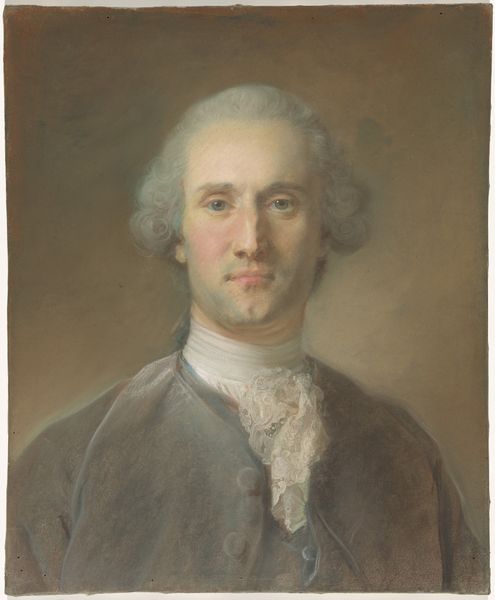
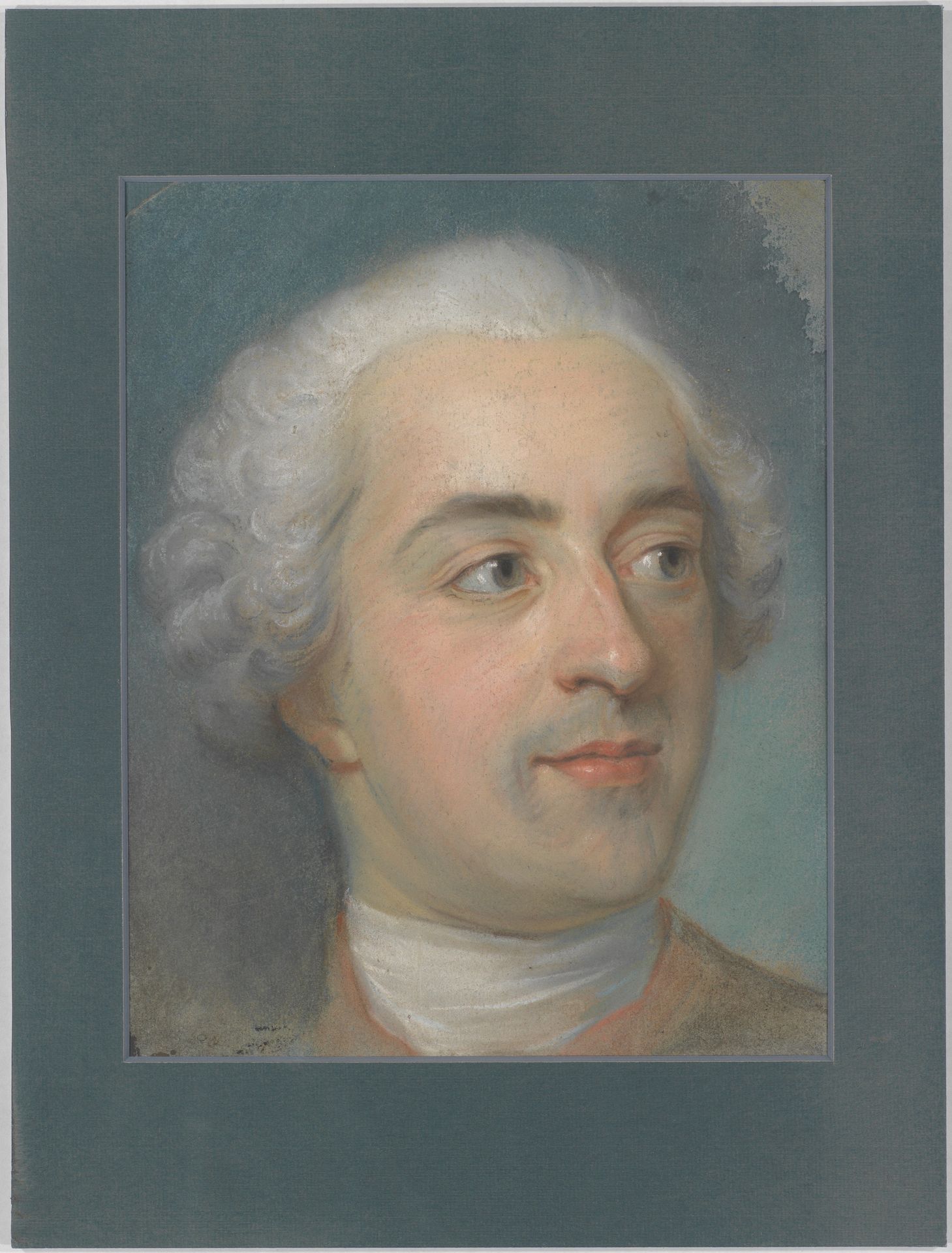
Curator: Before us hangs Maurice Quentin de La Tour's "Preparation for a Portrait of Louis XV (1710-1774)," created around 1745. The piece is currently housed at The Metropolitan Museum of Art. Editor: My immediate impression is one of restrained elegance, despite its preliminary nature. The pastels give the subject a softness, almost vulnerability, which is unexpected for a royal portrait, especially in this era of rigid representation and academic artistic codes. Curator: La Tour was renowned for his mastery of pastel, a medium that allowed him a certain freedom and speed compared to oil painting. Examining this piece through a material lens, one can see the appeal for portraiture in a court setting, considering it's potentially a faster medium to work with under pressure and time constraints from the royal court, don't you think? Editor: Absolutely. The choice of pastel is incredibly important here. While oil painting was traditionally reserved for higher-status portraiture, La Tour elevates pastel to capture the essence of power. The pastels lend a luminosity that feels modern, yet its placement within the broader Rococo art movement makes it an exceptional piece within the established court structure of the period. How subversive it is to portray royalty in what might have then been seen as a more approachable medium! Curator: I agree. The technique itself is intriguing, looking closely we see that it focuses solely on the head. In regards to labor and process, it makes perfect sense if this preparation of the piece served to obtain preliminary sketches on key elements before integrating these components in a final composition with more costly materials and commissioned studio work. Editor: This really makes us think of how identity can be constructed—and perhaps also deconstructed—through artistic representation. Louis XV, often depicted in grandiose settings to establish legitimacy, is here almost exposed, which can spark reflections about masculinity, vulnerability, and the burdens of leadership during times of growing dissent towards absolute monarchies. Curator: Exactly. By focusing on the materials and the method of production we start revealing a deeper relationship between art, labor and social forces in 18th century France. Editor: Considering how portraits have historically served as tools for social and political assertion, seeing it from these perspectives makes this an even more complex and historically insightful artwork to reflect on. Curator: Indeed.
Préparation for a Portrait of Louis XV (1710-1774)
1745

Maurice Quentin de La Tour
1704 - 1788
The Metropolitan Museum of Art
Metropolitan Museum of Art, New York, NYArtwork details
- Dimensions
- sheet (original sheet): 12 7/8 x 9 7/16 in. (32.7 x 24 cm)
- Location
- Metropolitan Museum of Art, New York, NY
- Copyright
- Public Domain
Comments
Share your thoughts
About this artwork
Curator: Before us hangs Maurice Quentin de La Tour's "Preparation for a Portrait of Louis XV (1710-1774)," created around 1745. The piece is currently housed at The Metropolitan Museum of Art. Editor: My immediate impression is one of restrained elegance, despite its preliminary nature. The pastels give the subject a softness, almost vulnerability, which is unexpected for a royal portrait, especially in this era of rigid representation and academic artistic codes. Curator: La Tour was renowned for his mastery of pastel, a medium that allowed him a certain freedom and speed compared to oil painting. Examining this piece through a material lens, one can see the appeal for portraiture in a court setting, considering it's potentially a faster medium to work with under pressure and time constraints from the royal court, don't you think? Editor: Absolutely. The choice of pastel is incredibly important here. While oil painting was traditionally reserved for higher-status portraiture, La Tour elevates pastel to capture the essence of power. The pastels lend a luminosity that feels modern, yet its placement within the broader Rococo art movement makes it an exceptional piece within the established court structure of the period. How subversive it is to portray royalty in what might have then been seen as a more approachable medium! Curator: I agree. The technique itself is intriguing, looking closely we see that it focuses solely on the head. In regards to labor and process, it makes perfect sense if this preparation of the piece served to obtain preliminary sketches on key elements before integrating these components in a final composition with more costly materials and commissioned studio work. Editor: This really makes us think of how identity can be constructed—and perhaps also deconstructed—through artistic representation. Louis XV, often depicted in grandiose settings to establish legitimacy, is here almost exposed, which can spark reflections about masculinity, vulnerability, and the burdens of leadership during times of growing dissent towards absolute monarchies. Curator: Exactly. By focusing on the materials and the method of production we start revealing a deeper relationship between art, labor and social forces in 18th century France. Editor: Considering how portraits have historically served as tools for social and political assertion, seeing it from these perspectives makes this an even more complex and historically insightful artwork to reflect on. Curator: Indeed.
Comments
Share your thoughts