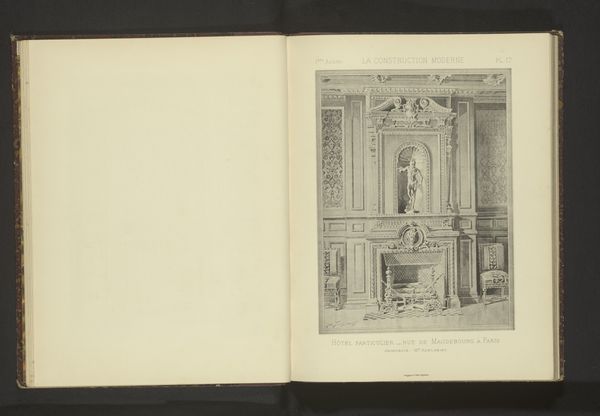
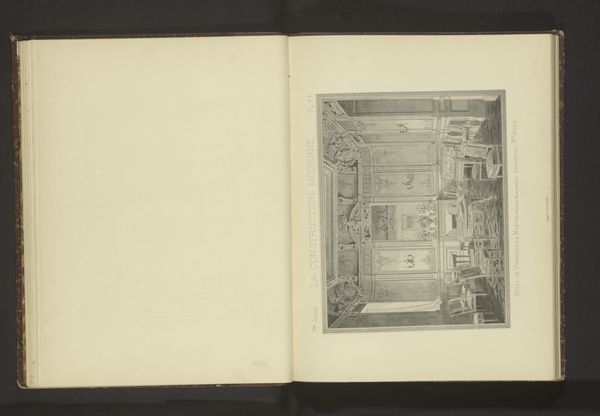
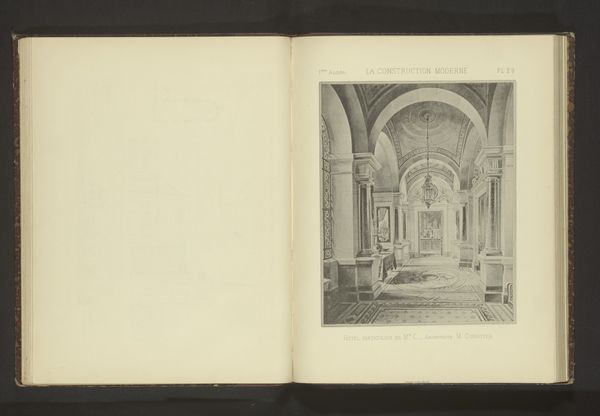
Reproductie van een prent van een schoorsteenmantel in een stadspaleis aan de Rue de Magdebourg in Parijs door H. Toussaint before 1886
0:00
0:00

Dimensions: height 268 mm, width 196 mm
Copyright: Rijks Museum: Open Domain
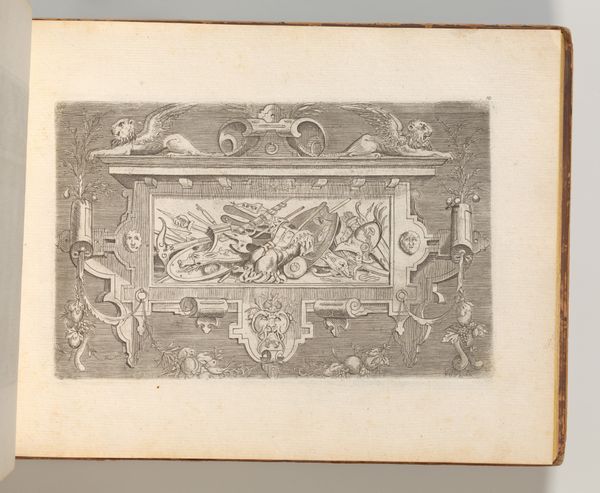
This print by Paul Dujardin depicts a chimney mantle in a Parisian town palace. Above the hearth, observe the prominent shield, flanked by mythical beasts, likely dragons or griffins. These creatures, symbols of power and guardianship, evoke a sense of ancestral strength. Such imagery is no isolated incident. We see these guardians echoed through the ages—from the lamassu figures of ancient Assyria to the heraldic symbols of medieval Europe. In ancient Greece, the griffin was believed to guard treasures and sacred sites. Over time, the griffin's significance shifted, often representing courage and military strength, as seen in countless coats of arms. This transformation reveals how symbols, rooted in the subconscious, adapt to reflect changing cultural values. Consider how the viewer might unconsciously associate this crest with ideas of protection and legacy. The emotional weight of this image lies in its ability to tap into our collective memory, engaging us on a deeply primal level. Symbols are vessels traveling across time, carrying with them a cargo of cultural and emotional significance, ever evolving with each new encounter.
Comments
No comments
Be the first to comment and join the conversation on the ultimate creative platform.
 Collect
 React
React Comment
More like this