

Possibly 1918
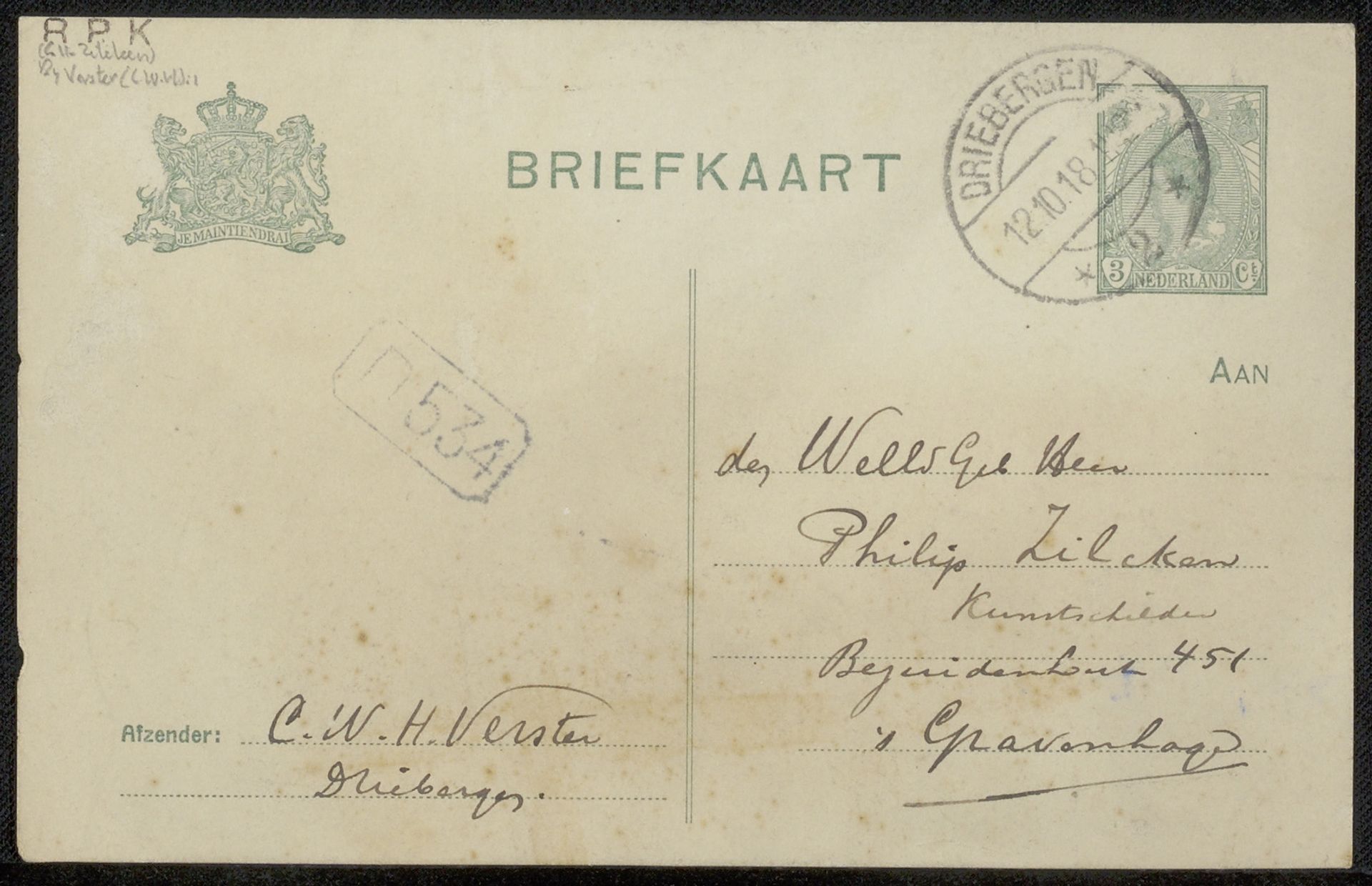
Briefkaart aan Philip Zilcken

Listen to curator's interpretation
Curatorial notes
Editor: So, here we have “Briefkaart aan Philip Zilcken,” possibly from 1918, by Cornelis Willem Hendrik Verster van Wulverhorst, created using drawing on paper. It's a rather unassuming postcard, really, but the script is very beautiful. How do you see this fitting into the art historical context? Curator: It’s fascinating how seemingly mundane objects like postcards offer a glimpse into the artistic networks and socio-political climate of the time. Given the likely date of 1918, what do you think might have been influencing artists in the Netherlands? Editor: Well, that would be right at the tail end of the First World War. Though the Netherlands remained neutral, I imagine the art world still felt those reverberations. Curator: Exactly. And Zilcken was himself a well-known artist and critic. Consider how this postcard functioned within their world. This wasn't simply a casual greeting; it was communication between established figures in the Dutch art scene. Also, think about how the very act of sending a "briefkaart"—a card that could be displayed publicly—positioned this exchange within the broader cultural landscape. Editor: I hadn't considered the public nature of it! Does the location - Driebergen - carry any weight? Curator: Possibly. Knowing where Verster was sending the card from might reveal connections to a particular artistic community, or even provide insight into exhibition schedules, artistic circles, or emerging trends. The networks between artists often determine how a movement or style becomes prominent. Editor: That makes so much sense. It’s like a tiny artifact with so much cultural weight to it. I’ll never look at postcards the same way! Curator: Precisely! The "Briefkaart aan Philip Zilcken" reminds us that even everyday objects can unlock significant historical insights into the cultural landscape.