1608
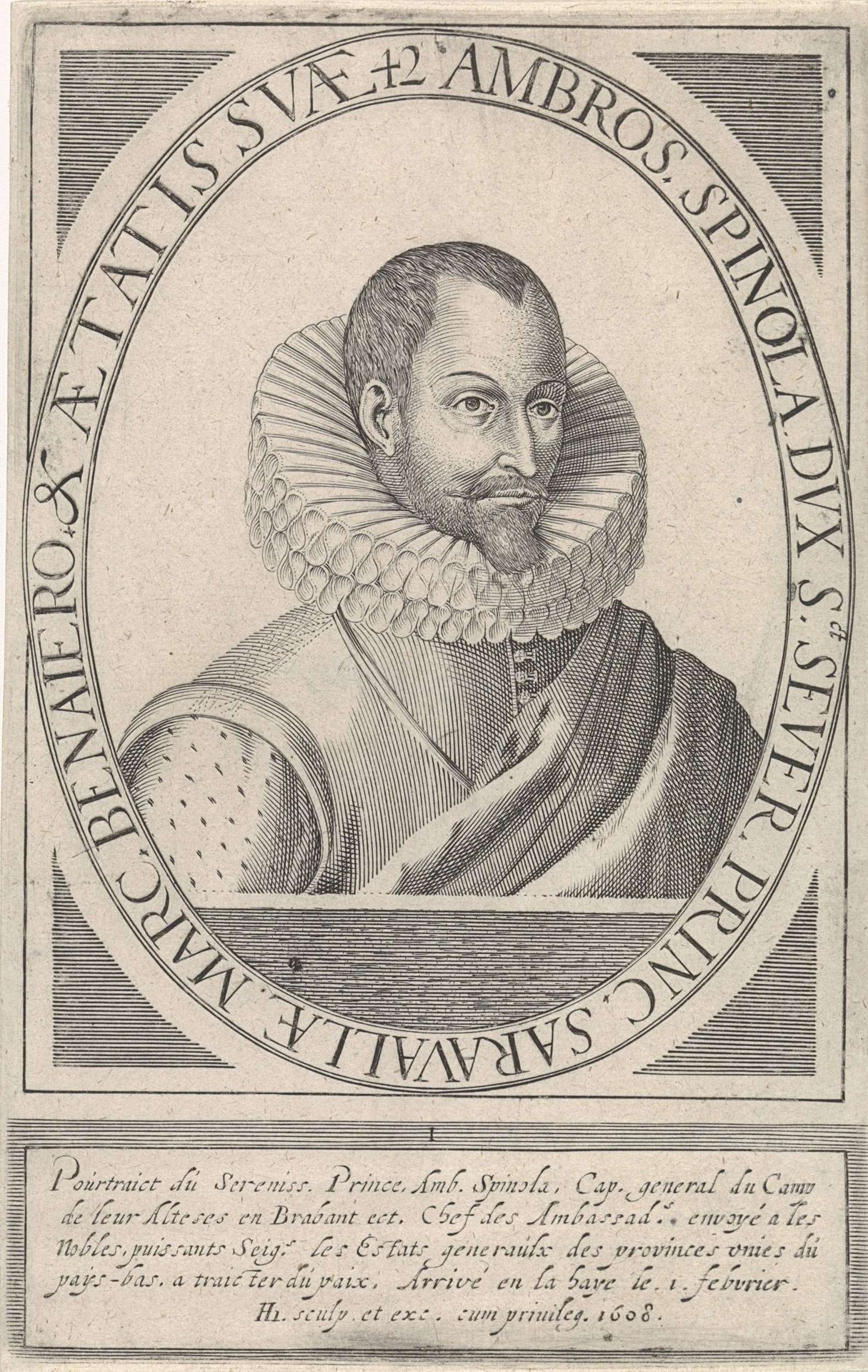
Portret van Ambrogio Spinola, markies de los Balbases

Hendrick Hondius I
1573 - 1650Location
RijksmuseumListen to curator's interpretation
Curatorial notes
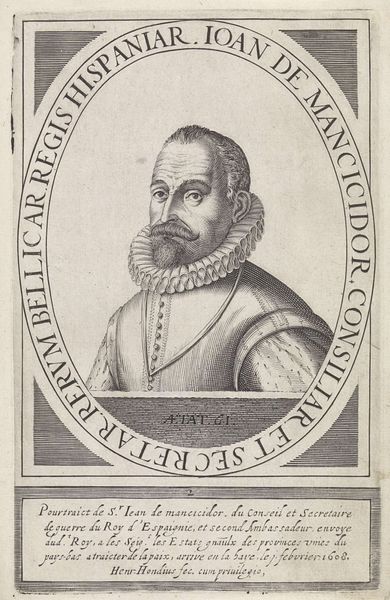
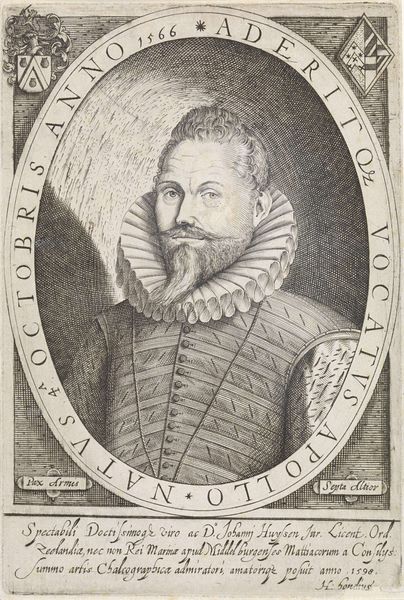
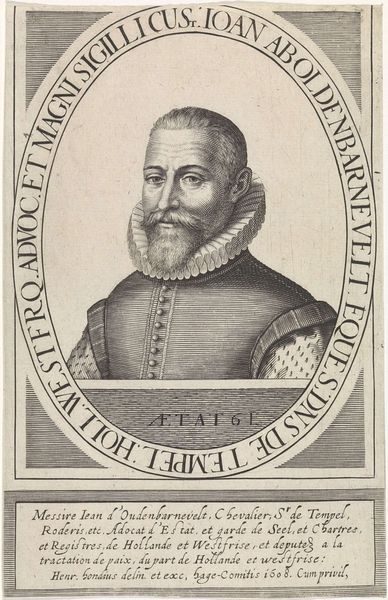
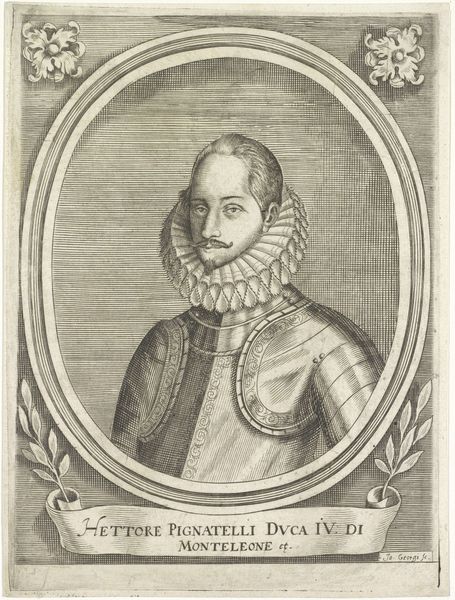
Editor: This is "Portrait of Ambrogio Spinola, Marquis of Los Balbases," a print from 1608 by Hendrick Hondius I, currently at the Rijksmuseum. What immediately strikes me is the incredible detail achieved through engraving – look at the ruff! How can lines alone create such an impression of opulent fabric? What do you make of it? Curator: The materiality speaks volumes. Consider the cost and labour involved in creating an engraving like this. This wasn't a quick sketch; it demanded precision, skill, and time. Prints like this served a purpose, disseminating images and solidifying the Spinola's status as military leader. The means of production are crucial to understanding its impact. Editor: So, it’s less about Spinola as an individual and more about the print as a commodity? Curator: Exactly. It's about understanding art as a product shaped by economic and social forces. This portrait, replicated and distributed, becomes a tool for crafting an image and upholding power structures. The work is as important as its circulation, reception and consumption. Where would this have been circulated and to whom? Editor: I guess I was initially drawn to the detail, seeing it as a showcase of the artist's skill… Curator: And that skill served a very specific function. Hondius, through his mastery of engraving, participates in this larger project of image-making. How does the relatively "cheap" reproducibility affect portraiture norms, I wonder? Editor: I see. Thinking about it as a commodity and part of a distribution network changes my perspective. It wasn't just a portrait, it was propaganda. Curator: Precisely. The material conditions of its creation are inextricable from its meaning. This print serves as both record of elite standing and an endorsement of existing power structures of the period.