About this artwork
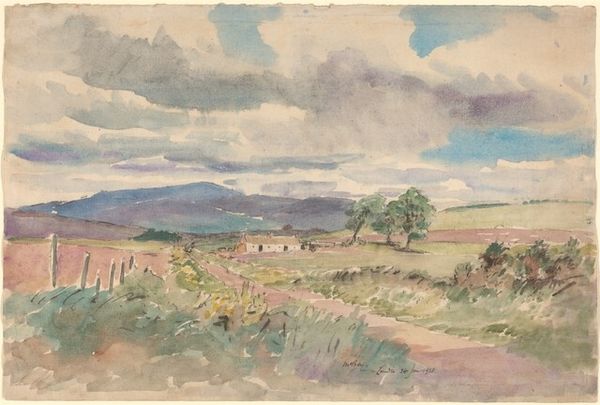
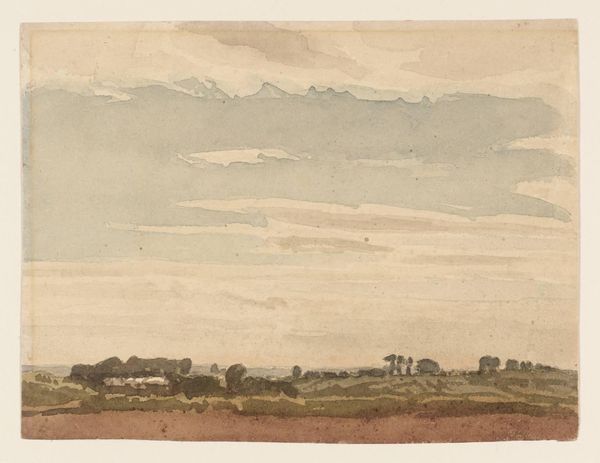
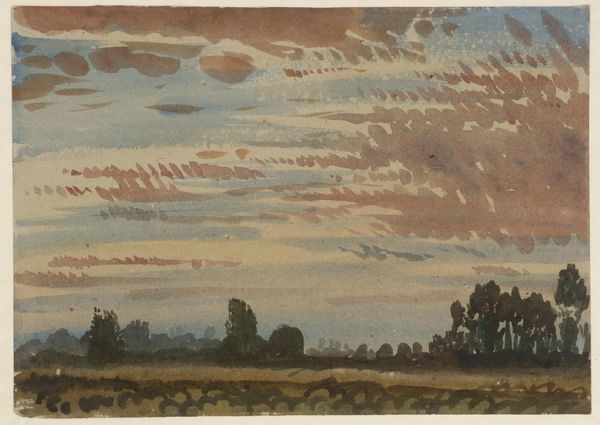
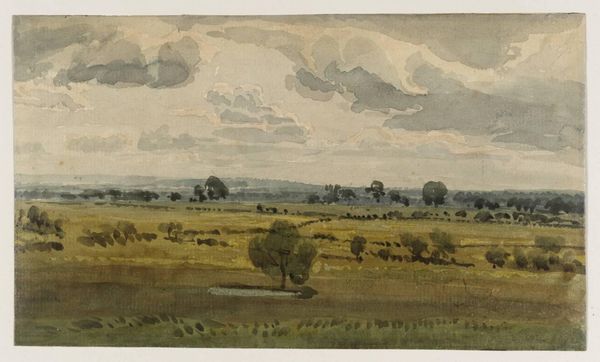
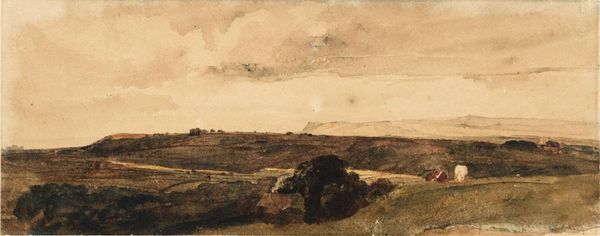
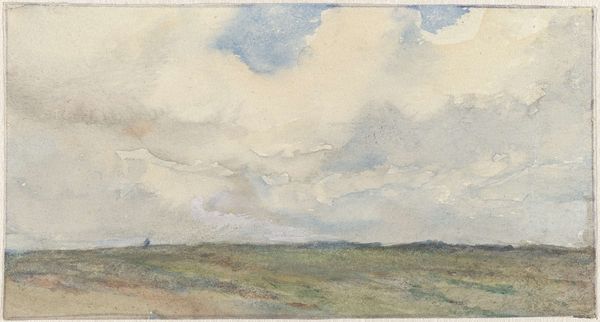
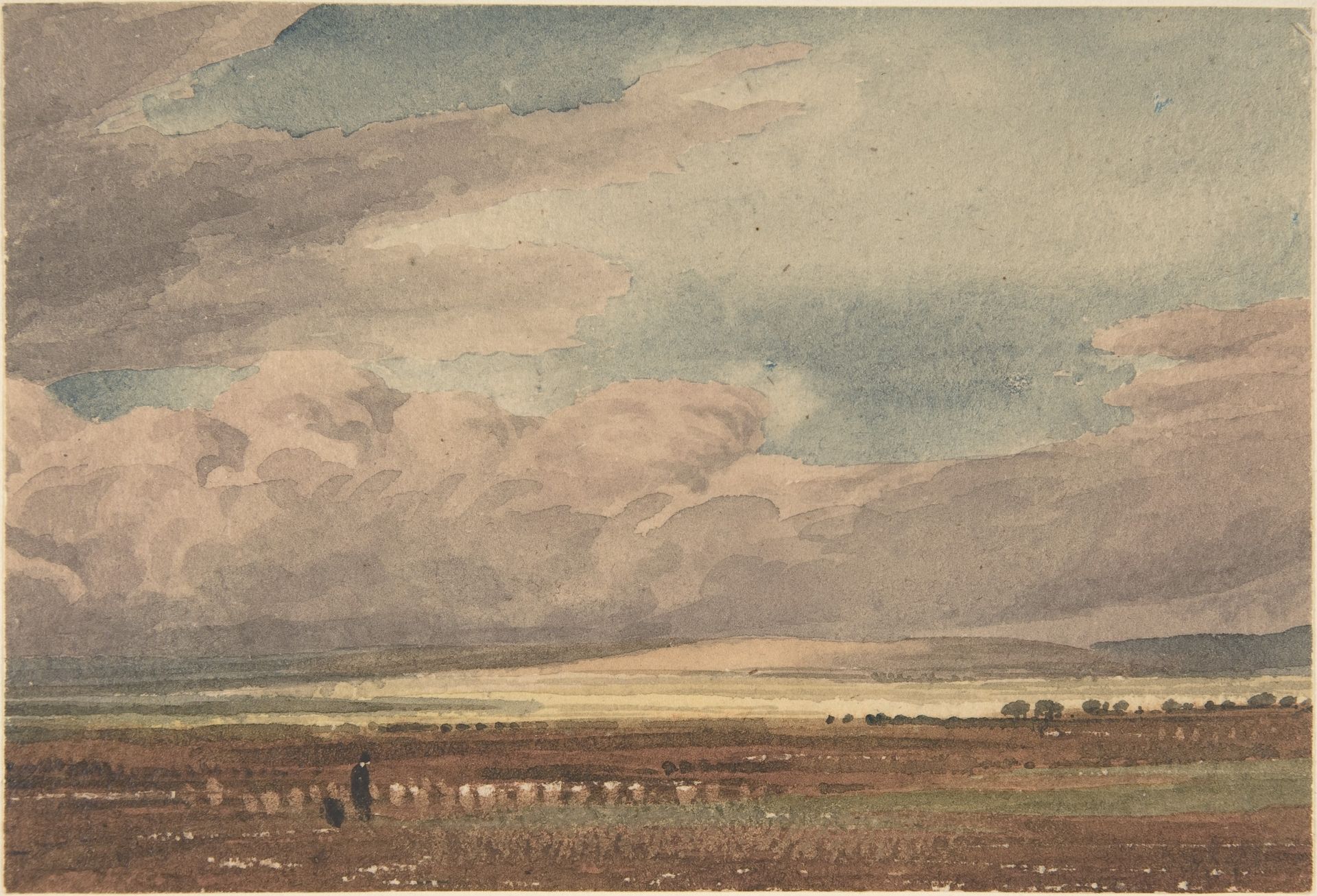
William Turner of Oxford made this watercolor on paper, titled 'Salisbury Plain with Old Sarum in the Distance, Wiltshire', sometime during his career. Here, the artist captures the vastness of Salisbury Plain, dominated by an expansive sky, with the historical site of Old Sarum visible on the horizon. The image creates meaning through its visual codes, cultural references, and historical associations, all of which reflect England during Turner's time. Salisbury Plain, known for its ancient history and prehistoric monuments like Stonehenge, carries a weight of cultural significance. In Turner's time, the site was a symbol of England’s rural past, but also a place of military exercise. The lone figures in the foreground suggest both the insignificance of the individual and a romantic connection with the landscape. Understanding a work like this involves looking into institutional archives, historical surveys, and critical literature to reveal the complex interplay of nature, history, and social identity. Only then can we appreciate the full depth of its cultural meaning.
Salisbury Plain with Old Sarum in the Distance, Wiltshire
1810 - 1862

William Turner of Oxford
1789 - 1862
The Metropolitan Museum of Art
Metropolitan Museum of Art, New York, NYArtwork details
- Medium
- drawing, painting, plein-air, watercolor
- Dimensions
- sheet: 4 3/4 x 6 15/16 in. (12 x 17.7 cm)
- Location
- Metropolitan Museum of Art, New York, NY
- Copyright
- Public Domain
Tags
Comments
Share your thoughts
About this artwork
William Turner of Oxford made this watercolor on paper, titled 'Salisbury Plain with Old Sarum in the Distance, Wiltshire', sometime during his career. Here, the artist captures the vastness of Salisbury Plain, dominated by an expansive sky, with the historical site of Old Sarum visible on the horizon. The image creates meaning through its visual codes, cultural references, and historical associations, all of which reflect England during Turner's time. Salisbury Plain, known for its ancient history and prehistoric monuments like Stonehenge, carries a weight of cultural significance. In Turner's time, the site was a symbol of England’s rural past, but also a place of military exercise. The lone figures in the foreground suggest both the insignificance of the individual and a romantic connection with the landscape. Understanding a work like this involves looking into institutional archives, historical surveys, and critical literature to reveal the complex interplay of nature, history, and social identity. Only then can we appreciate the full depth of its cultural meaning.
Comments
Share your thoughts