
Curatorial notes
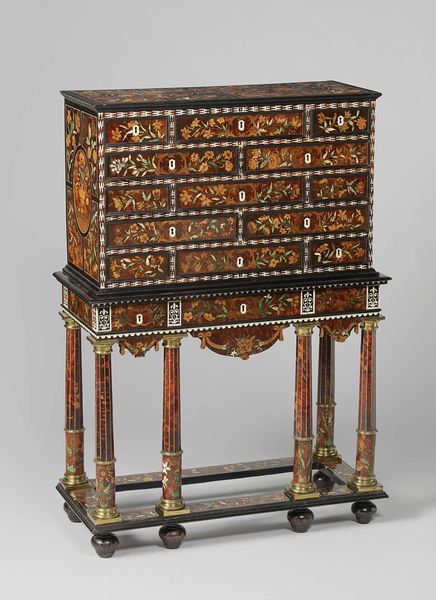
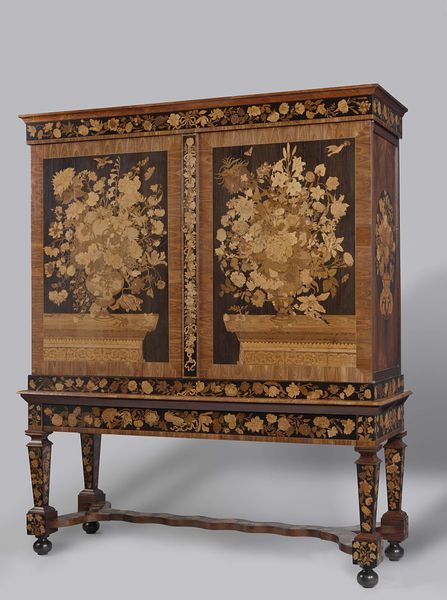
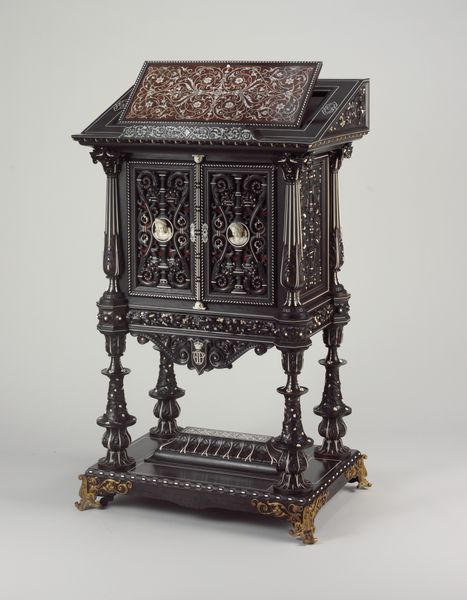
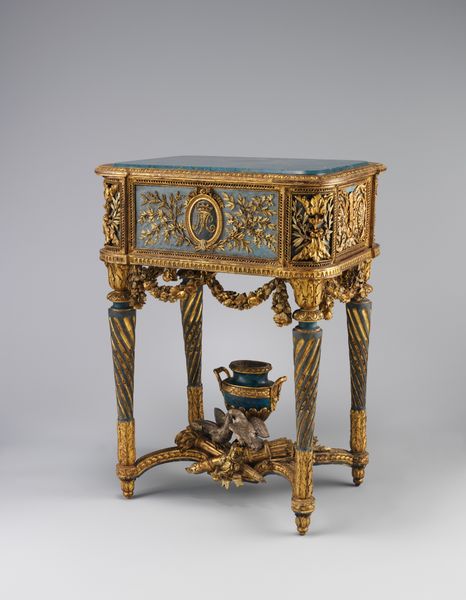
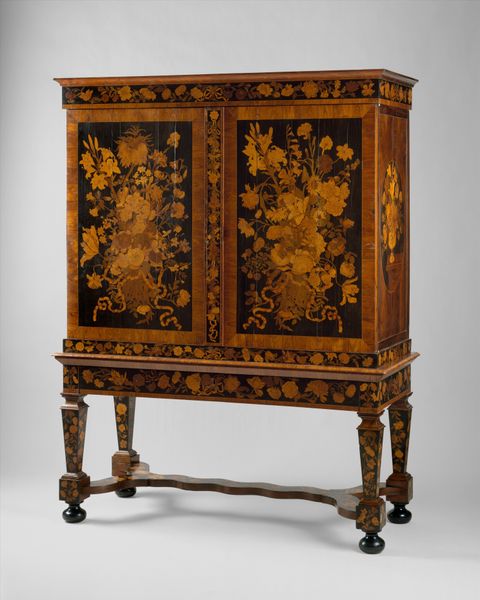
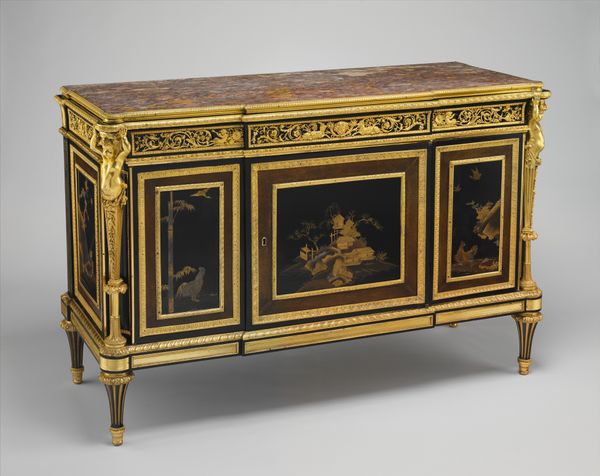
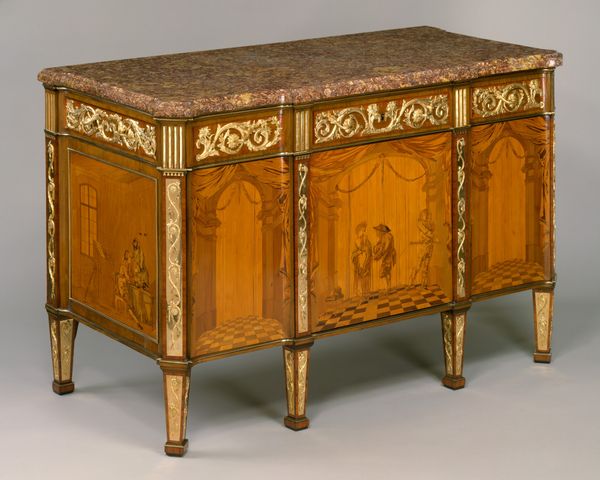
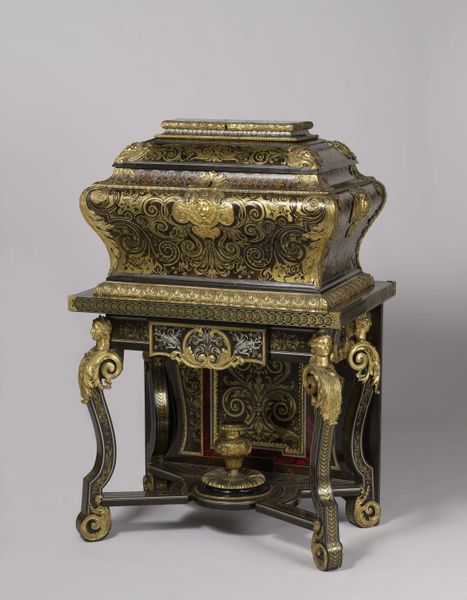
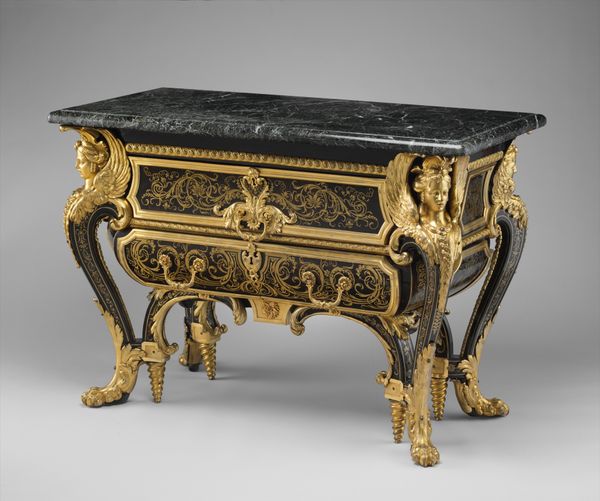
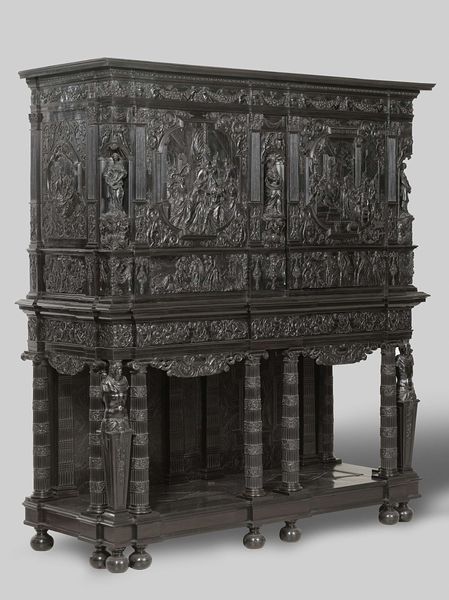
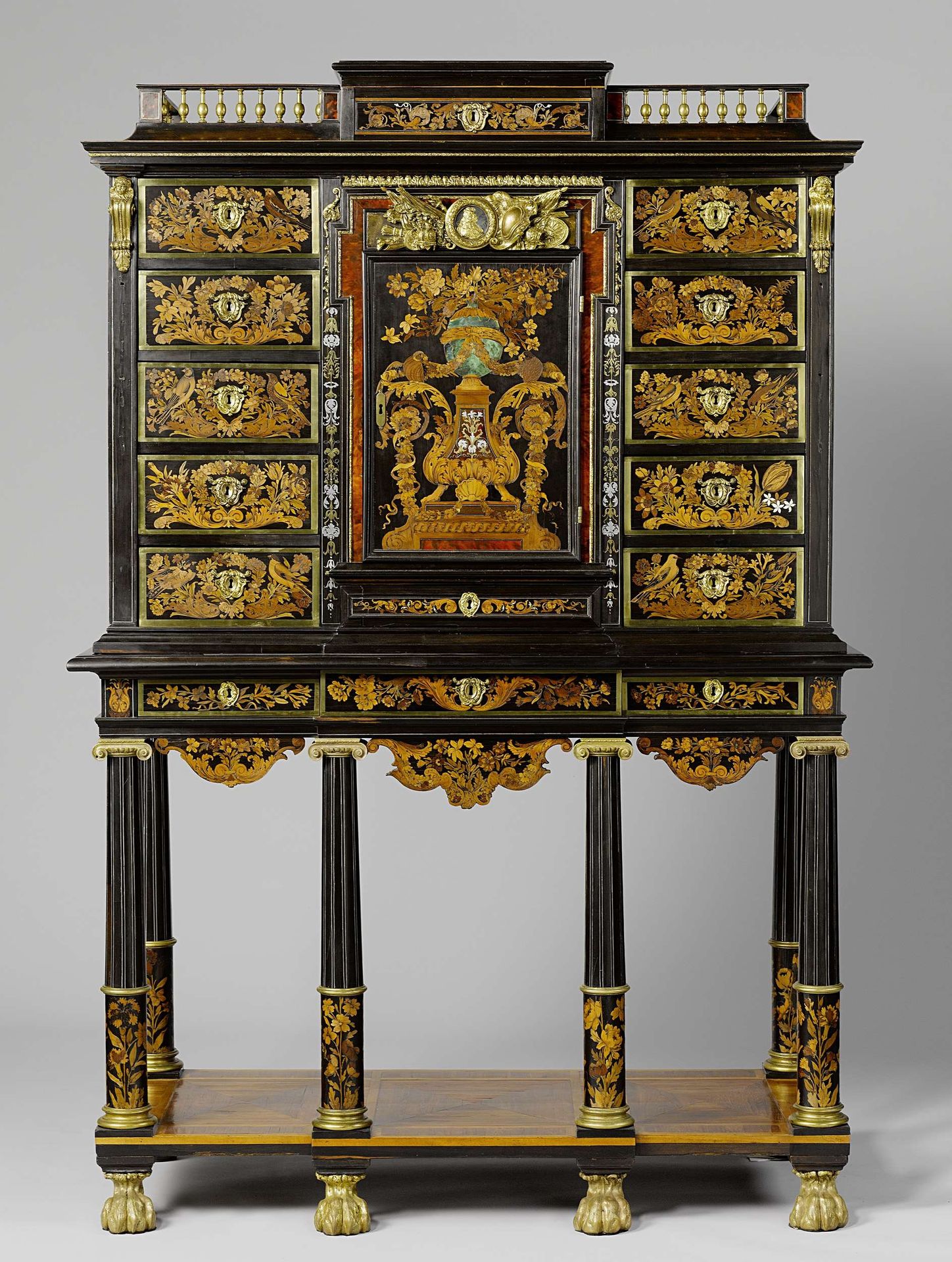
Editor: We're looking at a Cabinet, crafted around 1670 to 1675 by André Charles Boulle. It's predominantly wood, with intricate metal detailing. The ornamentation is amazing, but overall, it's also very imposing. What historical contexts influenced such elaborate furniture design? Curator: Think about the period: the late 17th century. Louis XIV was consolidating power, and Versailles was the epicentre of an explosion of decorative arts. This cabinet, dripping in Boulle marquetry, represents more than mere storage. It performs power! Each precisely inlaid detail proclaimed the wealth and sophistication of its owner, usually someone connected to the court. Do you see the way the columns mirror classical architecture? Editor: Yes, I noticed that. There is also some architectural inspiration at the top. Curator: This reference to the past legitimises their status, grounding their wealth in the perceived authority of antiquity. Objects like this shaped aristocratic identity as a statement about absolutism! The piece’s existence and prominent display in a home served as a daily affirmation of that social order. Editor: So, it’s like a piece of propaganda disguised as furniture? The decorative style reinforced certain power structures? Curator: Exactly. Consider the impact on the craftspeople too. Boulle was famously working for the king! The commissioning and production of such pieces not only solidified social status of its owners but helped shape the landscape of French decorative arts and industry at the time, becoming the foundation for trends we still admire today. Editor: That’s a totally different way of looking at it. I had no idea furniture could be so political. Curator: Decorative objects offer insight to understanding society, production and power. The way a cabinet is appreciated through changing hands also reveals so much about how perception shapes taste.