c. 1526 - 1606
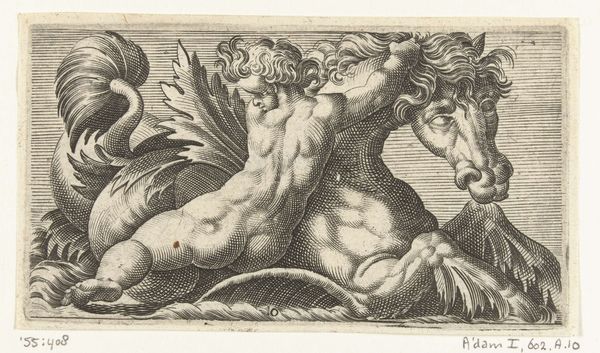
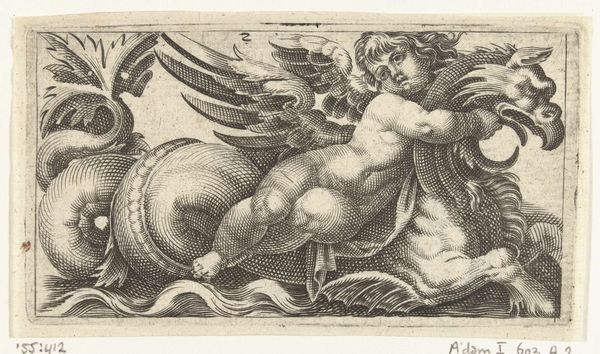
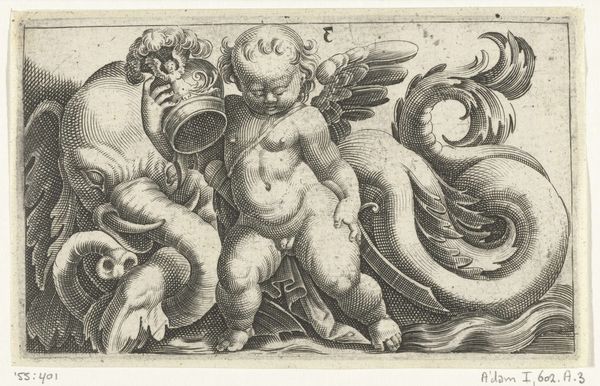
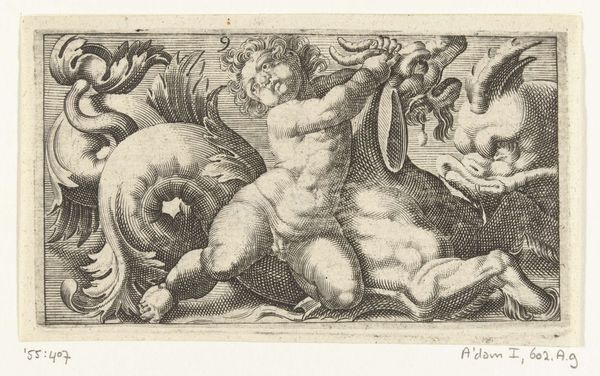
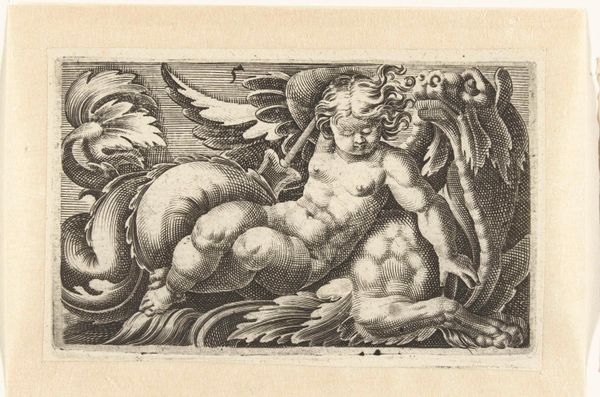
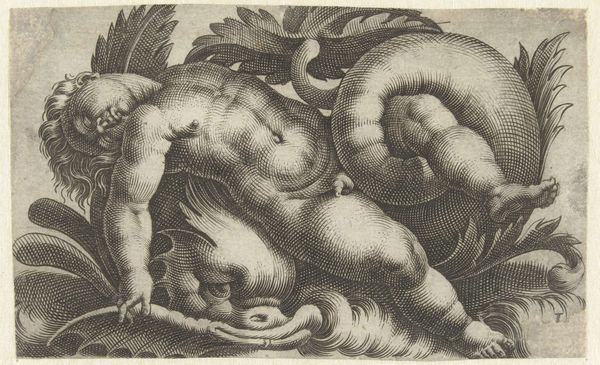
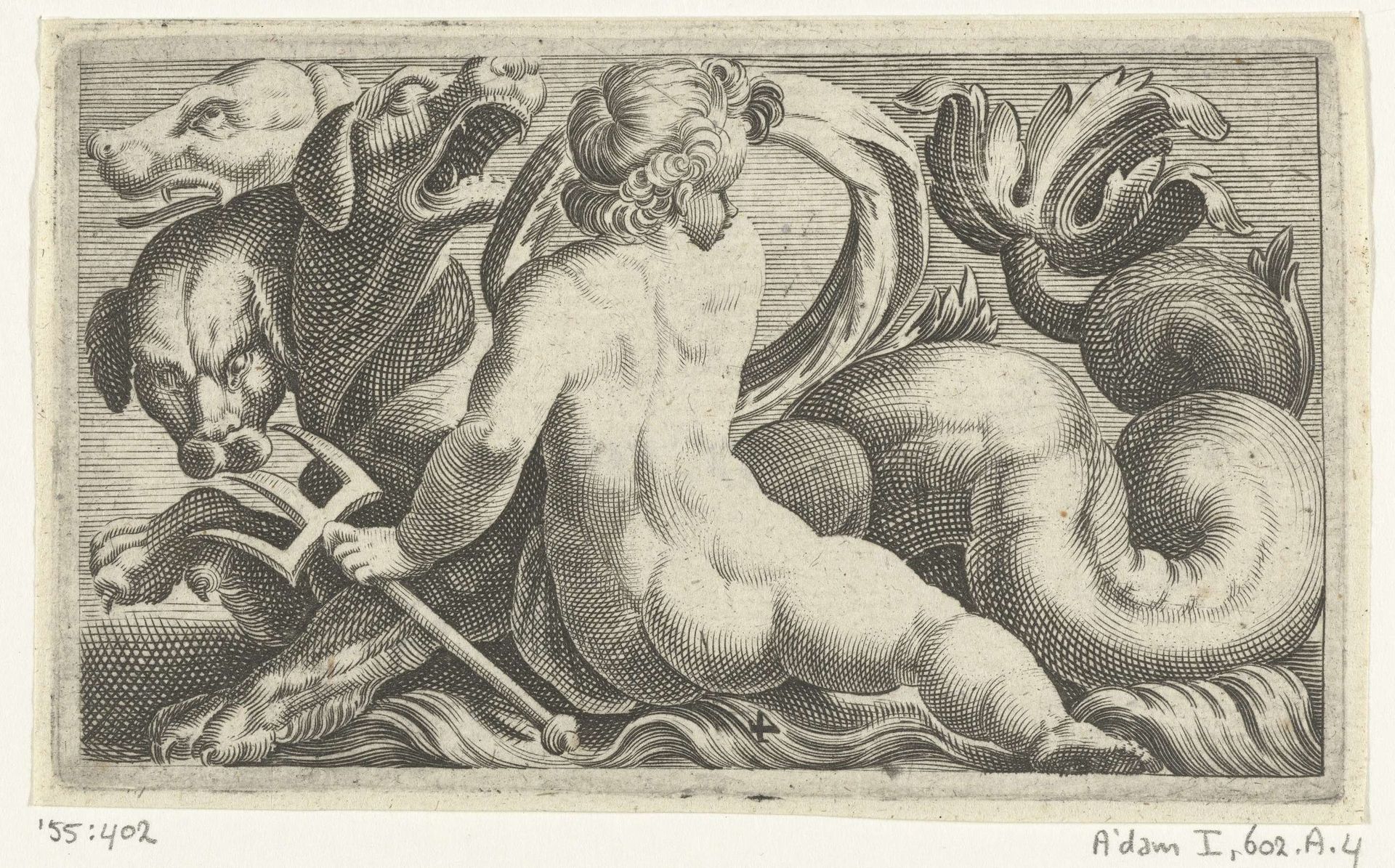
Kind op de rug gezien bij een driekoppig zeewezen

Adam Fuchs
1606Location
RijksmuseumListen to curator's interpretation
Curatorial notes
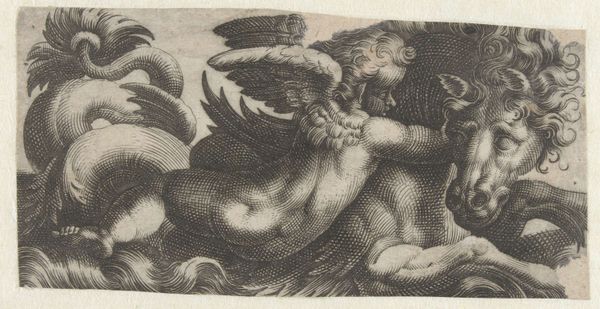
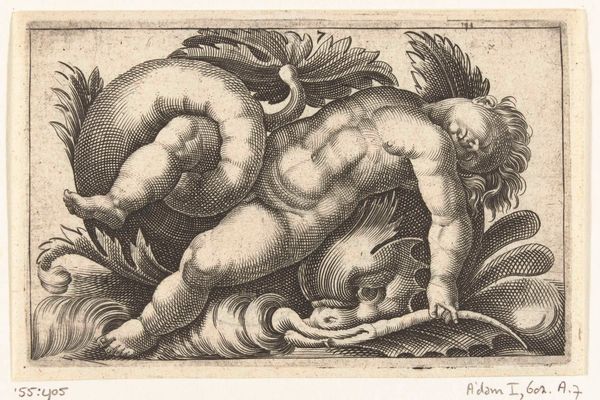
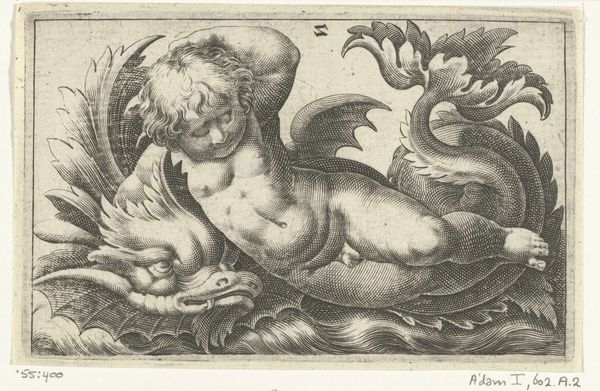
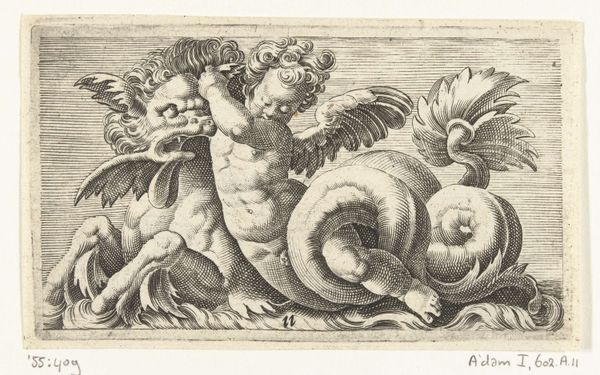
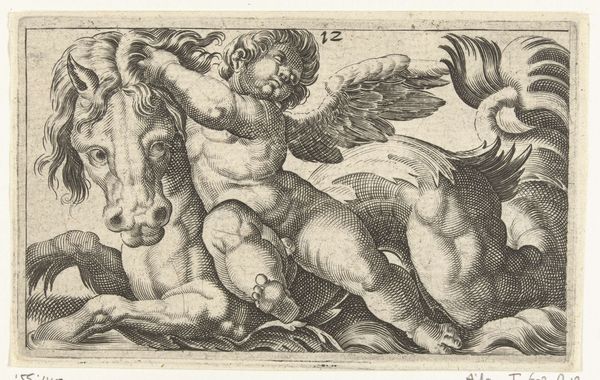
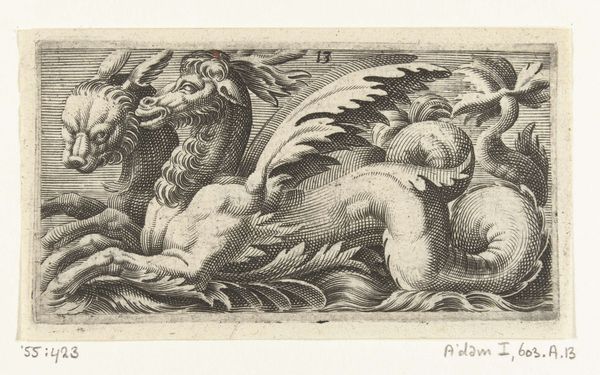
Adam Fuchs made this print of a child on the back of a three-headed sea creature, likely sometime before his death in 1606. The image presents a fascinating confluence of classical mythology, the natural world, and artistic invention, which were highly prized in Northern European courts at the time. The child, rendered in a classical style, holds a trident, a symbol of power over the seas, while riding a fantastical creature with canine heads, a scaly body, and decorative flourishes. The print may allude to the taming of nature through learning, and the mastery of knowledge over the world. Prints like these circulated widely in the Netherlands at this time, and helped to spread new ideas about science, religion, and politics. To understand the full meaning of this image, we might look to emblem books, natural histories, and accounts of courtly life. By studying the image in its time, we can better understand its role in shaping early modern thought.