

1893
The world's Columbian exposition

Listen to curator's interpretation
Curatorial notes
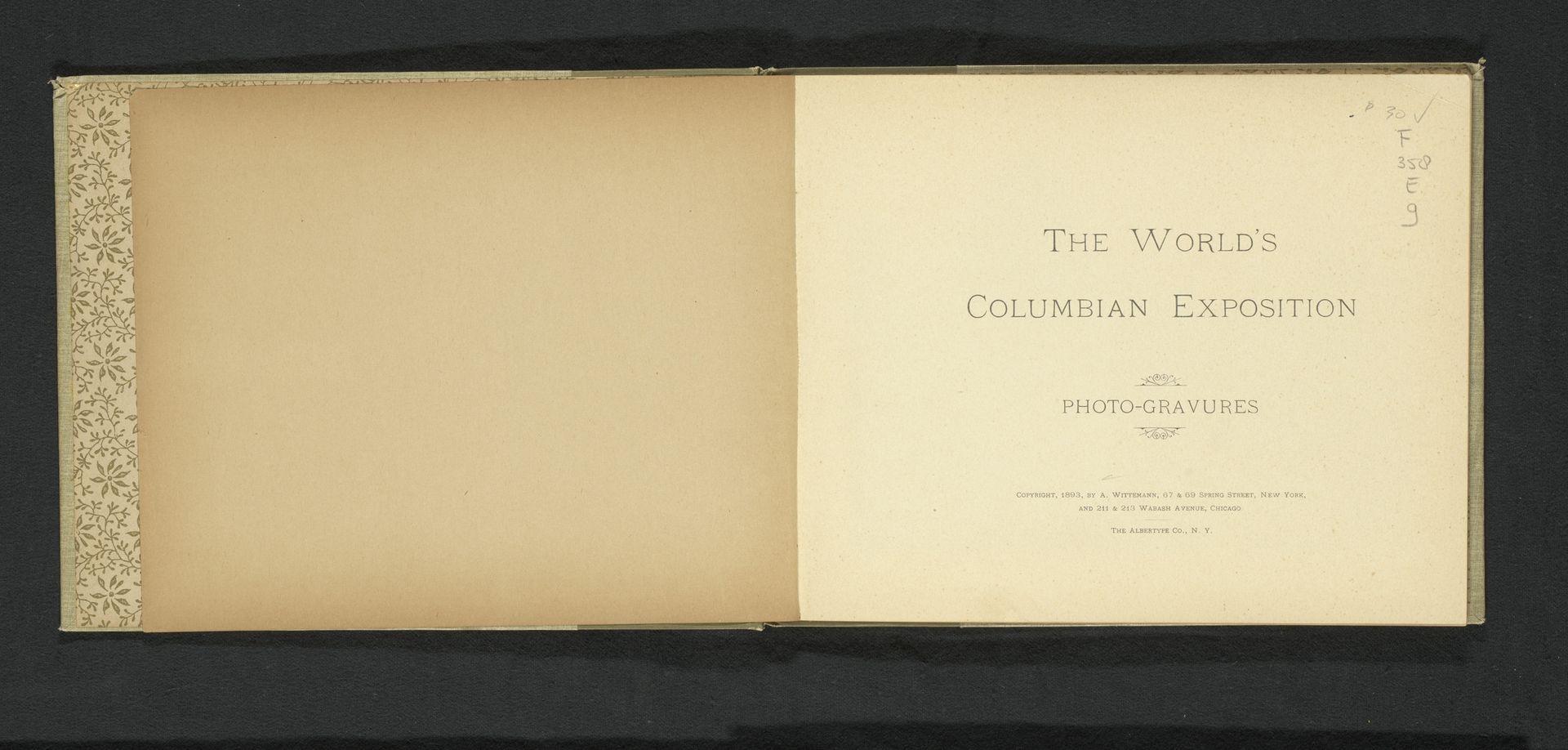
Curator: The sepia tones give it a very nostalgic, almost ghostly atmosphere, don't you think? It feels very… distant. Editor: Indeed. What we have here is the title page from a photo-gravure album titled "The World's Columbian Exposition" created in 1893. This was a common medium for disseminating images from such events. Curator: The choice of albumen print seems so crucial here. The texture, that almost luminous quality… It lends a gravitas that other methods might not. Think about the labor invested, the coating, the printing... Editor: I agree. The albumen printing process itself— the process speaks to a meticulousness that's reflected in the careful composition of the text. The serifs on the typeface are carefully chosen and balanced by ornamental details, underscoring its message and giving the words an authoritative effect. Curator: It also makes you consider the distribution process. This album wouldn't have been a cheap thing to produce or own. It points to a very specific, likely affluent, audience keen to consume visual documentation of the event. We need to think about the forestry practices, the labour of creating paper...the access this sort of object granted a few to knowledge, and denied to many. Editor: Yes, its construction speaks to that late Victorian era and its aesthetic ideals. The balanced symmetry and proportion adhere to a Neoclassical canon— order and reason presented through accessible popular media, and the choice to evoke that speaks volumes about the ideals they ascribed to the subject in its totality, this famous exposition, as a triumph. Curator: It is easy to forget about material and technique but looking at this now, they have made all the difference. What this tells me, seeing this, is less about the images that followed within, but all about its purpose as an artefact produced to signal particular ideas around technological advancement and consumer desire. Editor: And from that perspective, we are perhaps best able to comprehend the ideological constructions operating upon all involved during this historical moment. Thank you for your insights.