1896
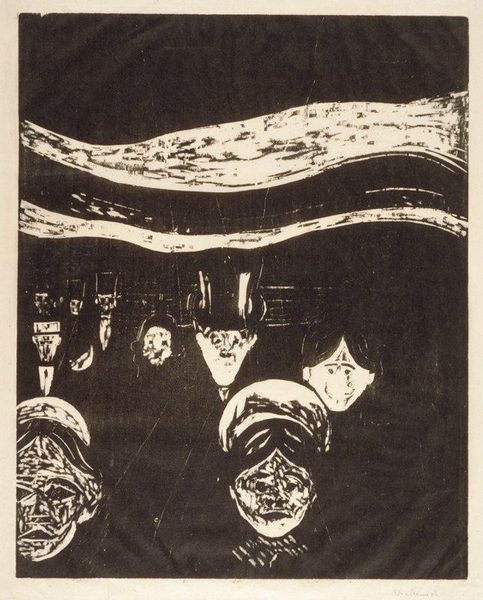
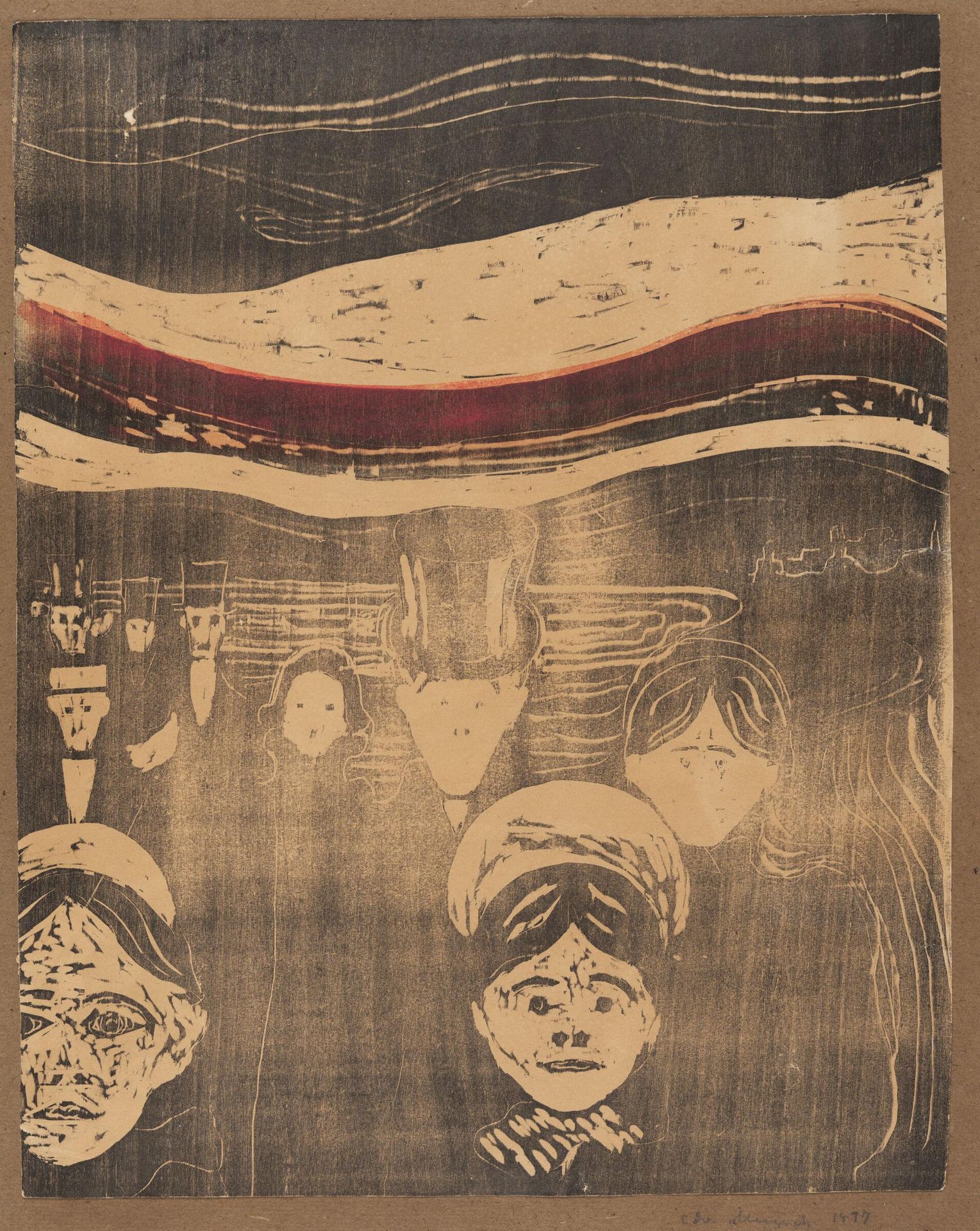
Angst


Listen to curator's interpretation
Curatorial notes
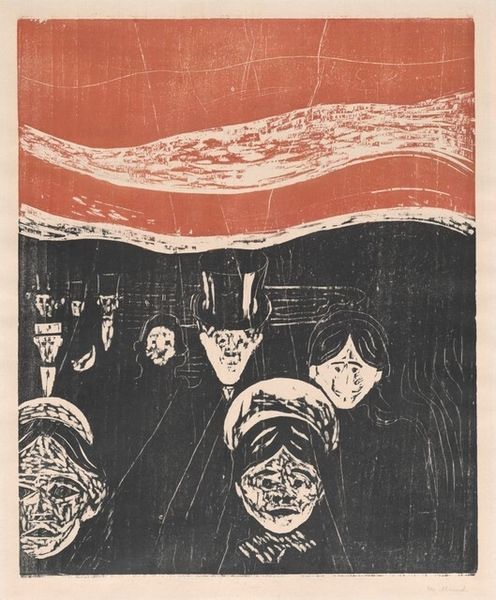
Curator: Here we have Edvard Munch's "Angst" at the Harvard Art Museums. Look at how the artist uses woodcut to convey such rawness. Editor: Raw indeed! It’s like a bad dream clinging to the surface, wouldn’t you say? The faces, the red streak in the sky… it's unsettling. Curator: Munch was experimenting with the materiality of printmaking, pushing the medium to reflect psychological states and the social anxieties brewing in Europe. Editor: I feel it. It’s claustrophobic, almost like being trapped in a crowded room where everyone is suffocatingly polite yet filled with unspoken dread. Curator: The process itself, the carving and inking, become part of the message about alienation and the pressures of modern life. Editor: It makes me want to scream, but politely, of course, as they do in the image. It’s amazing how he turned wood into a mirror of the soul’s dark corners. Curator: Exactly. It really speaks volumes about the constraints of the culture at that time. Editor: Makes you wonder about the wood, doesn’t it? What tree did it come from, and what secrets did it hold before Munch released this vision?