About this artwork
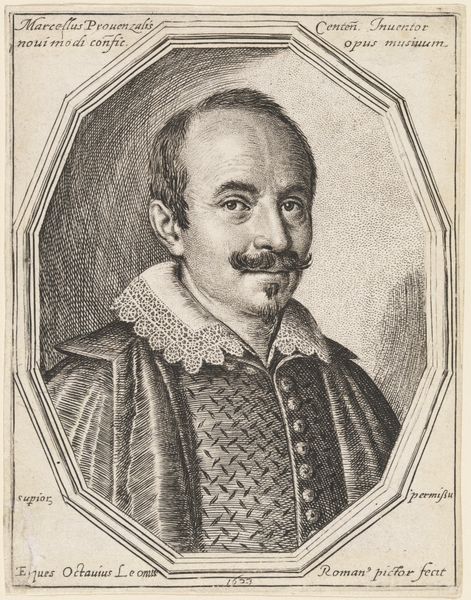
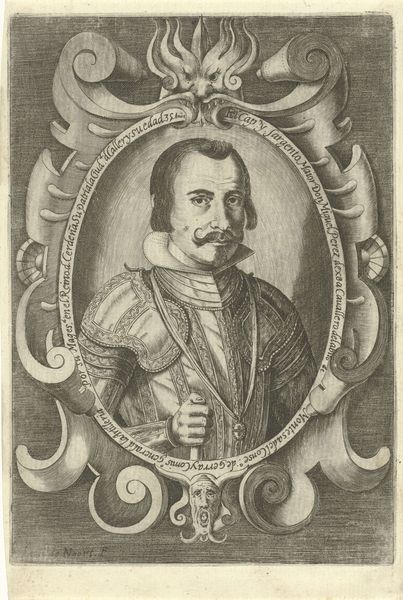
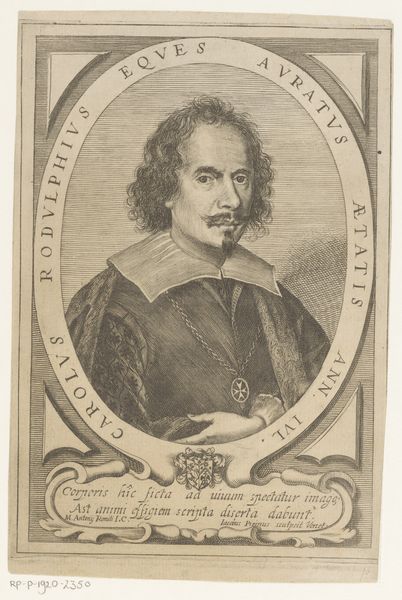
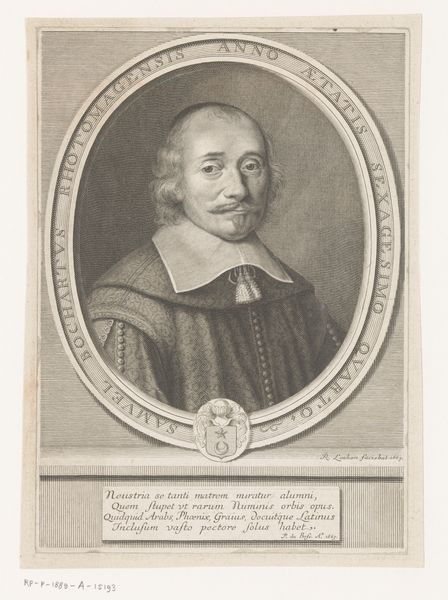
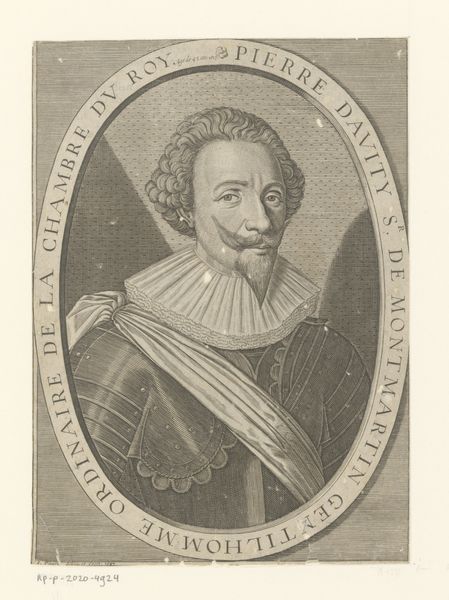
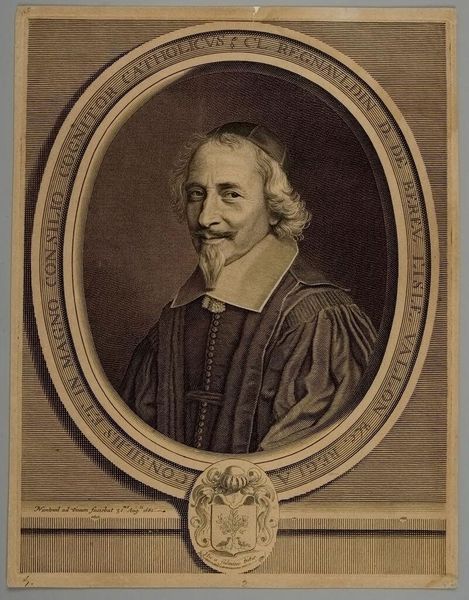
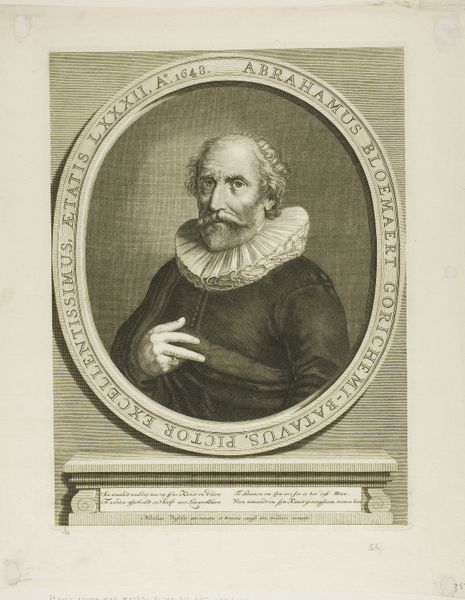
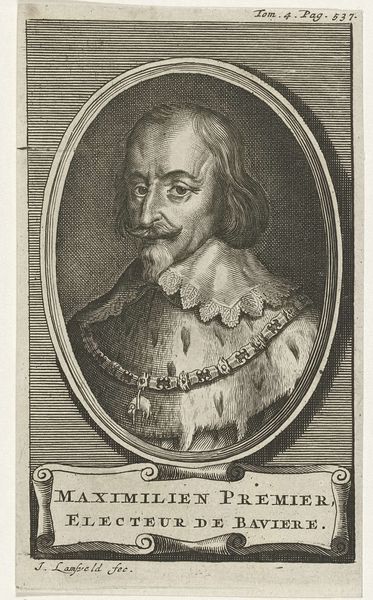
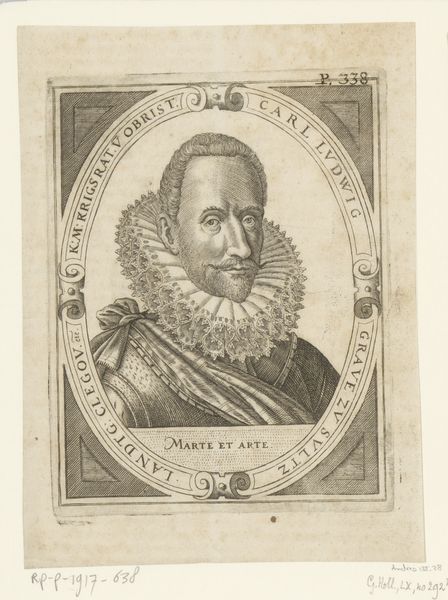
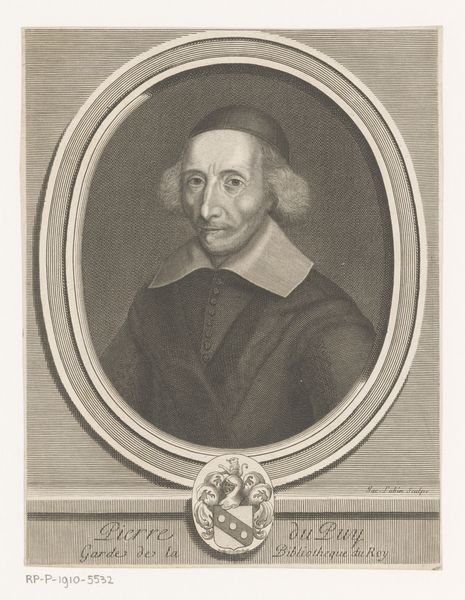
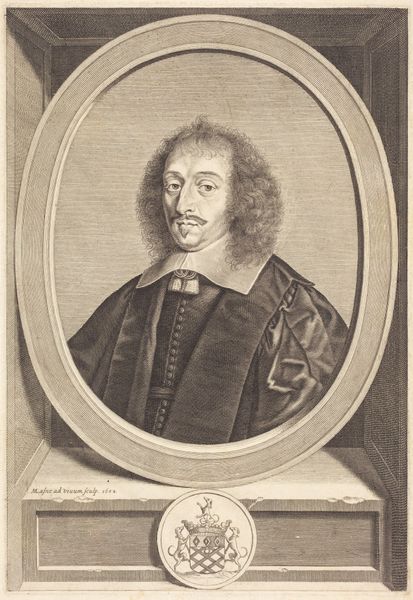
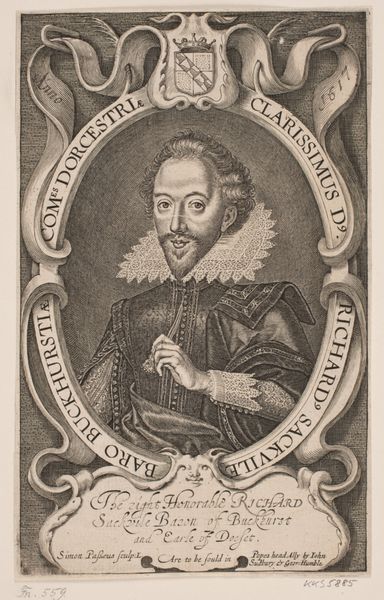
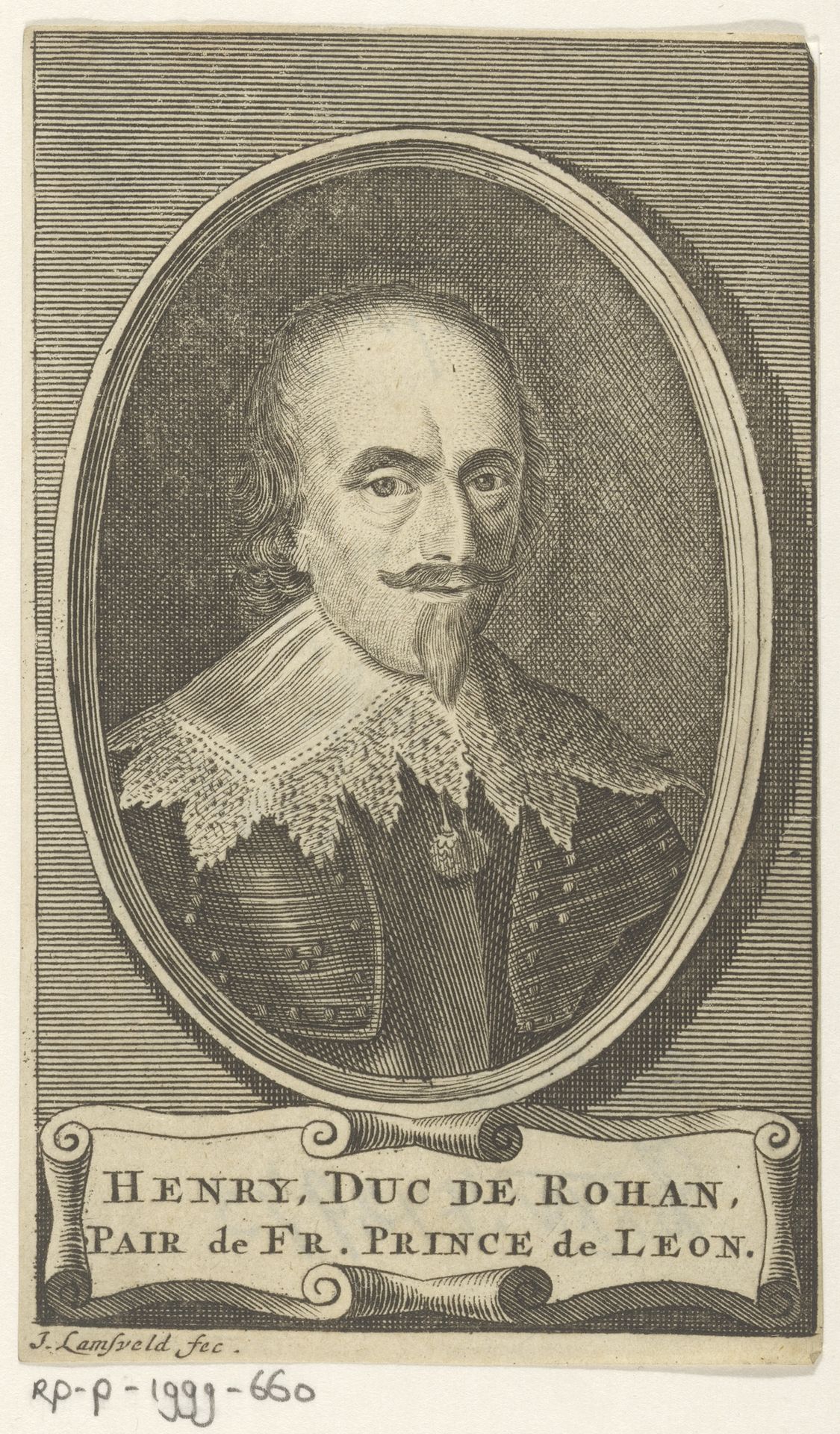
This portrait of Henri II de Rohan was created by Jan Lamsvelt, most likely in the early 18th century, using engraving. Consider the process: a metal plate, likely copper, was painstakingly etched with lines to create this image. The incised lines hold ink, which is then transferred to paper under great pressure. It’s a method demanding precision and skill, akin to the work of a goldsmith. The fine lines capture the Duke's likeness, the intricate lace collar, and the gleam of his armor. The materiality of the print – the paper, the ink, the very lines themselves – speaks to a culture of reproduction and dissemination of images, reflective of growing literacy and a public sphere. Prints like these were commodities, produced for a market, and consumed by a public eager for images of nobility and power. This portrait offers not just an image of a man, but a glimpse into the social and economic structures of its time, a reminder that art is always made within a context of labor, politics, and consumption.

Artwork details
- Medium
- print, engraving
- Dimensions
- height 137 mm, width 82 mm
- Location
- Rijksmuseum
- Copyright
- Rijks Museum: Open Domain
Tags
Comments
Share your thoughts
About this artwork
This portrait of Henri II de Rohan was created by Jan Lamsvelt, most likely in the early 18th century, using engraving. Consider the process: a metal plate, likely copper, was painstakingly etched with lines to create this image. The incised lines hold ink, which is then transferred to paper under great pressure. It’s a method demanding precision and skill, akin to the work of a goldsmith. The fine lines capture the Duke's likeness, the intricate lace collar, and the gleam of his armor. The materiality of the print – the paper, the ink, the very lines themselves – speaks to a culture of reproduction and dissemination of images, reflective of growing literacy and a public sphere. Prints like these were commodities, produced for a market, and consumed by a public eager for images of nobility and power. This portrait offers not just an image of a man, but a glimpse into the social and economic structures of its time, a reminder that art is always made within a context of labor, politics, and consumption.
Comments
Share your thoughts