About this artwork
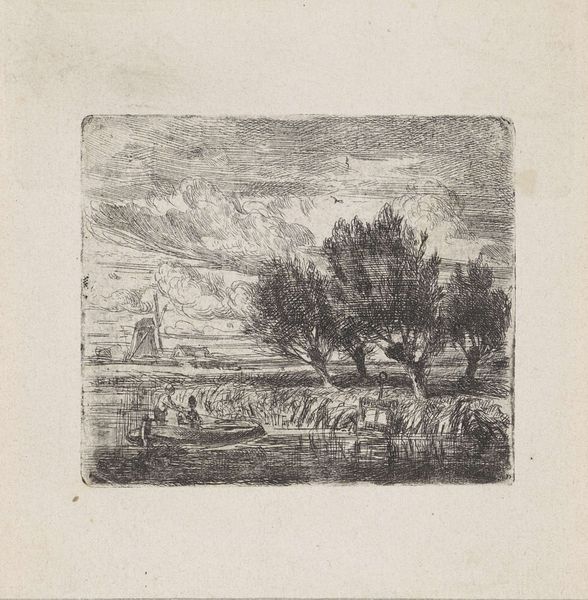
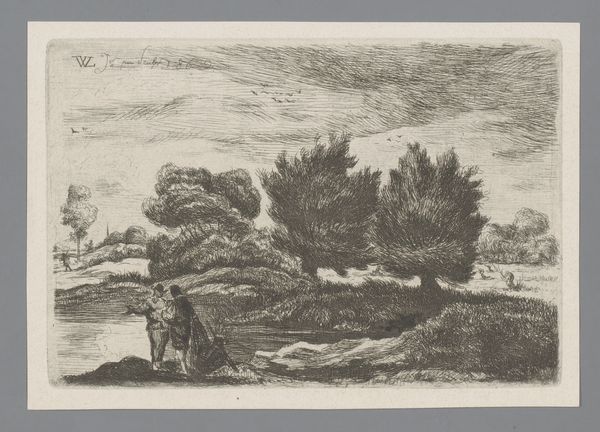
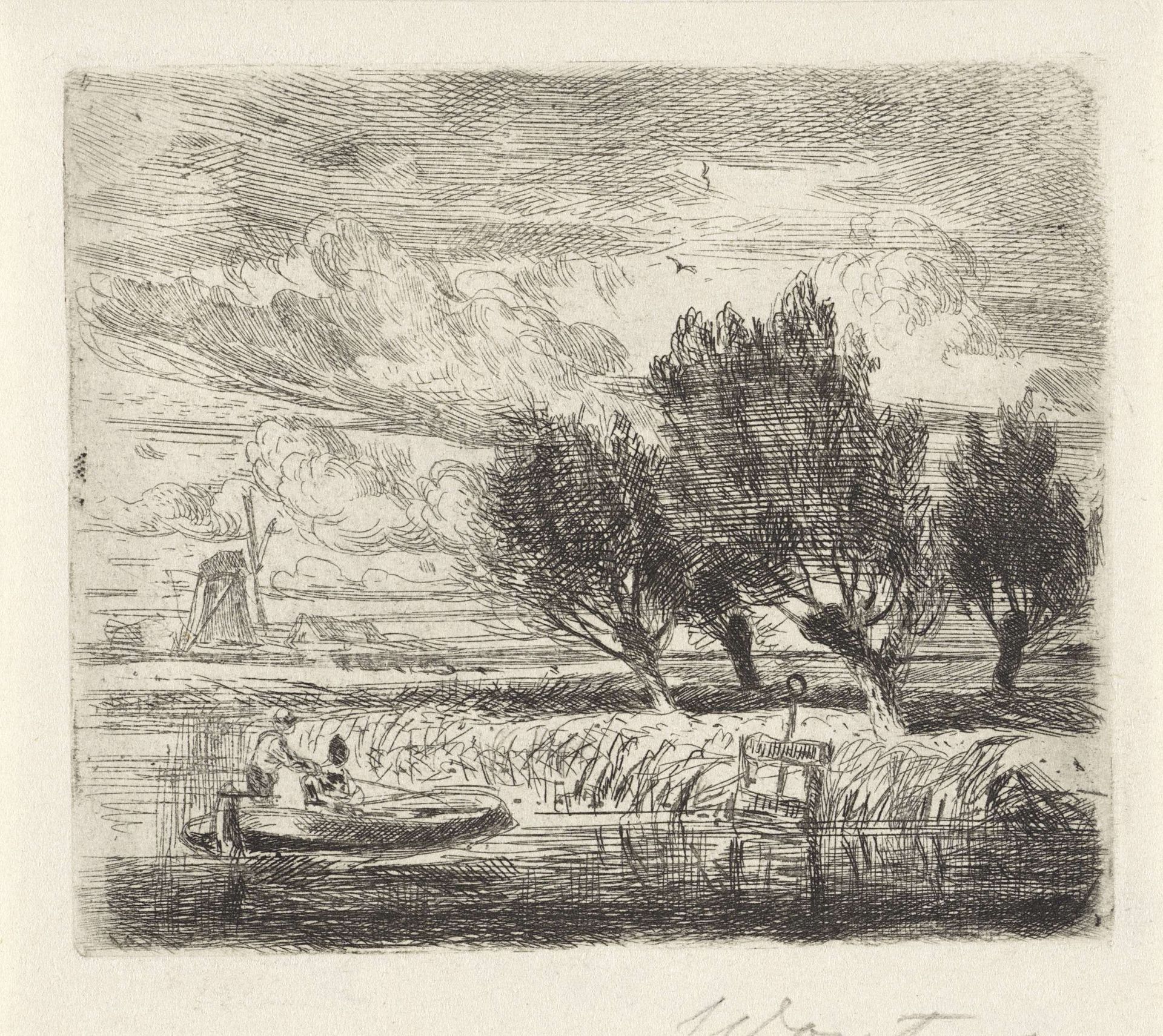
This etching, "Knotwilgen aan de waterkant", was created by Augustinus Jacobus Bernardus Wouters. It features pollard willows that stand along the water's edge. These trees, with their repeatedly lopped branches, are potent symbols of cultivation and human intervention in nature. Consider the cyclical nature of pollarding: cutting back to encourage new growth. It’s a dialogue between humanity and nature, echoing ancient agricultural practices. The act of pruning and managing trees is an act of cultural memory. The willows, repeatedly reshaped, mirror similar motifs found in ancient tree worship and fertility rituals across cultures. In these traditions, trees symbolize life, death, and regeneration. The enduring image of the pollard willow connects us to the past, revealing how we continuously reshape and are reshaped by the natural world.
Knotwilgen aan de waterkant
1839 - 1888

Augustinus Jacobus Bernardus Wouters
1829 - 1904Location
RijksmuseumArtwork details
- Medium
- print, etching
- Dimensions
- height 74 mm, width 86 mm
- Location
- Rijksmuseum
- Copyright
- Rijks Museum: Open Domain
Tags
Comments
Share your thoughts
About this artwork
This etching, "Knotwilgen aan de waterkant", was created by Augustinus Jacobus Bernardus Wouters. It features pollard willows that stand along the water's edge. These trees, with their repeatedly lopped branches, are potent symbols of cultivation and human intervention in nature. Consider the cyclical nature of pollarding: cutting back to encourage new growth. It’s a dialogue between humanity and nature, echoing ancient agricultural practices. The act of pruning and managing trees is an act of cultural memory. The willows, repeatedly reshaped, mirror similar motifs found in ancient tree worship and fertility rituals across cultures. In these traditions, trees symbolize life, death, and regeneration. The enduring image of the pollard willow connects us to the past, revealing how we continuously reshape and are reshaped by the natural world.
Comments
Share your thoughts