About this artwork
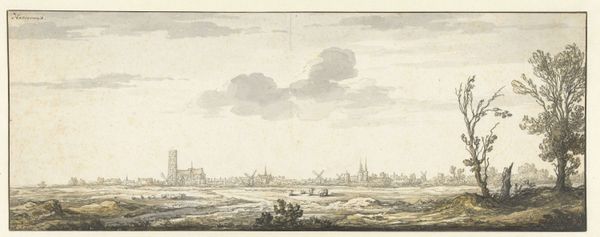
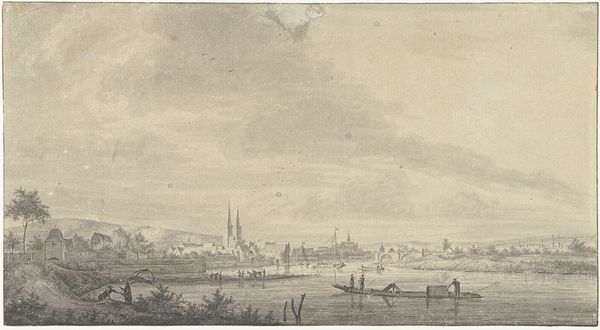
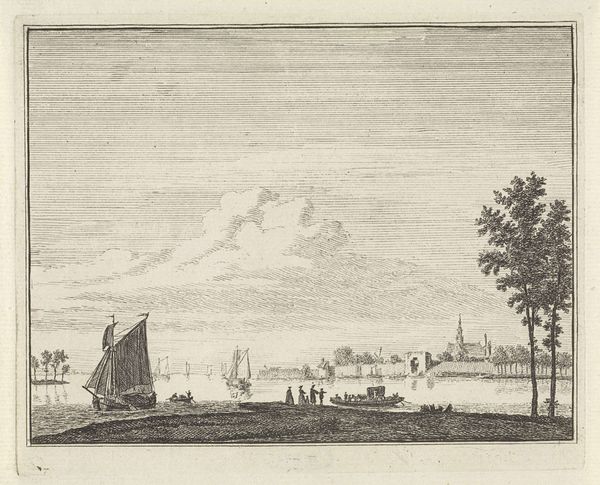
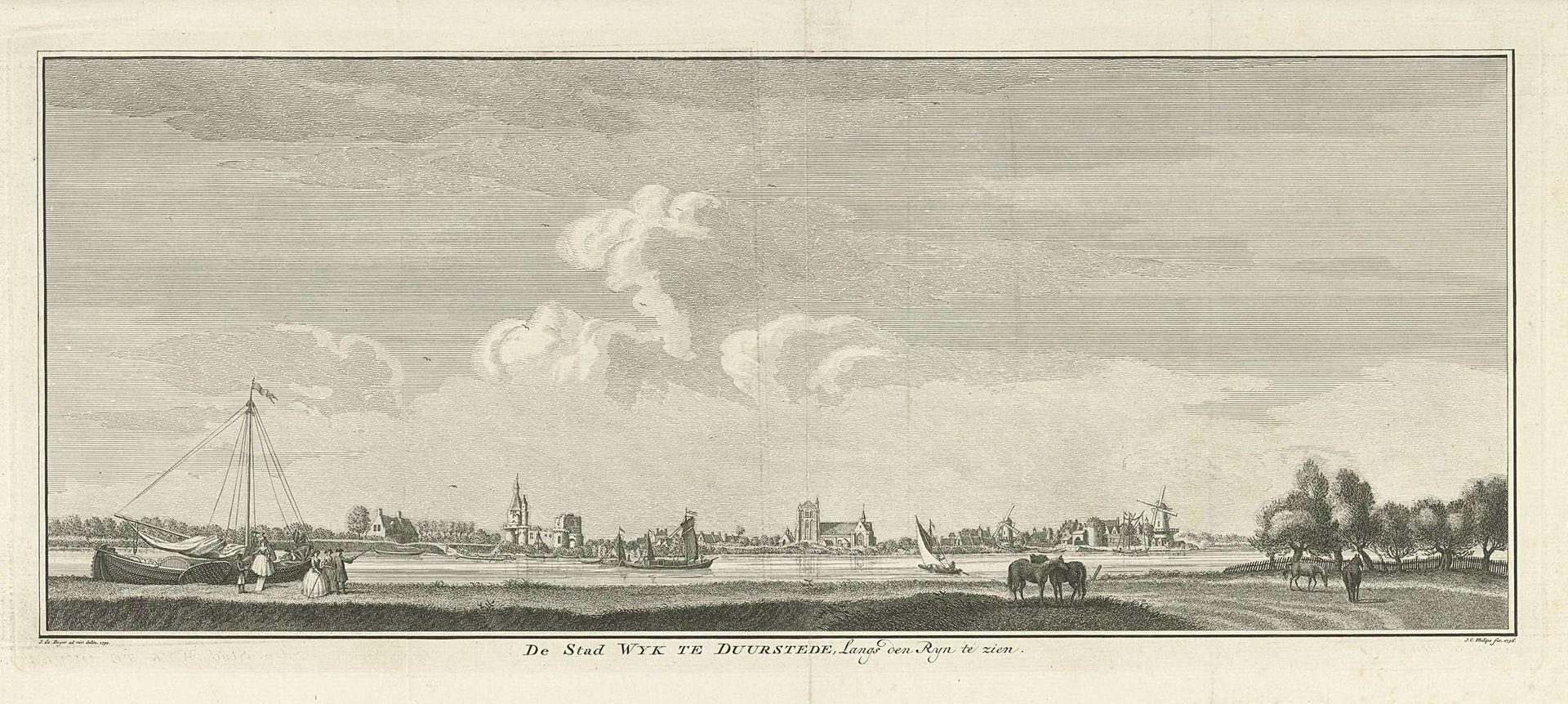
Jan Caspar Philips made this view of Wijk bij Duurstede using etching, a printmaking technique that was relatively new at the time. The linear quality of the image, and its capacity to capture fine detail, is directly tied to the etching process. To create the image, Philips would have coated a metal plate with a waxy, acid-resistant substance known as a ground. Using a sharp needle, he would then scratch away the ground, exposing the metal beneath. Next, the plate was immersed in acid, which bit into the exposed lines, creating recessed grooves. Finally, ink was applied to the plate, filling these grooves, and the surface was wiped clean. When paper was pressed against the plate, the ink transferred, producing the print you see here. This method, while requiring skill, allowed for the relatively quick production of multiple identical images. It speaks to a growing culture of visual communication and dissemination in the 18th century, as urban views became increasingly popular amongst a rising middle class.

Artwork details
- Medium
- print, engraving
- Dimensions
- height 176 mm, width 417 mm
- Location
- Rijksmuseum
- Copyright
- Rijks Museum: Open Domain
Tags
Comments
Share your thoughts
About this artwork
Jan Caspar Philips made this view of Wijk bij Duurstede using etching, a printmaking technique that was relatively new at the time. The linear quality of the image, and its capacity to capture fine detail, is directly tied to the etching process. To create the image, Philips would have coated a metal plate with a waxy, acid-resistant substance known as a ground. Using a sharp needle, he would then scratch away the ground, exposing the metal beneath. Next, the plate was immersed in acid, which bit into the exposed lines, creating recessed grooves. Finally, ink was applied to the plate, filling these grooves, and the surface was wiped clean. When paper was pressed against the plate, the ink transferred, producing the print you see here. This method, while requiring skill, allowed for the relatively quick production of multiple identical images. It speaks to a growing culture of visual communication and dissemination in the 18th century, as urban views became increasingly popular amongst a rising middle class.
Comments
Share your thoughts