Dimensions: height 105 mm, width 168 mm
Copyright: Rijks Museum: Open Domain
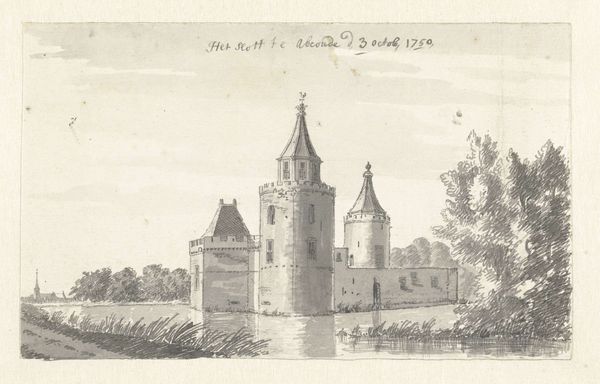
Curator: This is "View of Zuilichem Castle" by Noach van der Waals, created in 1870. It’s an engraving, offering a glimpse into a bygone era. Editor: Immediately, I sense a romantic longing. There's a stillness, a quiet melancholy hanging in the air around that castle. Curator: It’s interesting you pick up on melancholy. Castles, particularly in the 19th century, become potent symbols of national identity, also reminders of feudal power structures and their decline. The past isn't just picturesque; it carries historical weight. Editor: Precisely, that's what creates the tension for me. It presents the visual continuity of this place, offering that feeling of being removed in time. The castle looks simultaneously fortified yet vulnerable, those round towers almost whimsical against the main structure. It's as though time is passing. Curator: Consider the context of its creation. The late 19th century sees the rise of national museums and heritage preservation, framing how people viewed their own histories and national myths. This wasn't merely a landscape; it was a visual claim to history. Notice also how van der Waals adopts a relatively realistic style which reinforces a feeling of authentic reportage and historical truth. Editor: I wonder about the intended audience, and whether they associated such images with idealized historical narratives or saw the realism and therefore something a little more complicated. The delicate engraving lines certainly convey a kind of… elevated status, even of something as commonplace as a landmark or place. Curator: I agree, printmaking allowed for wide circulation of these romanticized scenes, influencing how people perceived the past and reinforcing the emotional pull of these places as containers for identity. Prints helped visualize these narratives, embedding them in the popular imagination. Editor: A thought: while photography became dominant in capturing “reality” or history, engravings maintained an association with precision and craftsmanship. Curator: It's almost as though the act of creating an engraving became symbolic itself, a marker of something valuable being reproduced in perpetuity. It also subtly elevates the subject through skillful artistry. It suggests more than meets the eye; deeper layers of history. Editor: I’m still struck by the water surrounding the structure—it's more than just a moat. The reflection blurs the boundary between reality and memory. The romantic image creates the atmosphere and impression for an artwork to convey cultural identity and values. Curator: Absolutely. Art always operates within larger frameworks, influencing our sense of the past. This image provides one more key that helps us unlock those frameworks.
Comments
No comments
Be the first to comment and join the conversation on the ultimate creative platform.
 Collect
 React
React Comment
More like this