1809 - 1837
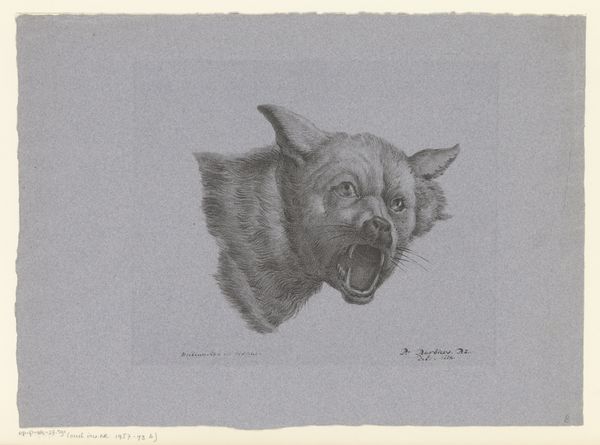
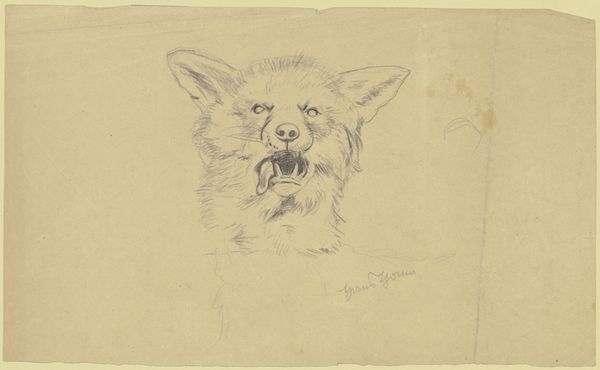
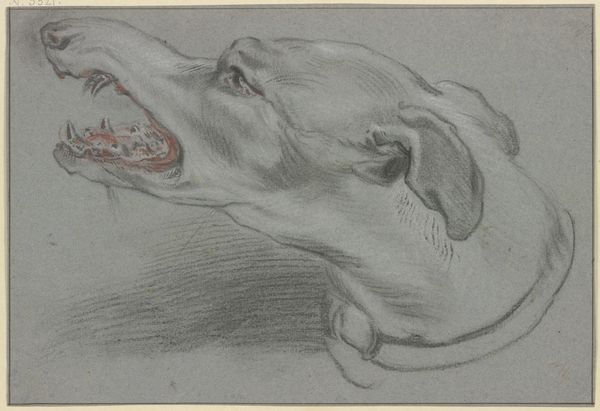
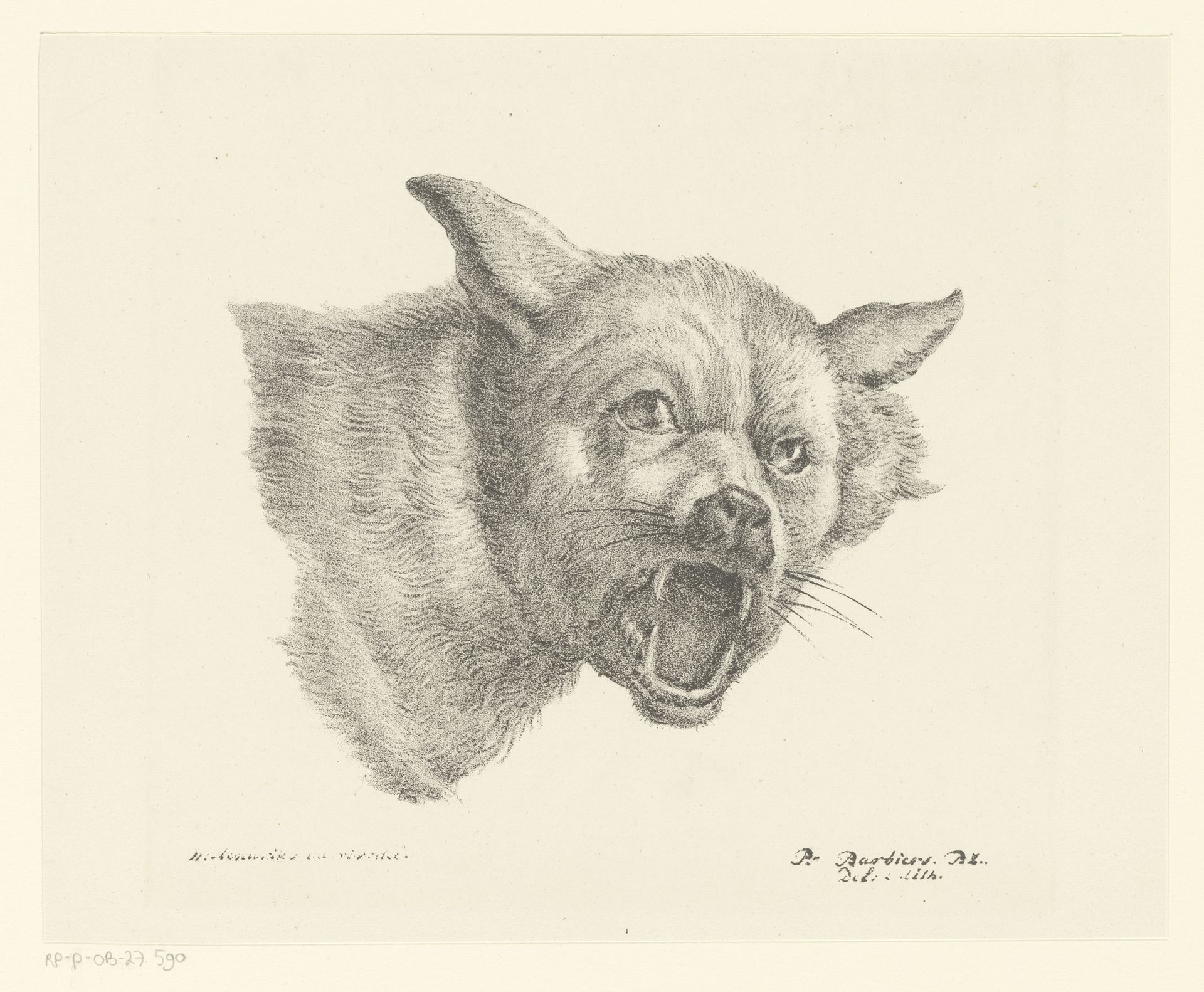
Kop van een wolf of hond

Pieter Bartholomeusz. Barbiers
1772 - 1837Location
RijksmuseumListen to curator's interpretation
Curatorial notes
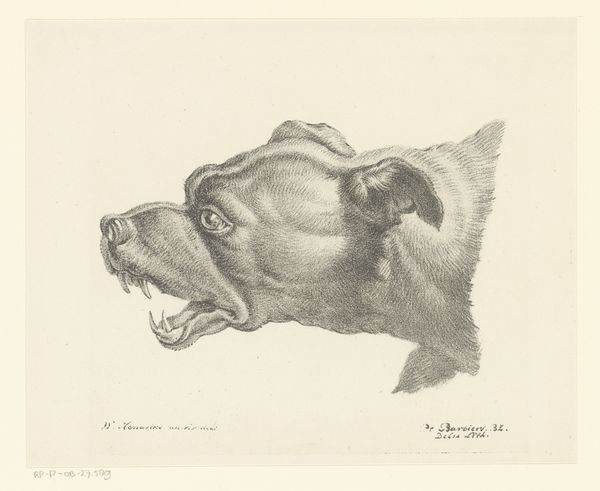
Pieter Bartholomeusz. Barbiers rendered this drawing, "Head of a Wolf or Dog," with pen and lith at an unknown date, and is currently held at the Rijksmuseum. Here, the snarling canid head, baring its teeth in a primal display, embodies a potent symbol that has coursed through the arteries of human culture across millennia. From the protective canines guarding ancient Egyptian tombs to the ferocious wolves of Roman mythology, these creatures evoke deep-seated emotions of fear and respect. The dog, often a symbol of loyalty, finds its binary opposite in the wolf, representing untamed wilderness. This tension between domesticity and the wild resonates even now, reflecting our own internal conflicts. Consider the enduring image of Romulus and Remus, suckled by a she-wolf, a symbol of primal strength nurturing the founders of Rome. The wolf has resurfaced and evolved, and it will continue to evolve with us.