1939
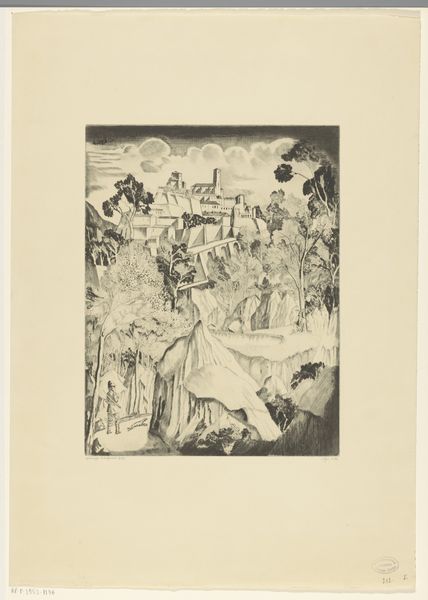
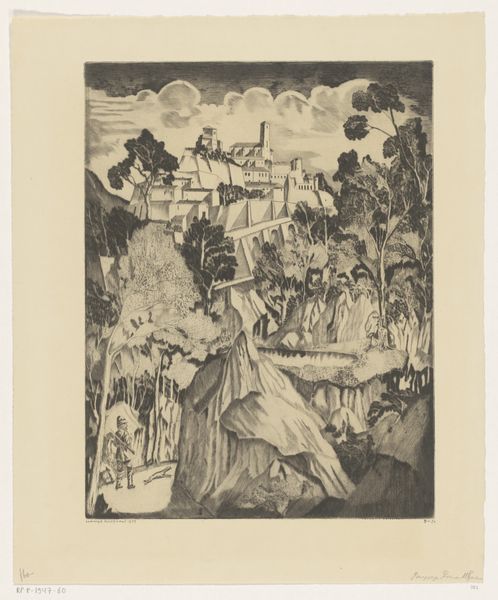
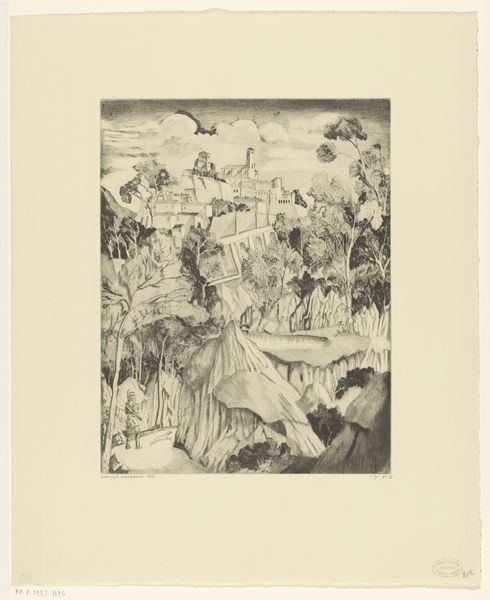
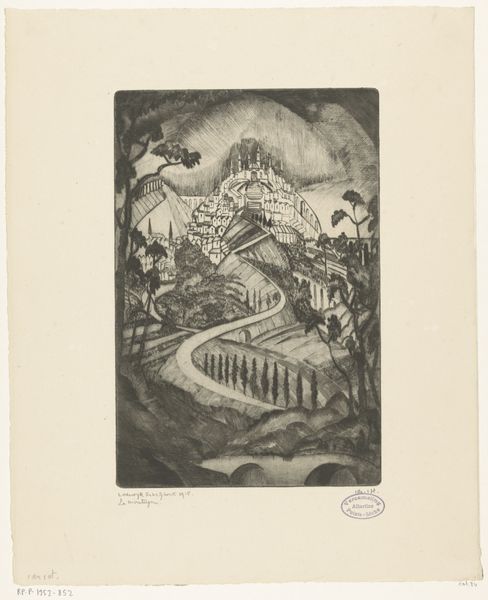
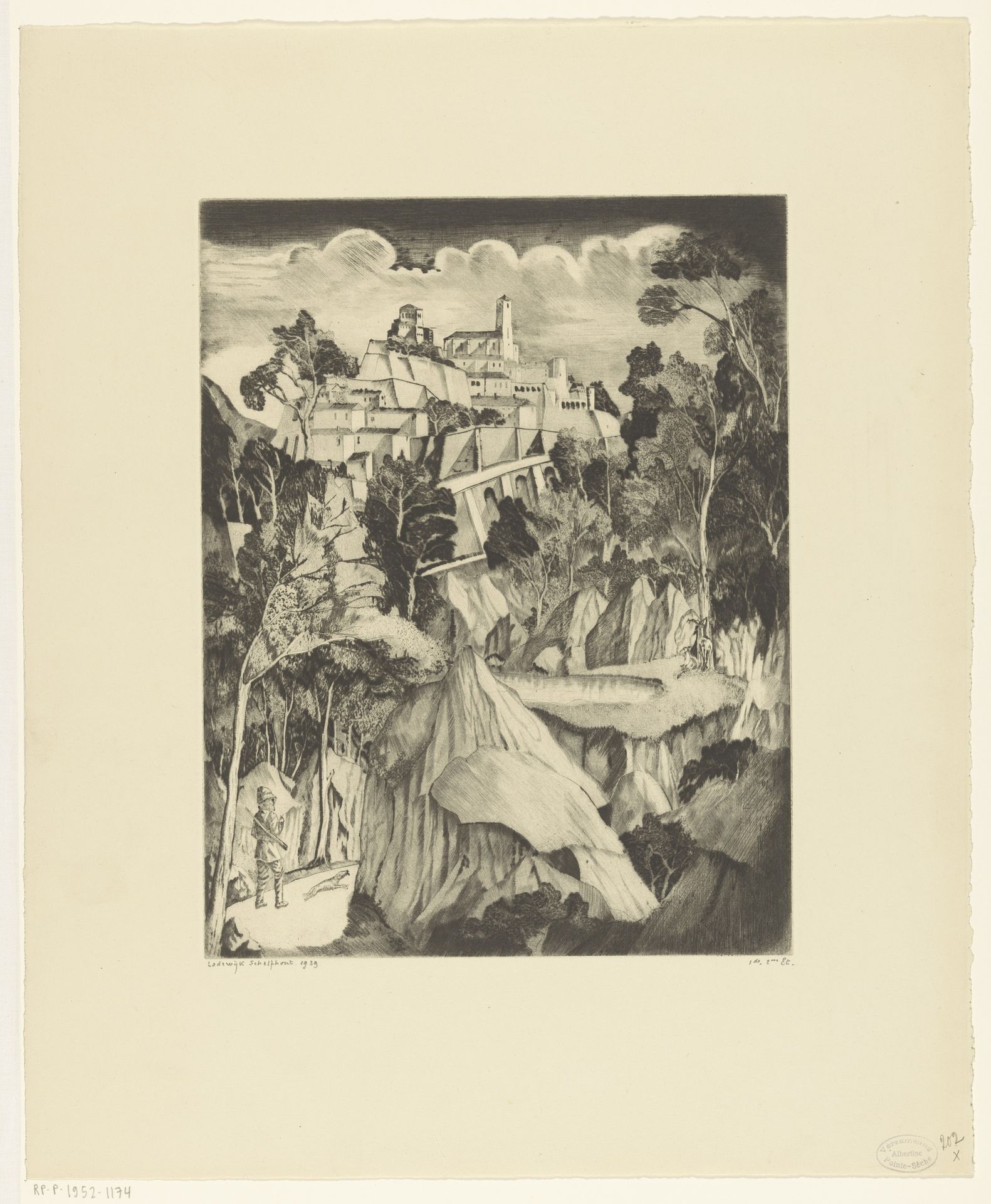
Heuvellandschap met jager

Lodewijk Schelfhout
1881 - 1943Location
RijksmuseumListen to curator's interpretation
Curatorial notes
Lodewijk Schelfhout created this landscape with a hunter using etching. It's a scene dominated by natural forms, yet a hunter stands in the foreground, and a settlement on a hill overlooks the scene. Consider the hunter: This figure is one of mankind across time. As a symbol, the hunter is about survival and confrontation with nature. But in the Renaissance, the hunt became a noble pastime, a choreographed dance of power. This evolves through time to modern environmentalism and our changing relationship with the natural world. Observe the hunter in Schelfhout’s landscape: what does he represent? In the collective memory, landscapes evoke a sense of awe and the sublime. The emotional charge is intense. The romantic idea of the hunter is tied to this landscape, which makes it a powerful combination of motifs, engaging the viewer on a deep subconscious level. So the hunter, in this context, takes on new layers of meaning, reflecting the cyclical progression of symbols.