About this artwork
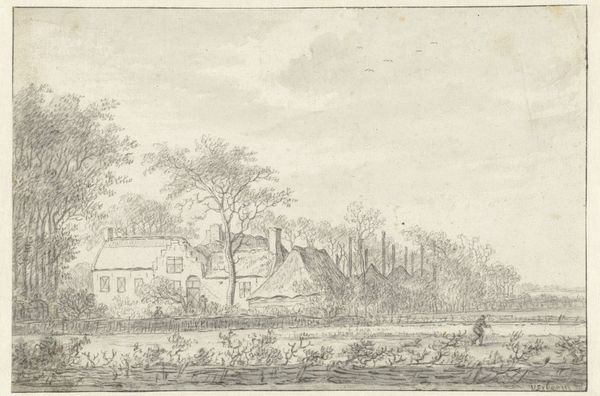
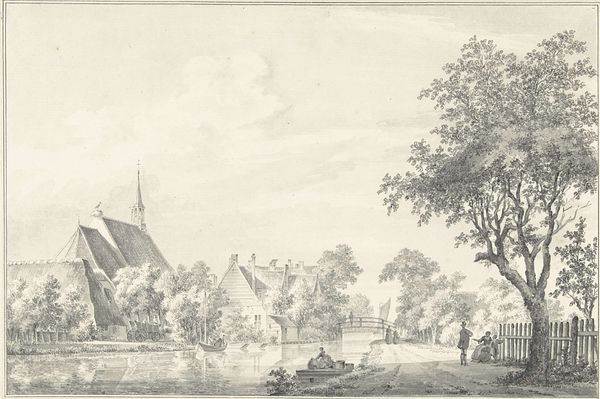
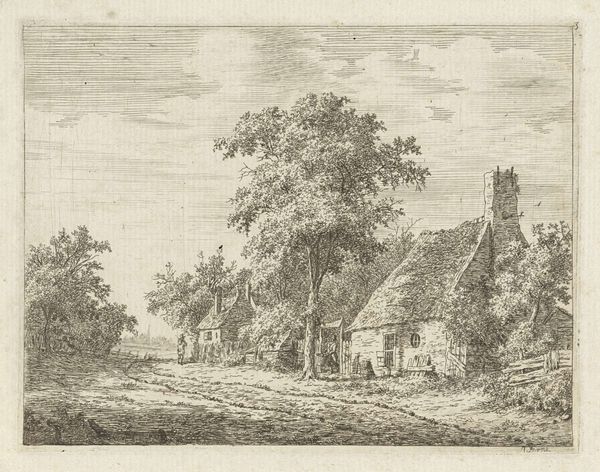
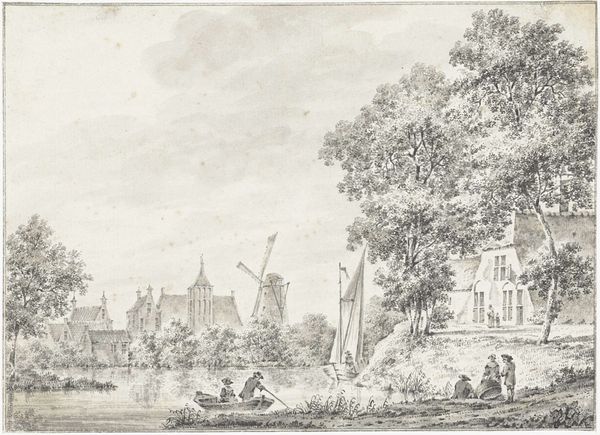
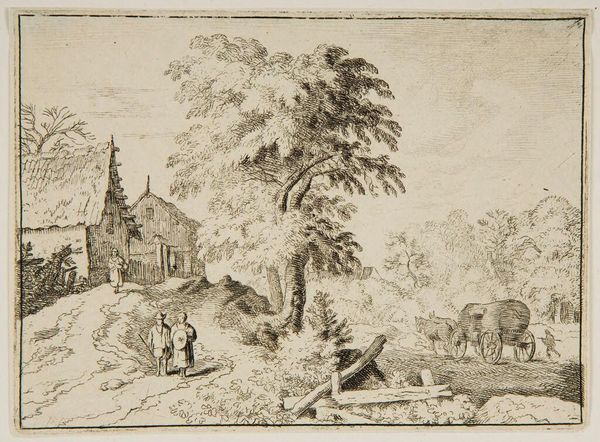
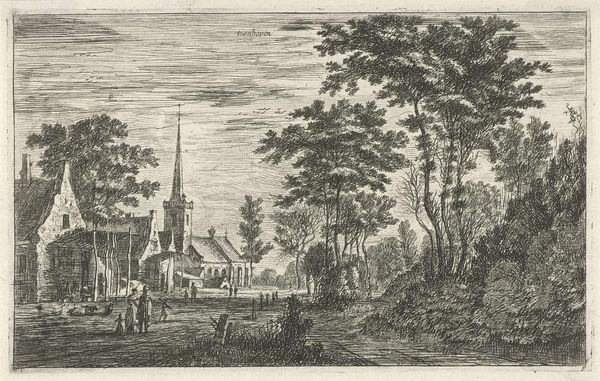
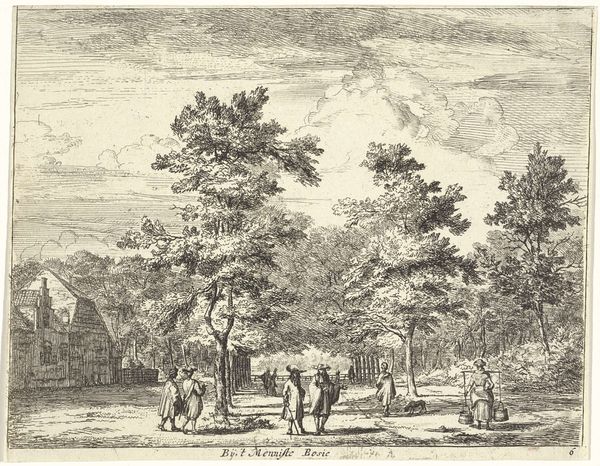
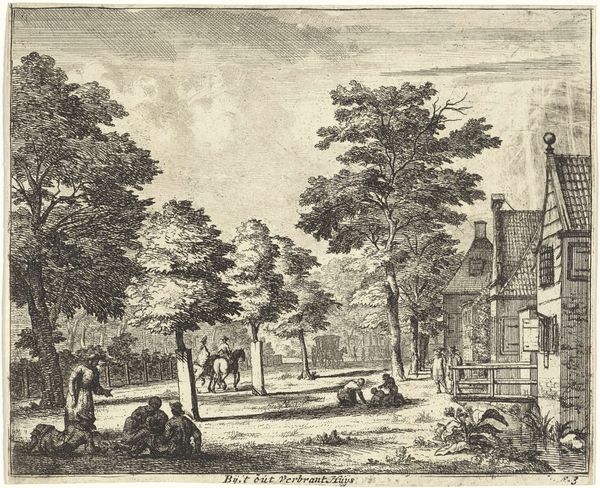
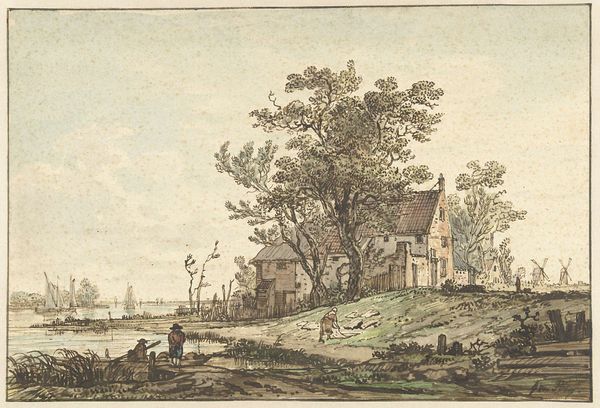
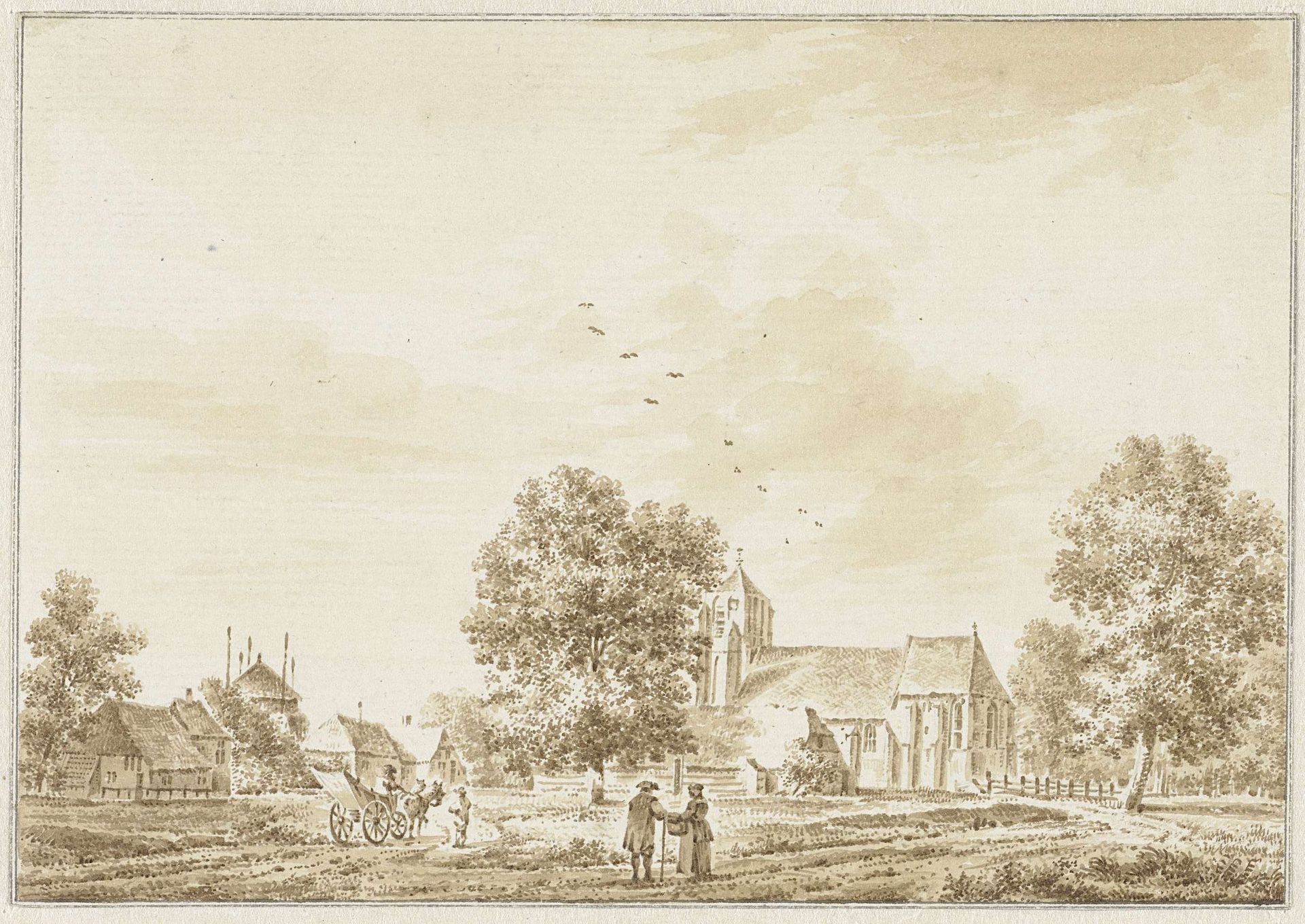
"Enspijk bij Leerdam" was created by Pieter Jan van Liender, likely in the mid-18th century. It’s a drawing characterized by delicate lines and a subdued palette of sepia tones, giving the scene a sense of historical distance and tranquility. Van Liender masterfully uses composition to guide our eye through the landscape. The buildings, trees and figures are carefully arranged to create a balanced yet dynamic scene. Note how the perspective flattens the space, almost abstracting the landscape into a series of planes. This flattening effect serves to emphasize the surface of the drawing itself, drawing attention to the materiality of the artwork. The drawing offers a glimpse into the 18th-century Dutch countryside, but it also invites us to consider how we construct meaning through visual representation. The formal qualities of the drawing—its line, composition, and tone—shape our perception and understanding of the scene. It underscores that art is not simply a mirror reflecting reality, but an active agent in shaping our understanding.

Artwork details
- Medium
- drawing, etching, paper, pencil
- Dimensions
- height 113 mm, width 161 mm
- Copyright
- Rijks Museum: Open Domain
Tags
Comments
Share your thoughts
About this artwork
"Enspijk bij Leerdam" was created by Pieter Jan van Liender, likely in the mid-18th century. It’s a drawing characterized by delicate lines and a subdued palette of sepia tones, giving the scene a sense of historical distance and tranquility. Van Liender masterfully uses composition to guide our eye through the landscape. The buildings, trees and figures are carefully arranged to create a balanced yet dynamic scene. Note how the perspective flattens the space, almost abstracting the landscape into a series of planes. This flattening effect serves to emphasize the surface of the drawing itself, drawing attention to the materiality of the artwork. The drawing offers a glimpse into the 18th-century Dutch countryside, but it also invites us to consider how we construct meaning through visual representation. The formal qualities of the drawing—its line, composition, and tone—shape our perception and understanding of the scene. It underscores that art is not simply a mirror reflecting reality, but an active agent in shaping our understanding.
Comments
Share your thoughts