About this artwork
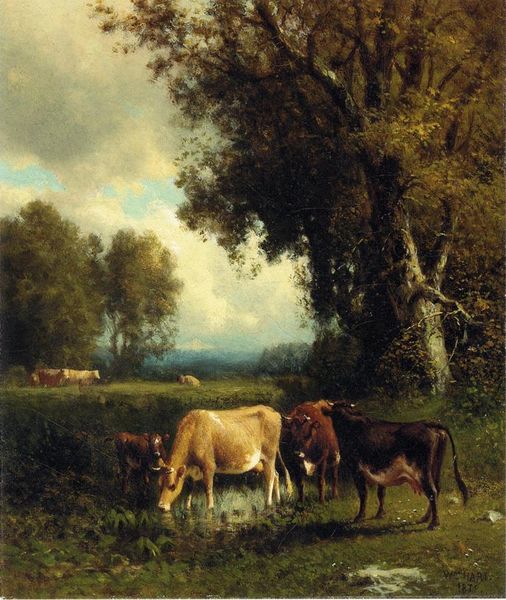
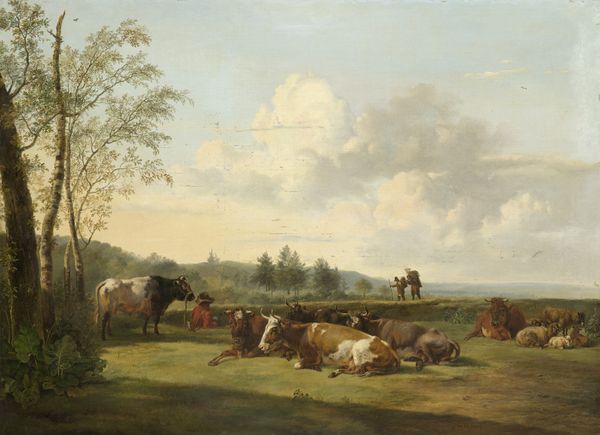
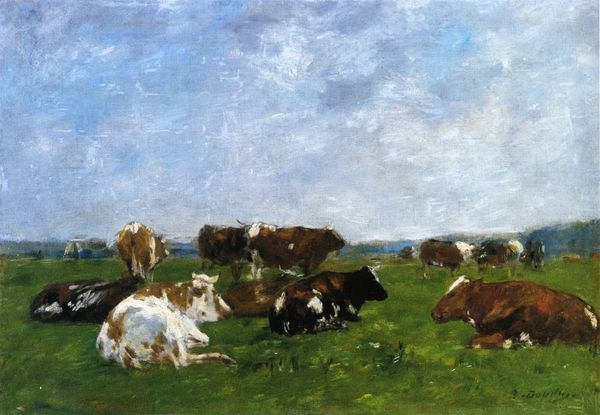
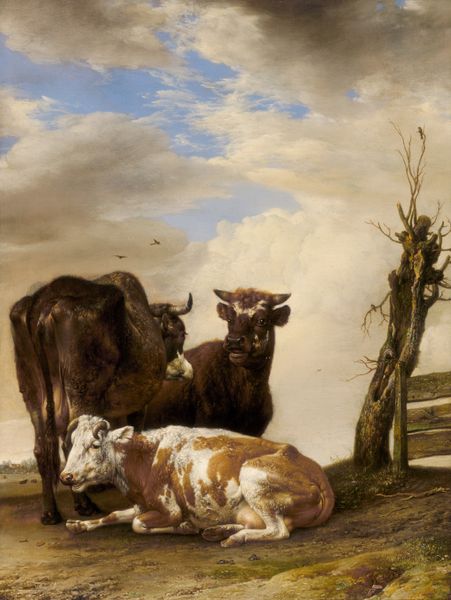
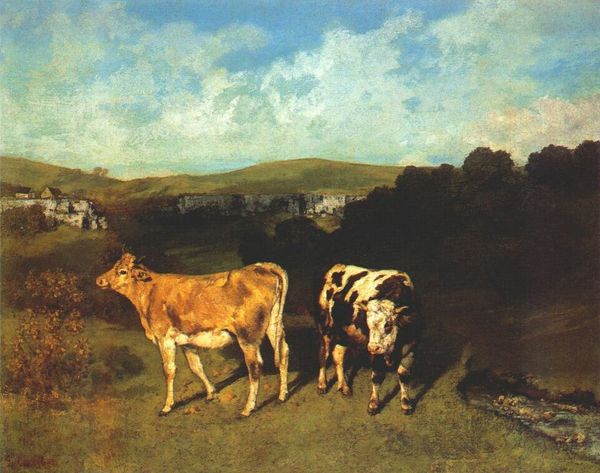
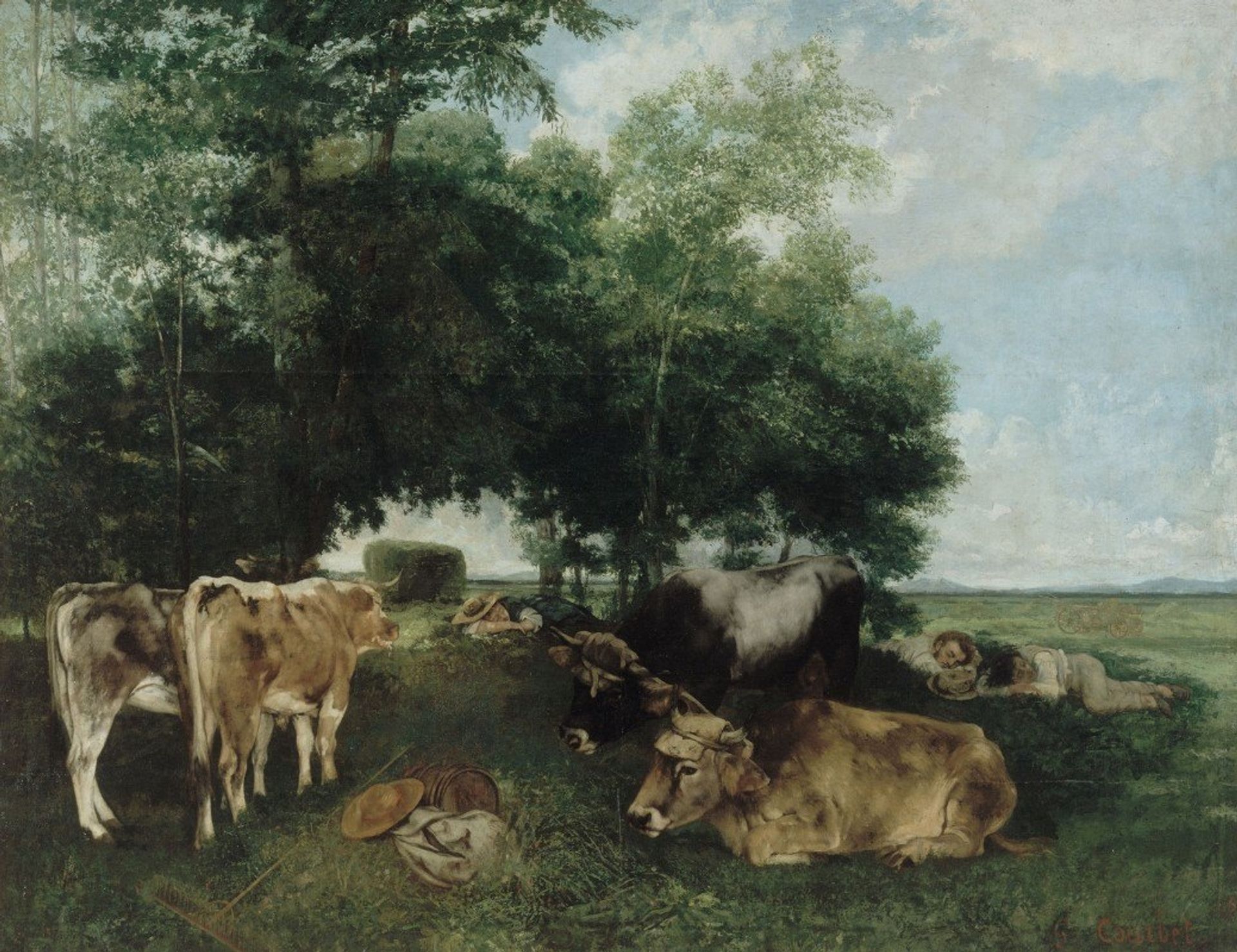
Editor: Gustave Courbet’s "La Sieste Pendant La Saison Des Foins," painted around 1867, depicts a peaceful midday scene with cows and a sleeping figure in a meadow. The use of oil paint gives it such a tangible, textured feel. The painting seems incredibly serene, a true escape to the countryside. What do you see when you look at this? Curator: Beyond the literal representation, consider the archetypal imagery: the cow, a long-standing symbol of nurture, fertility, and connection to the land. Think about how many cultures revere the cow! What emotional resonances does that evoke for you, knowing that heritage? Editor: That's a lovely point – a sense of grounding and plenty, perhaps? I hadn't immediately made that connection. It felt more immediately about a certain kind of rural French life, very particular. Curator: Indeed. And within that specific context, consider the *act* of rest in the hay season. Is it just about a simple break? Or could it also suggest a moment of connection, a deep-seated harmony between humans, animals, and the earth? The cyclical nature of the seasons reinforces these connections. Editor: So it's less a snapshot, and more an articulation of the deeper bonds between humans and their environment? I can certainly see the connection with the pastoral tradition now. Curator: Precisely! And think about the symbolism of sleep itself - a retreat from conscious awareness into a realm of deeper knowing. What insights emerge when the individual allows themselves to become fully immersed in their surroundings? Courbet invites us to consider these timeless connections. Editor: That really enriches my understanding. I initially saw a charming scene, but now I'm drawn to consider its layered cultural meanings and underlying themes of nature and human existence. Curator: Art expands when we find its personal connections through culture, which then gives us insights into both.

Artwork details
- Medium
- painting, plein-air, oil-paint
- Copyright
- Public Domain: Artvee
Tags
Comments
Share your thoughts
About this artwork
Editor: Gustave Courbet’s "La Sieste Pendant La Saison Des Foins," painted around 1867, depicts a peaceful midday scene with cows and a sleeping figure in a meadow. The use of oil paint gives it such a tangible, textured feel. The painting seems incredibly serene, a true escape to the countryside. What do you see when you look at this? Curator: Beyond the literal representation, consider the archetypal imagery: the cow, a long-standing symbol of nurture, fertility, and connection to the land. Think about how many cultures revere the cow! What emotional resonances does that evoke for you, knowing that heritage? Editor: That's a lovely point – a sense of grounding and plenty, perhaps? I hadn't immediately made that connection. It felt more immediately about a certain kind of rural French life, very particular. Curator: Indeed. And within that specific context, consider the *act* of rest in the hay season. Is it just about a simple break? Or could it also suggest a moment of connection, a deep-seated harmony between humans, animals, and the earth? The cyclical nature of the seasons reinforces these connections. Editor: So it's less a snapshot, and more an articulation of the deeper bonds between humans and their environment? I can certainly see the connection with the pastoral tradition now. Curator: Precisely! And think about the symbolism of sleep itself - a retreat from conscious awareness into a realm of deeper knowing. What insights emerge when the individual allows themselves to become fully immersed in their surroundings? Courbet invites us to consider these timeless connections. Editor: That really enriches my understanding. I initially saw a charming scene, but now I'm drawn to consider its layered cultural meanings and underlying themes of nature and human existence. Curator: Art expands when we find its personal connections through culture, which then gives us insights into both.
Comments
Share your thoughts