after 1859
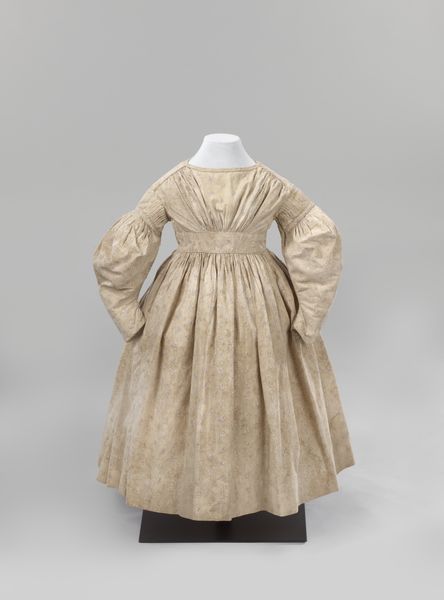
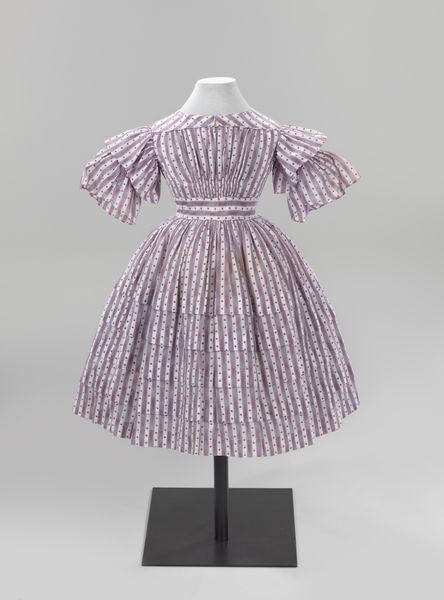
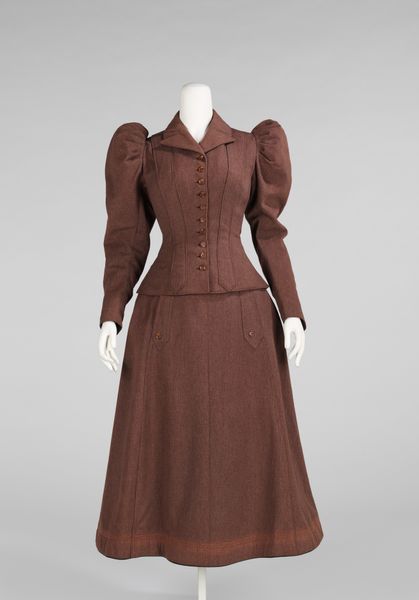
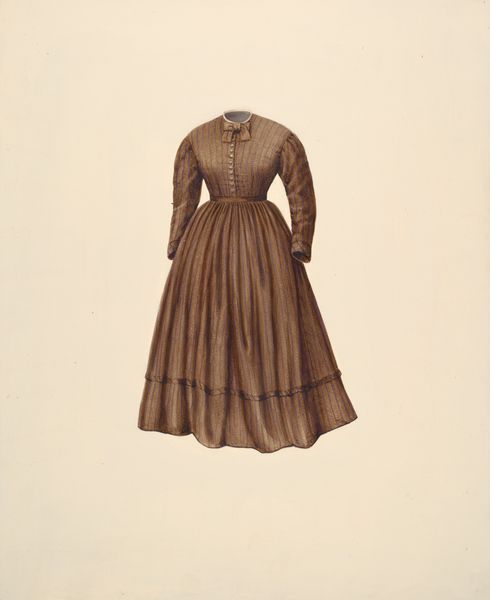
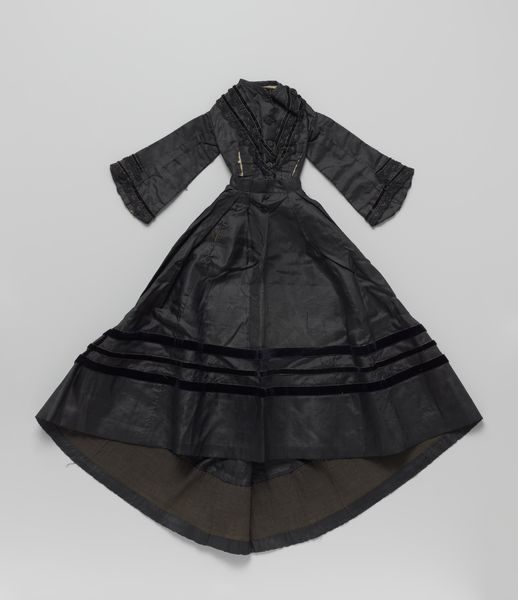
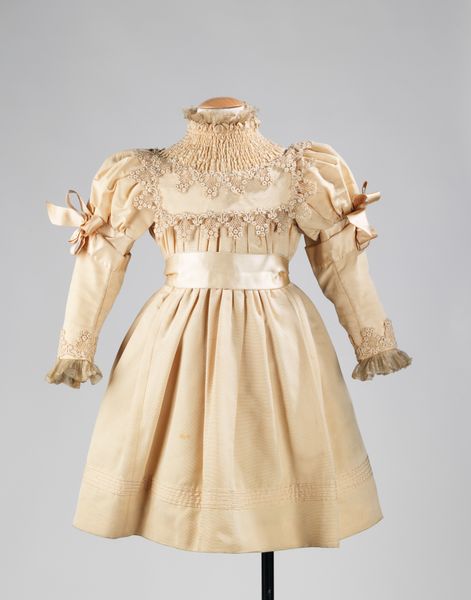
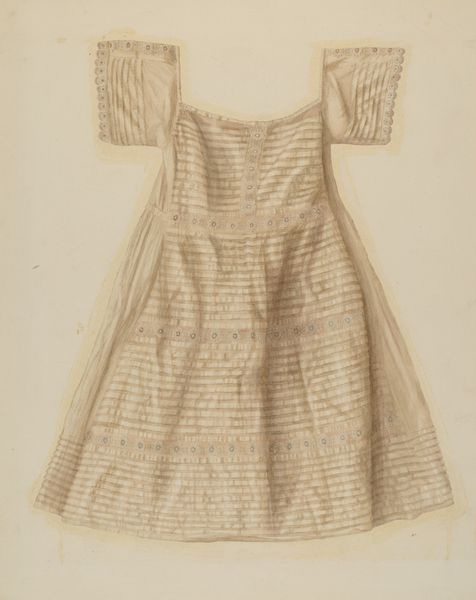
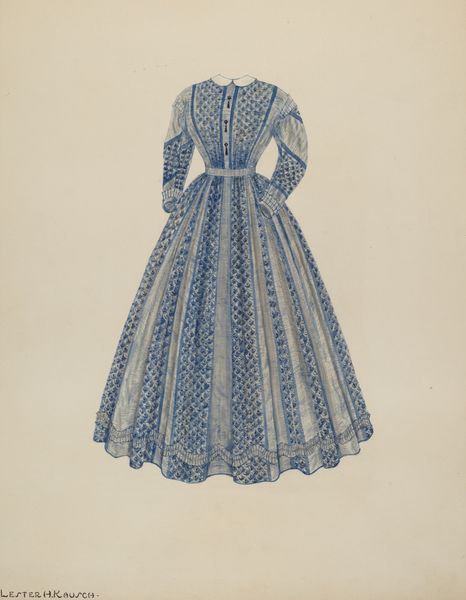
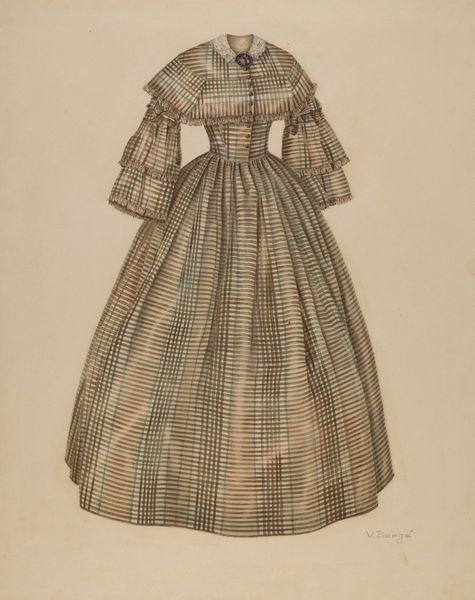
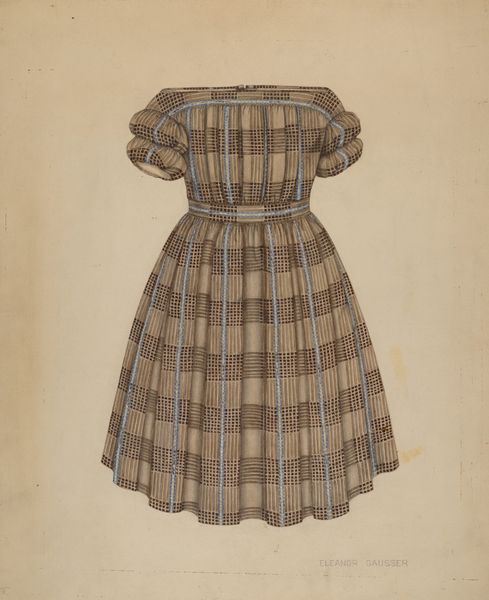
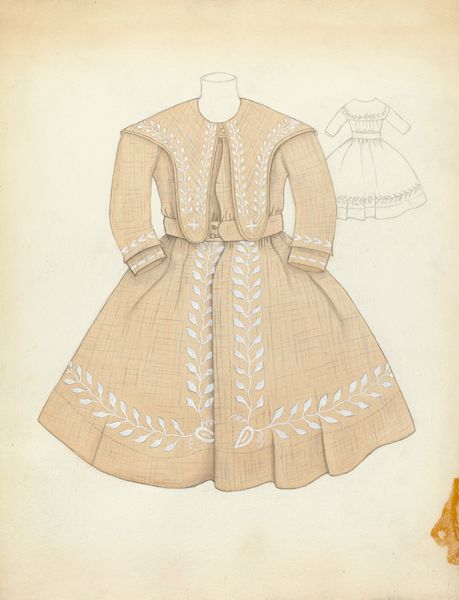
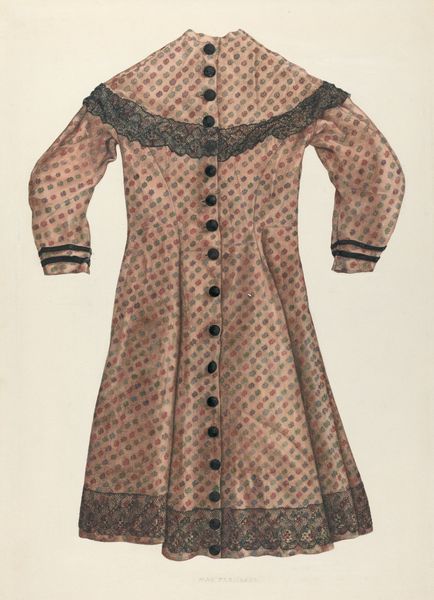
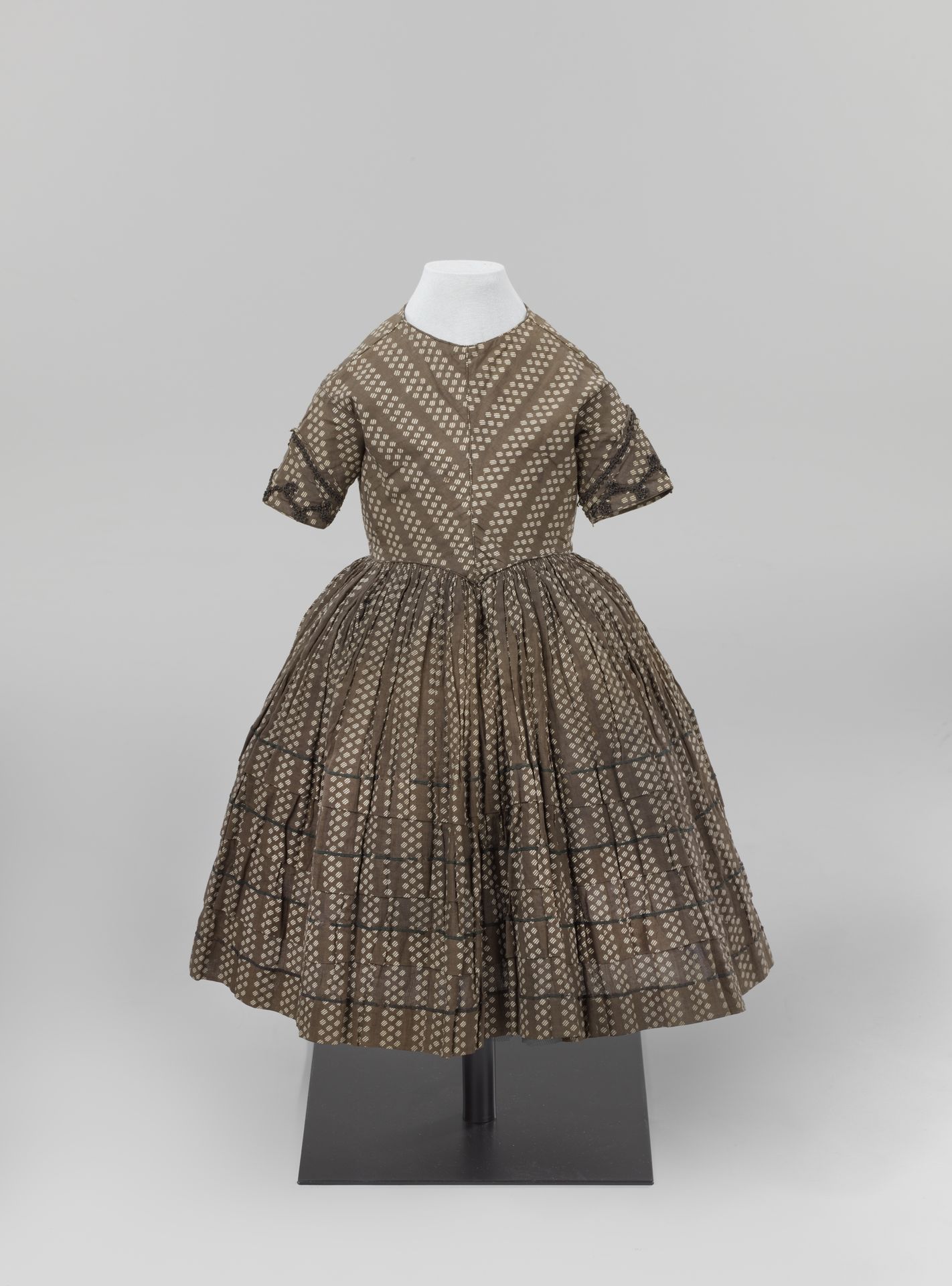
Japon van katoenen batist, bedrukt met een bruin fond waarin een verticaal gestreept strooipatroon is uitgespaard. Ronde hals, puntig lijf met balein middenvoor, gerimpelde wijde rok met drie oprijgen. Versierd met bruin passement en band. Lijf gevoerd met katoen.

Listen to curator's interpretation
Curatorial notes
This is a dress of cotton batiste with a printed pattern, crafted by an anonymous maker. The term "Japon" suggests the influence of Japanese aesthetics on Western fashion, reflecting a broader cultural phenomenon of Japonism. During this era, Western designers drew inspiration from Japanese art, textiles, and design principles, incorporating them into clothing and decorative arts. The dress subtly reflects the era’s complex cultural exchanges and power dynamics between the East and West. Its design maintains traditional Western dressmaking techniques, while the "Japon" designation alludes to the exoticism and allure of Japanese culture as perceived through a Western lens. Consider the anonymous creator of this dress and her place in society. Was she a professional seamstress or a member of the upper class? The dress's construction and materials speak to the skilled labor required to produce such garments, prompting us to think about the hands and lives involved in its creation.