

1859
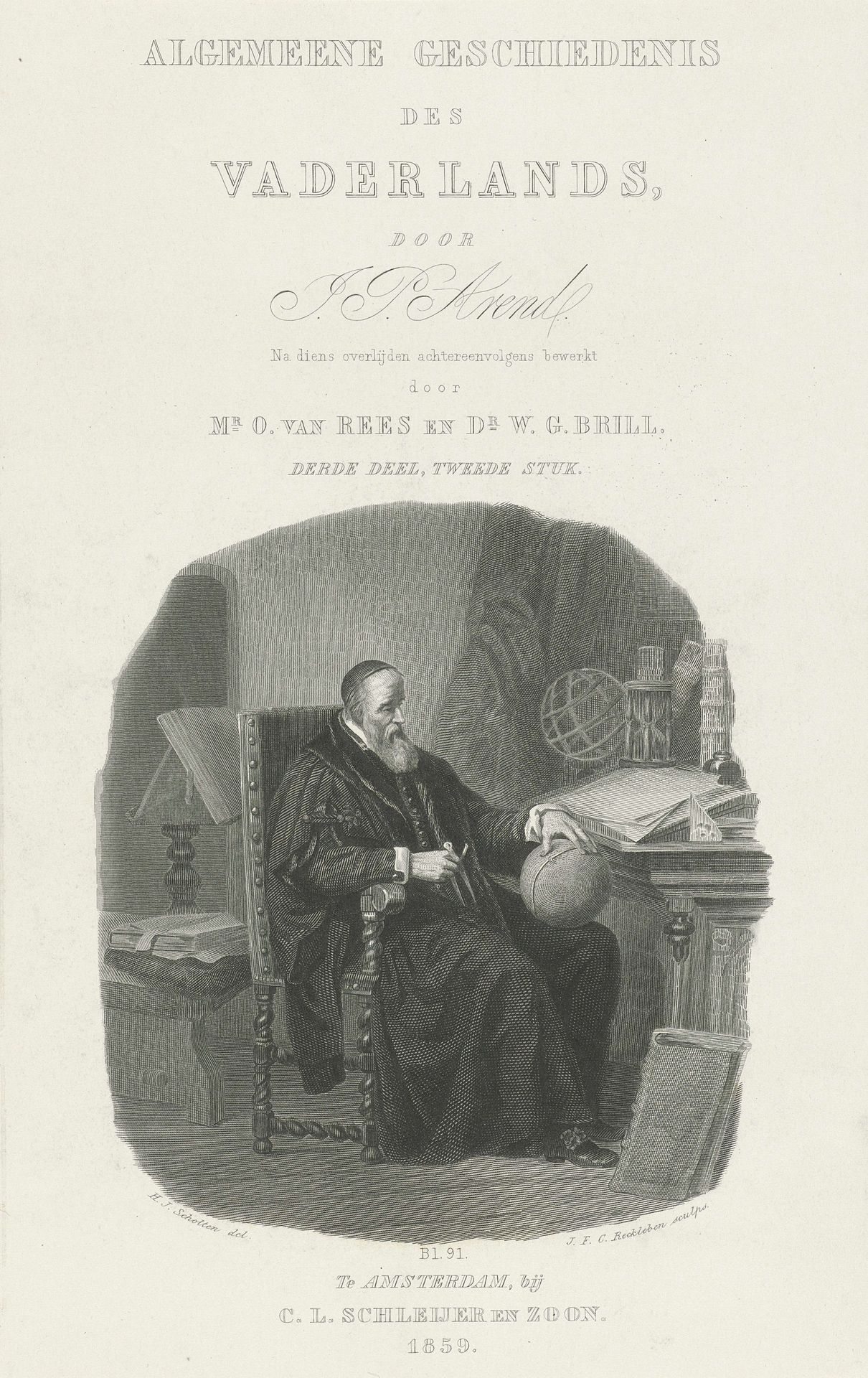
Titelpagina van 'Algemeene geschiedenis des vaderlands van de vroegste tijden tot op heden'

Jan Frederik Christiaan Reckleben
1819 - 1879Location
RijksmuseumListen to curator's interpretation
Curatorial notes
Curator: The fine lines of this engraving create a somewhat melancholic mood, don’t you think? There’s a distinct solemnity about it. Editor: I see what you mean. We’re looking at the title page from "Algemeene geschiedenis des vaderlands van de vroegste tijden tot op heden," or "General History of the Fatherland from the Earliest Times to the Present Day." It's from 1859 and part of the Rijksmuseum's collection. Curator: It's fascinating to consider how this print functions as both an introduction to a historical text and an artistic creation in its own right. You immediately see the materiality of book production in 19th-century Netherlands. The textures! The artist Jan Frederik Christiaan Reckleben captured such remarkable detail, down to the subject’s fur-trimmed gown and neatly patterned chair. Editor: Absolutely. The visual language here is one of established authority. Note how the man, presumably the author, is staged amongst scholarly tools: globe, books, quill. Everything speaks to a controlled, rational understanding of the world and the nation’s place in it. The globe suggests a global view informing this local history, almost like a silent claim of legitimacy for the project. Curator: The printing process itself adds layers of meaning. Look at the sharp lines achieved through engraving, emphasizing precision and control – a mechanical means of replicating an image intended for wide distribution. How many hands touched the materials from metal plate to paper, and what conditions were they working under? That process shapes its reception too. Editor: Exactly. The very act of reproducing this image as a print, readily available for distribution, democratizes knowledge and history to some extent, although we also have to consider who would have had access to the book itself at the time. It projects the idea of a shared national narrative. And the placement of this thoughtful man in an ornate robe also gives clues about the socio-economic landscape where the consumption of these texts would thrive. Curator: It certainly provides food for thought when considering what history Reckleben's artwork and the associated book attempted to convey in 1859. Editor: Indeed. Thinking about how national narratives are constructed and disseminated, even down to the imagery on a title page, is really compelling.