1889
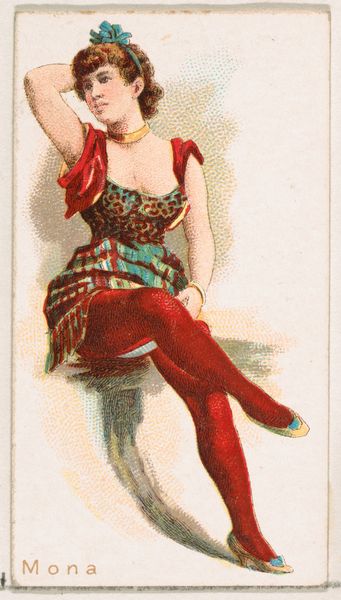
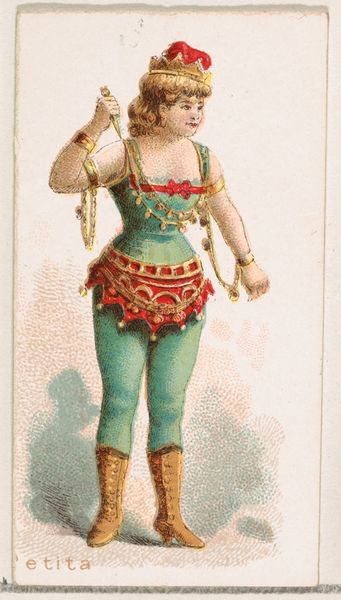
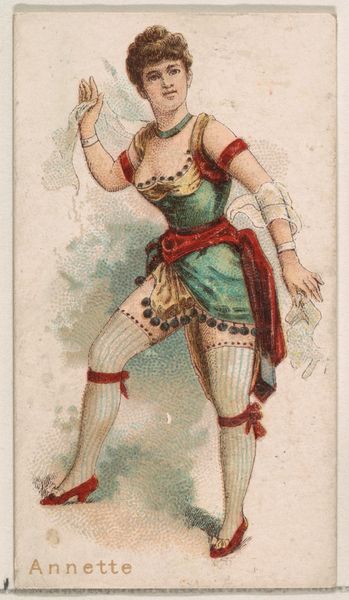
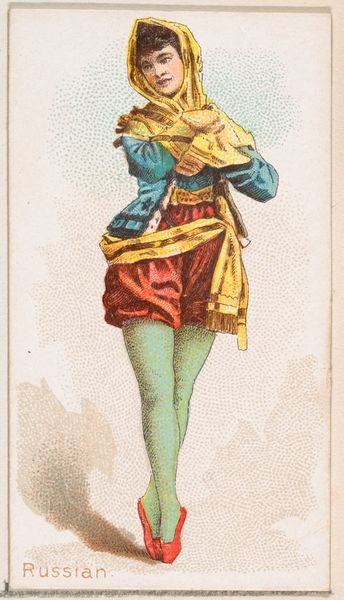
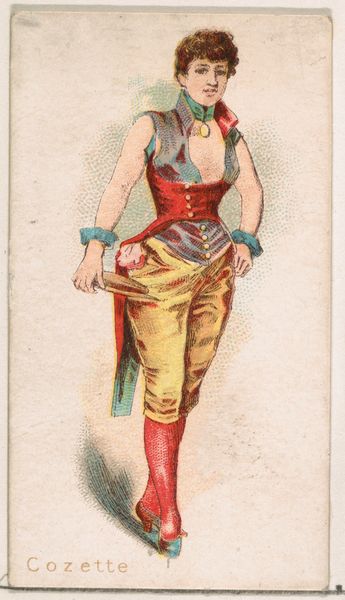
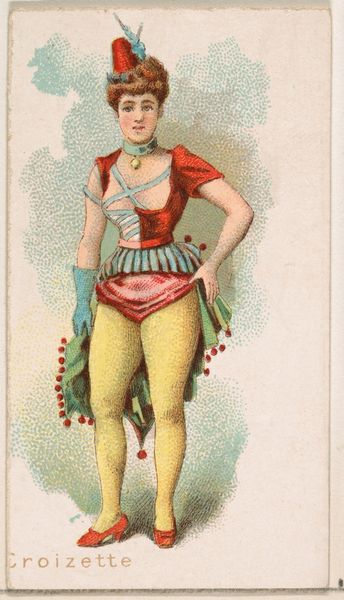
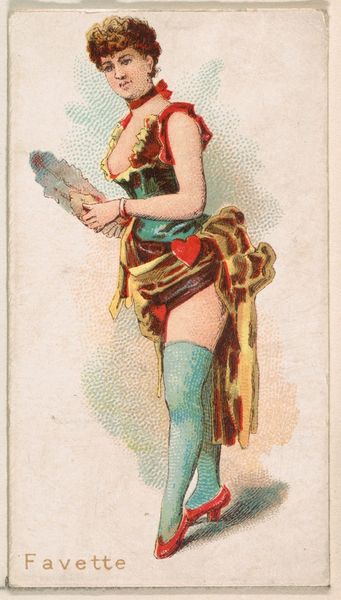
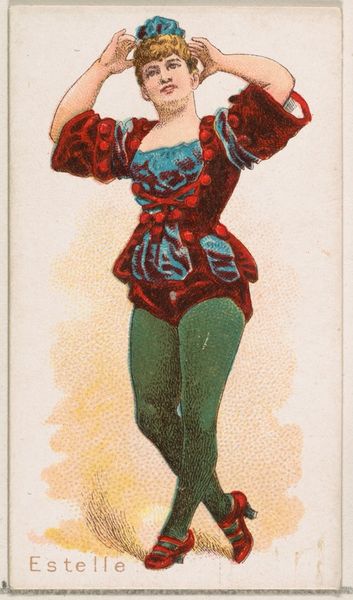
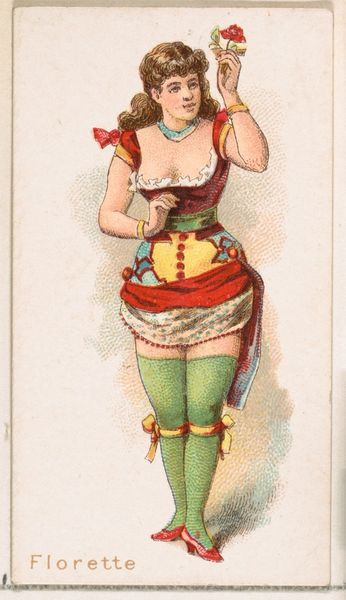
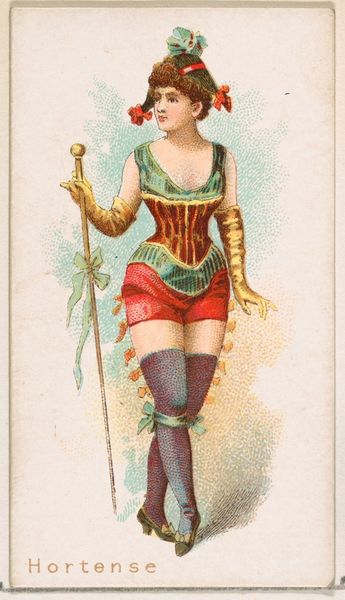
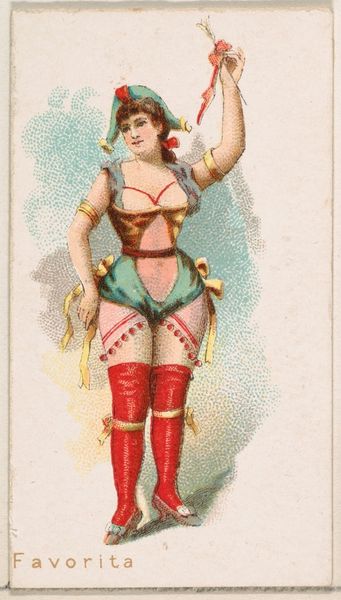
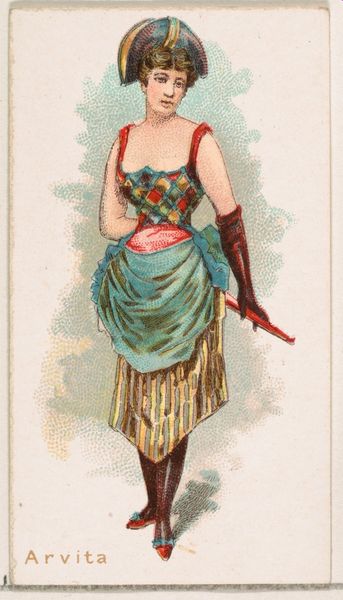
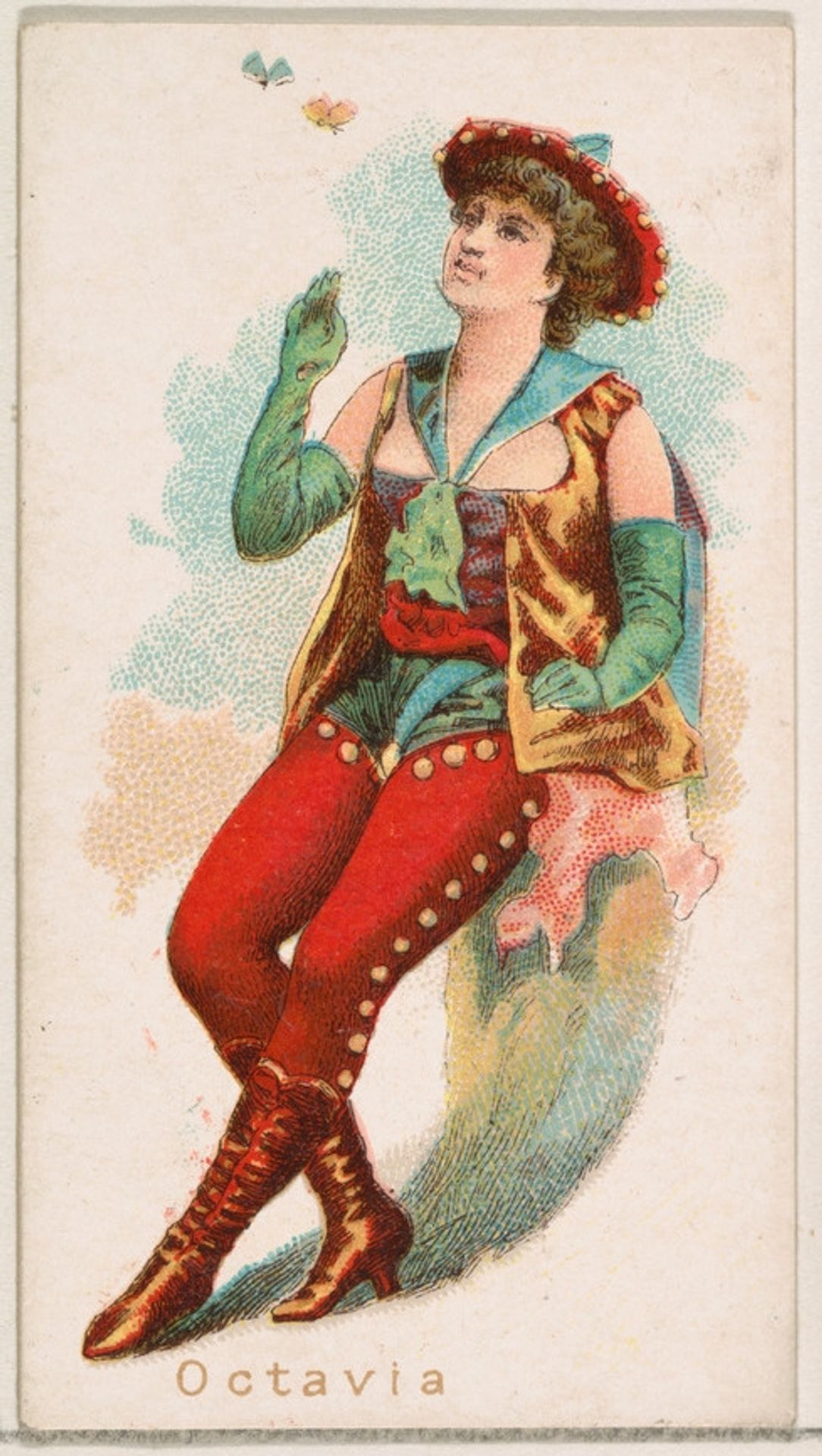
Octavia, from the Ballet Queens series (N182) issued by Wm. S. Kimball & Co.

William S. Kimball & Company
@williamskimballcompany
The Metropolitan Museum of Art
Metropolitan Museum of Art, New York, NYListen to curator's interpretation
Curatorial notes
Curator: This is "Octavia, from the Ballet Queens series," created around 1889 by Wm. S. Kimball & Co. It’s a print, a type of promotional card. Editor: My first impression is one of whimsical theatricality, from the bright colors to the curious little butterflies above the dancer. Curator: It’s fascinating to consider these cards were essentially advertisements. The Ballet Queens series points to the intersection of popular entertainment and burgeoning consumer culture. These cards, akin to modern-day trading cards, were included in cigarette packs. Editor: Yes, the visual language is captivating. Octavia’s gaze upwards towards the butterflies evokes a sense of lightness, perhaps even spiritual aspiration. Ballet itself was already laden with symbolic significance. Curator: Absolutely, and look at the materiality of it. We have paper, ink, and the whole lithographic process – think of the labor involved in mass-producing these cards for widespread distribution. They were meant to be ephemeral, yet they survive, giving us insight into production practices of the time. Editor: The color palette as well. Red tights, brown boots, green gloves: there's almost an alchemical feeling to it, drawing on color traditions but to represent something more fleeting, a moment of theatrical illusion. Notice the little touches that render a character of refinement through the symbolic dance posture, juxtaposed against the advertisement context. Curator: Consider also the impact on gender roles and representations of women during this era. Ballet dancers were celebrated but often existed in a liminal space, viewed with both admiration and suspicion. The cards likely contributed to both the glamorization and the objectification of female performers. Editor: A dance frozen in time, a symbol encased within a throwaway consumer product... fascinating to consider the layers of intent, use, and cultural significance. Curator: Indeed, it makes one reconsider our relationships to production, to consumer goods and to this little piece of preserved ballet history.