


Curatorial notes
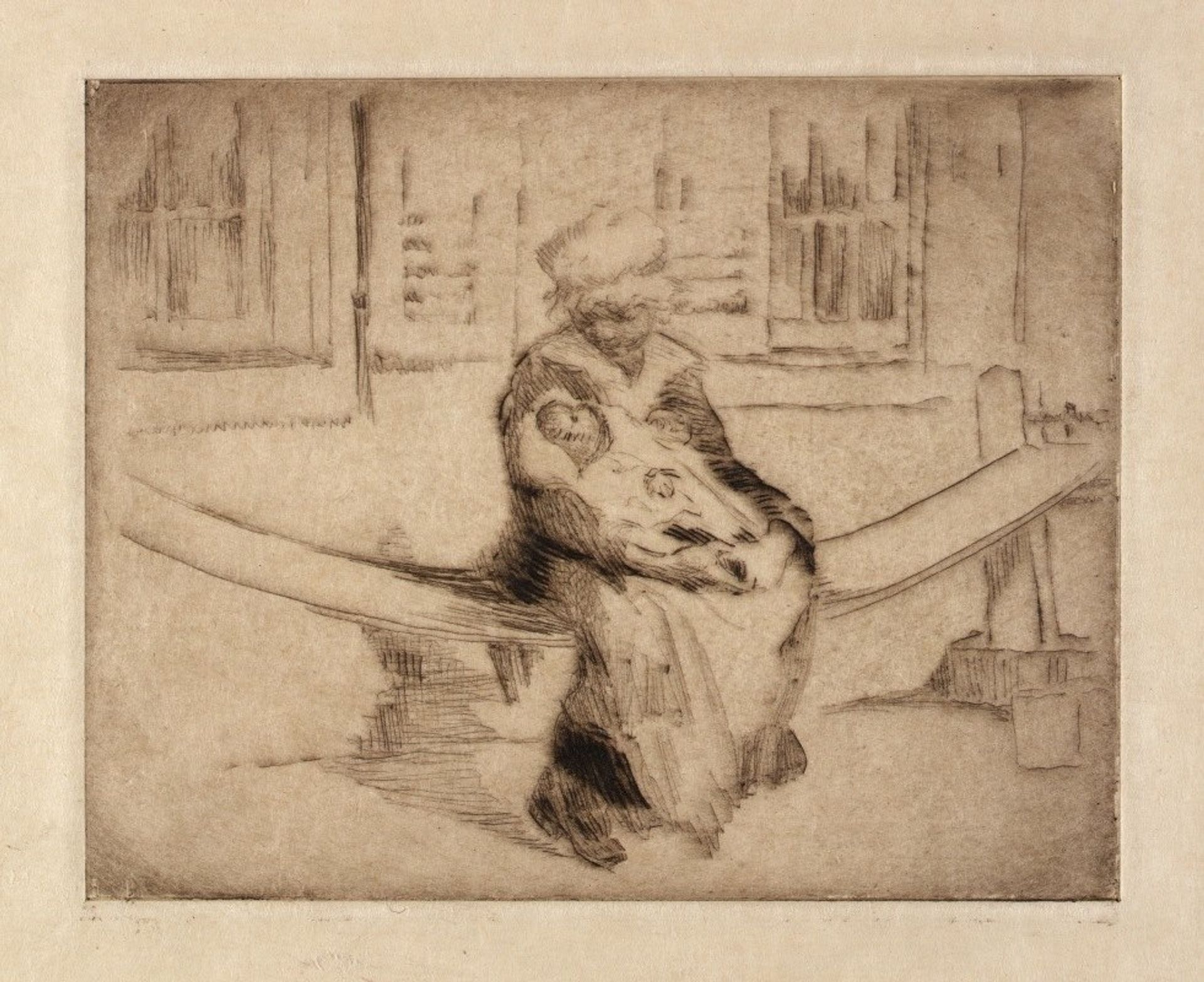
Curator: Let’s consider Helen Hyde’s etching from 1918, titled "Friday’s Child." It's a striking example of her work during that period. Editor: It possesses a rather somber tone, wouldn’t you say? The muted browns of the etching only emphasize the pensive mood, and the subject almost appears withdrawn. Curator: I agree, but it's crucial to consider Hyde's commitment to printmaking as a form of democratized art. Her etchings and woodblock prints, often on paper, were a deliberate choice, making art more accessible to a wider audience, diverging from the exclusive world of painting. Editor: The heart shaped images embroidered onto the figure’s smock—I keep returning to that detail. Hearts often represented devotion, or a longing for connection during that time. Are we seeing a universal theme of motherly care reflected here, do you think? Curator: Well, her technique itself, that drypoint etching, highlights the handmade quality, bridging the gap between industry and artistry. Hyde used an etching needle to scratch directly into the copper plate, a process requiring great skill but offering immediacy that factory production methods lacked. Editor: The title also draws me in. In Western cultures there are associations with the nursery rhyme - “Friday’s child is loving and giving.” I see her embrace of Eastern artistic themes blending seamlessly with more intimate Western archetypes here. Curator: I can't help but view that garment through a material lens as well. The handwork speaks to labor, particularly that of women during that period, connecting the print's narrative to the tactile reality of clothing production, cottage industries and so forth. Editor: Perhaps. The lasting visual power remains; those familiar, comforting emblems woven so delicately hint to deeply embedded cultural stories, handed from generation to generation. It’s an invitation into quiet reflection, surely? Curator: Yes, in carefully examining its materiality and modes of production we expose assumptions around what counts as “fine art.” Editor: Seeing this etching offers a potent visual link to both cultural and deeply personal emotional lives, it will endure.