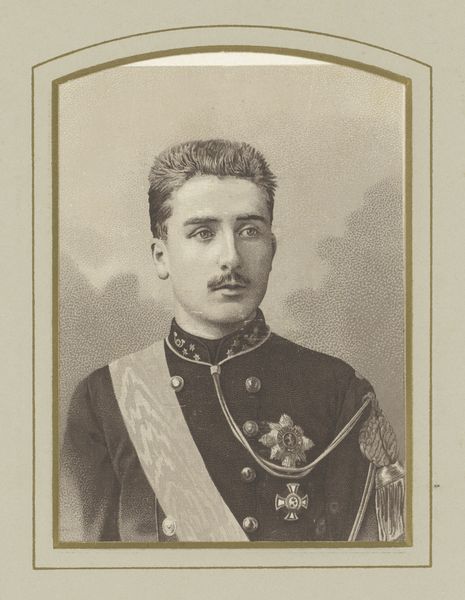
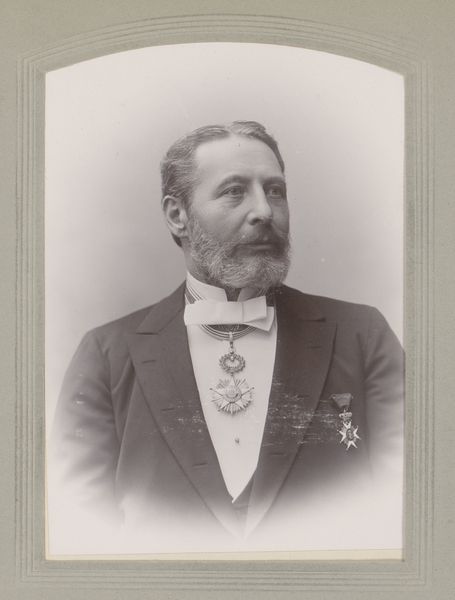
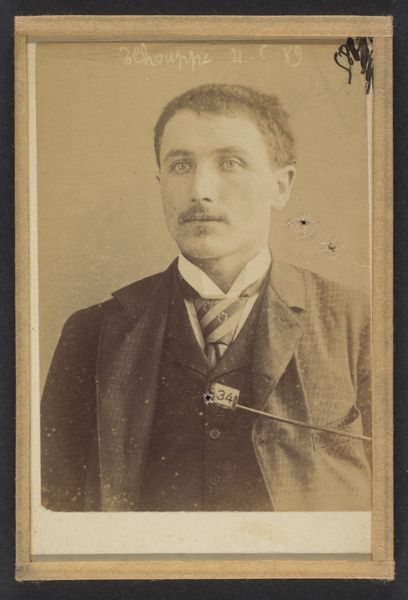
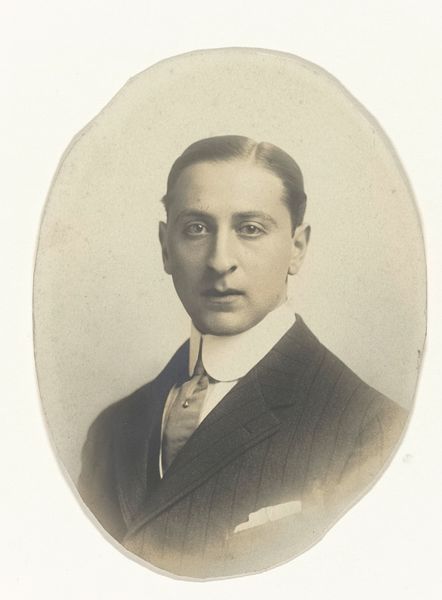
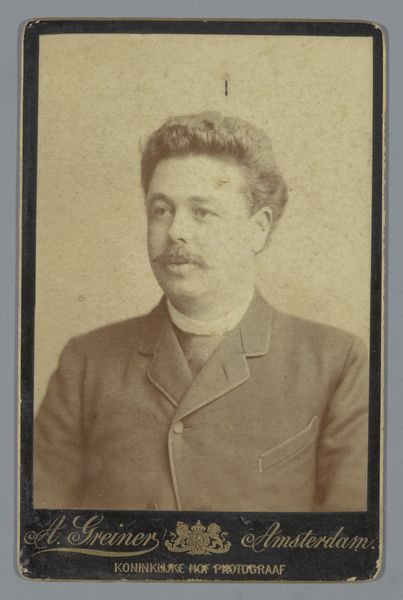
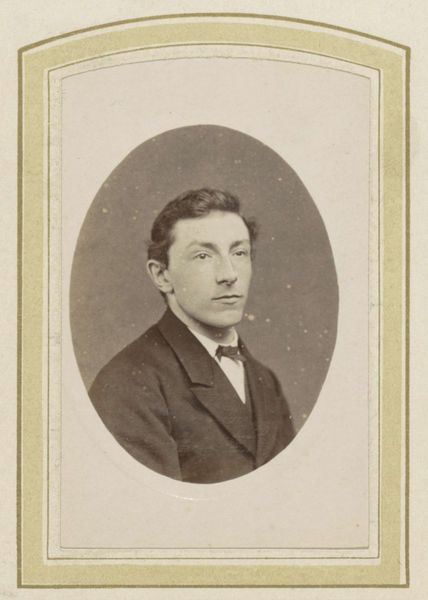
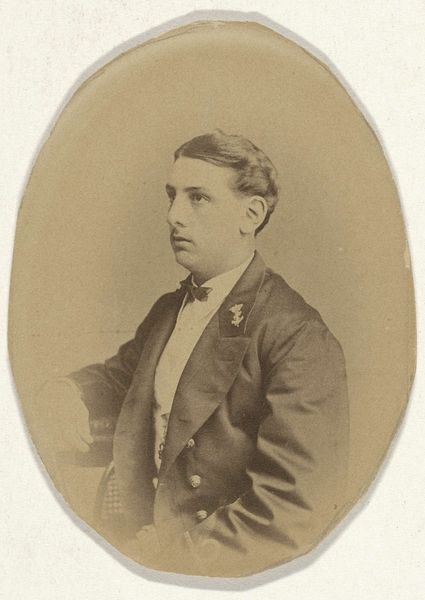
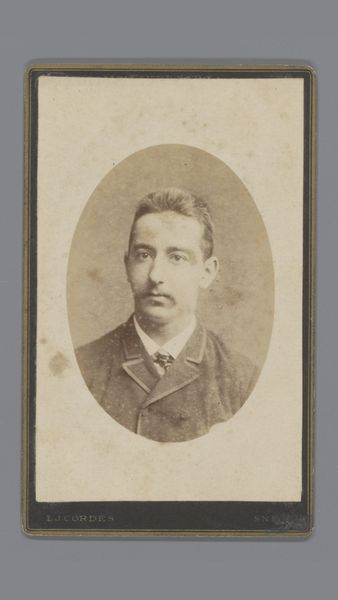
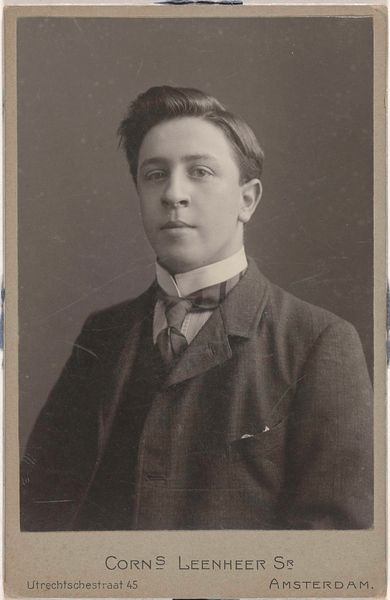
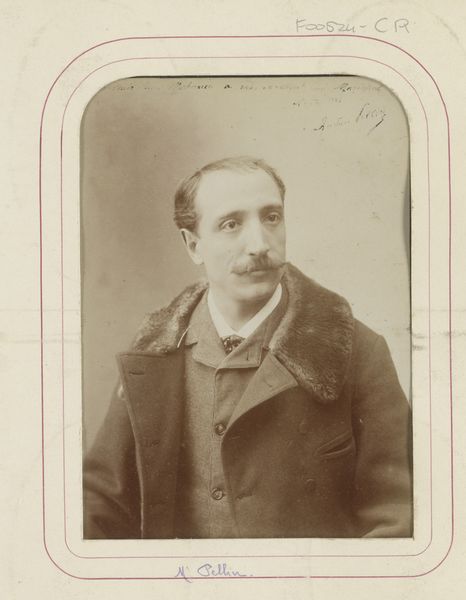
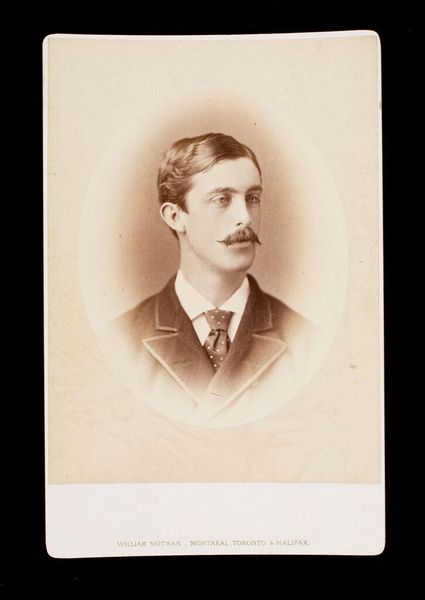
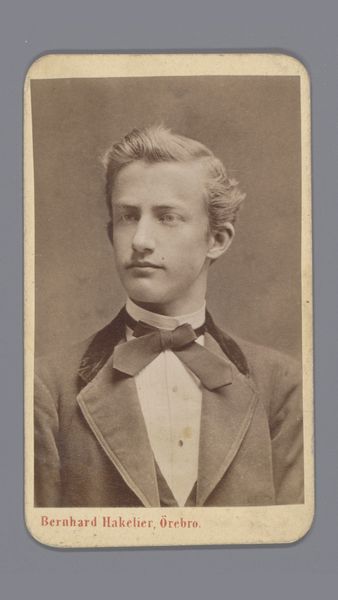
Portret van Napoleon Eugène Bonaparte, kroonprins van Frankrijk 1865 - 1880

anonymous
Rijksmuseum
photography
portrait
photography
historical photography
19th century
academic-art
Dimensions: height 88 mm, width 63 mm, height 111 mm, width 75 mm
Copyright: Rijks Museum: Open Domain
Curator: Let's delve into this photographic print, "Portret van Napoleon Eugène Bonaparte, kroonprins van Frankrijk," dating roughly between 1865 and 1880. Editor: He appears quite young; the softness in his gaze strikes me immediately. There's an undeniable air of privilege, almost a staged vulnerability, but the actual print work suggests it was distributed broadly and intended as popular representation rather than elite. Curator: Precisely. Contextually, consider this work within the visual culture of 19th-century European royalty and photography's democratization. How was masculinity constructed and disseminated through these images, particularly of young royal figures like Napoleon Eugène? And what are the politics of representation inherent in that circulation? Editor: I find the layering of materials quite interesting. It's clearly a photographic base but there seems to be further pigmentation that speaks to questions around authenticity. Does this make it more, or less ‘real’, especially with the photographic process relatively new to wider audiences at the time? It makes you consider the means of reproduction and what these images meant to people, almost like collecting trading cards. Curator: That’s insightful. Considering feminist theory and cultural studies, the photograph reinforces societal structures regarding male power and hereditary privilege. He inherits power and that is visibly signaled through attire and posture, whilst softening him with a sympathetic air. How did this image function to uphold, or perhaps contest, these entrenched notions? Editor: Good point, because if it was solely for distribution, perhaps his costume points to a commercialized depiction of him rather than an overt declaration of status. It has a kind of pre-mass-produced feeling to it, especially given the hand coloring you've mentioned. Perhaps we are as much gazing upon a portrait of 19th century printing practice as we are Napoleon himself. Curator: Indeed. By intersecting art history, feminist theory, and the sociology of image production, we can analyze it to discern broader implications of identity, gender, race, and power relations in historical portrayals. Editor: Exactly. Thinking materially reveals social structures from an interesting viewpoint, while also understanding how they can manifest through different technologies such as photography, print and the means to color them for effect. It brings out dimensions missed at face value.
Comments
No comments
Be the first to comment and join the conversation on the ultimate creative platform.
 React
React Comment